
[Paper Review] Federated Learning for Internet of Things: Applications, Challenges, and Opportunities
This paper proposes federated learning (FL) as a privacy-preserving, scalable solution for IoT systems, enabling collaborative model training without centralizing raw data. It identifies seven key challenges in deploying FL on IoT—such as communication overhead, device heterogeneity, and secure aggregation—and outlines opportunities for lightweight protocols, standardized tools, and edge-optimized frameworks to enable real-world deployment.
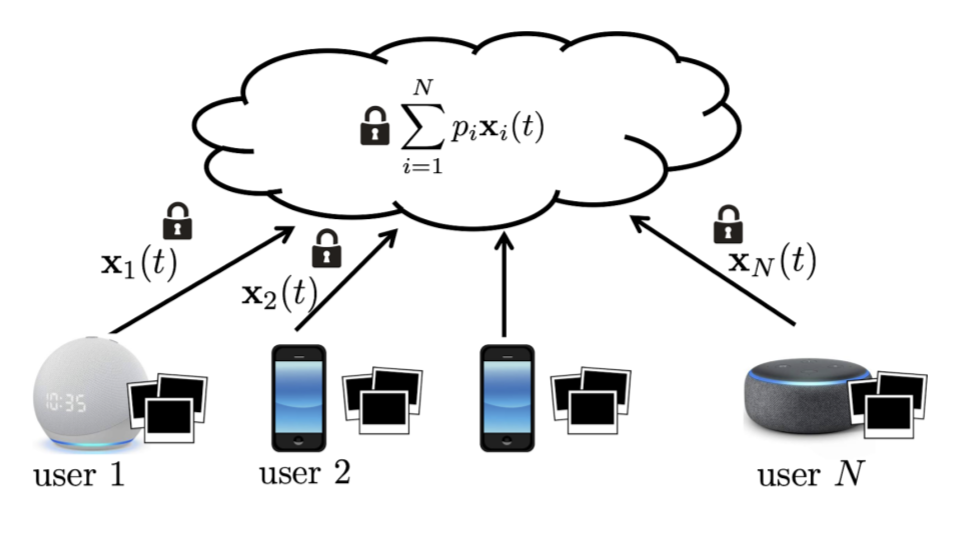
Billions of IoT devices will be deployed in the near future, taking advantage of faster Internet speed and the possibility of orders of magnitude more endpoints brought by 5G/6G. With the growth of IoT devices, vast quantities of data that may contain users' private information will be generated. The high communication and storage costs, mixed with privacy concerns, will increasingly challenge the traditional ecosystem of centralized over-the-cloud learning and processing for IoT platforms. Federated Learning (FL) has emerged as the most promising alternative approach to this problem. In FL, training data-driven machine learning models is an act of collaboration between multiple clients without requiring the data to be brought to a central point, hence alleviating communication and storage costs and providing a great degree of user-level privacy. However, there are still some challenges existing in the real FL system implementation on IoT networks. In this paper, we will discuss the opportunities and challenges of FL in IoT platforms, as well as how it can enable diverse IoT applications. In particular, we identify and discuss seven critical challenges of FL in IoT platforms and highlight some recent promising approaches towards addressing them.
Motivation & Objective
- Address the growing challenge of centralized data processing in IoT due to high communication costs and privacy risks from massive data generation.
- Identify and analyze seven critical challenges hindering real-world FL deployment in IoT networks.
- Highlight opportunities for lightweight, secure, and scalable FL systems tailored to resource-constrained IoT devices.
- Promote standardization and tool development to accelerate FL adoption in IoT ecosystems.
- Bridge the gap between theoretical FL frameworks and practical IoT deployment through system-level design insights.
Proposed method
- Proposes a distributed FL framework where clients (IoT devices) train local models and send only model updates to a central server, preserving raw data on edge devices.
- Analyzes secure aggregation protocols based on pairwise random-seed agreement and secret sharing to protect model updates and ensure dropout resilience.
- Evaluates system-level challenges such as device heterogeneity, communication bottlenecks, and resource constraints in low-end IoT hardware.
- Reviews existing FL tools like TensorFlow Federated, PySyft, and FedML, and advocates for extending them to support edge FL with efficient training and deployment.
- Introduces FedIoT as a mature systems framework enabling FL deployment on edge devices like Raspberry Pi and NVIDIA Jetson Nano.
- Proposes extending edge inference frameworks (e.g., TensorFlow Lite, TVM) to support FL training, addressing a critical gap in current tooling.
Experimental results
Research questions
- RQ1How can federated learning effectively address privacy and communication overhead in large-scale IoT deployments?
- RQ2What are the key system-level challenges in deploying FL on heterogeneous, resource-constrained IoT devices?
- RQ3How can secure aggregation be optimized to reduce computational overhead on low-end IoT devices?
- RQ4What role do standardized tools and simulation environments play in accelerating FL research and deployment for IoT?
- RQ5How can existing edge AI frameworks be extended to support federated learning training, not just inference?
Key findings
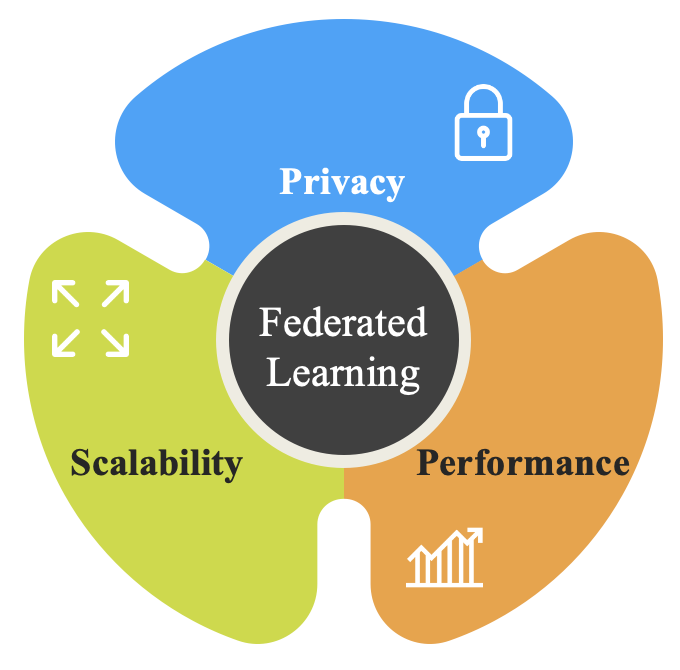
- Federated learning significantly enhances user privacy by ensuring raw data never leaves IoT devices, minimizing the risk of data leakage.
- Collaborative training in FL enables higher model performance than individual device training, especially when local data is limited.
- The distributed nature of FL improves scalability by reducing communication and storage costs, particularly beneficial for low-bandwidth IoT networks.
- Current secure aggregation protocols suffer from high computational overhead due to mask reconstruction, especially when users drop out, posing a bottleneck on low-end devices.
- Existing FL tools like FedML and TensorFlow Federated are not yet optimized for edge FL training, creating a critical gap in practical deployment.
- Extending edge inference frameworks such as TensorFlow Lite and TVM to support FL training could unlock significant performance and efficiency gains in IoT systems.
Read this paper
Open the full text in the Nubint reader and ask about any passage as you read.
Read this paper on NubintThis review was generated by AI from the original paper. Please check the paper before citing it.