
[Paper Review] Gauging Non-Invertible Symmetries: Topological Interfaces and Generalized Orbifold Groupoid in 2d QFT
This paper develops a framework for gauging non-invertible symmetries in 2D quantum field theories using topological interfaces and generalized orbifold groupoids. It establishes that generalized gauging—previously formalized in category theory—can be physically realized via topological interfaces between QFTs, enabling systematic classification and deriving new self-dualities in conformal field theories, including infinite non-invertible self-dualities in the Ising² CFT.
Gauging is a powerful operation on symmetries in quantum field theory (QFT), as it connects distinct theories and also reveals hidden structures in a given theory. We initiate a systematic investigation of gauging discrete generalized symmetries in two-dimensional QFT. Such symmetries are described by topological defect lines (TDLs) which obey fusion rules that are non-invertible in general. Despite this seemingly exotic feature, all well-known properties in gauging invertible symmetries carry over to this general setting, which greatly enhances both the scope and the power of gauging. This is established by formulating generalized gauging in terms of topological interfaces between QFTs, which explains the physical picture for the mathematical concept of algebra objects and associated module categories over fusion categories that encapsulate the algebraic properties of generalized symmetries and their gaugings. This perspective also provides simple physical derivations of well-known mathematical theorems in category theory from basic axiomatic properties of QFT in the presence of such interfaces. We discuss a bootstrap-type analysis to classify such topological interfaces and thus the possible generalized gaugings and demonstrate the procedure in concrete examples of fusion categories. Moreover we present a number of examples to illustrate generalized gauging and its properties in concrete conformal field theories (CFTs). In particular, we identify the generalized orbifold groupoid that captures the structure of fusion between topological interfaces (equivalently sequential gaugings) as well as a plethora of new self-dualities in CFTs under generalized gaugings.
Motivation & Objective
- To extend the concept of gauging beyond invertible symmetries to non-invertible generalized symmetries in 2D QFT.
- To provide a physical interpretation of algebra objects and module categories in fusion categories via topological interfaces between QFTs.
- To establish a systematic method for classifying generalized gaugings using bootstrap analysis and topological interface fusion.
- To demonstrate the emergence of new self-dualities and hidden structures in conformal field theories under generalized gauging.
- To derive mathematical theorems in category theory from physical axioms of QFT with topological interfaces.
Proposed method
- Formulates generalized gauging as a physical process involving topological interfaces between QFTs, linking mathematical structures like algebra objects and module categories to observable QFT phenomena.
- Uses topological defect lines (TDLs) in 2D QFT to represent non-invertible symmetries, with fusion rules encoded in fusion categories.
- Applies a bootstrap approach to classify topological interfaces, enabling the enumeration of possible generalized gaugings and their consistency conditions.
- Introduces the generalized orbifold groupoid to describe sequential gaugings and fusion of topological interfaces, capturing the algebraic structure of multiple gaugings.
- Employs dimensional constraints and quantum dimension conditions to filter viable algebra objects for gauging, such as binary algebras in WZW models.
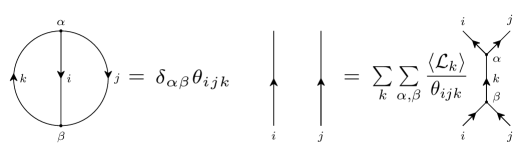
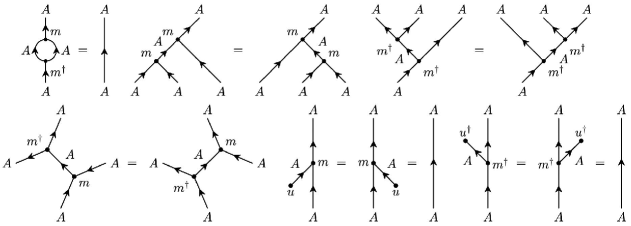
- Fixes F-symbols and multiplication morphisms for dual algebras using physical consistency conditions, even without full F-symbol data.
Experimental results
Research questions
- RQ1How can non-invertible symmetries in 2D QFT be gauged, and what physical mechanism underlies this process?
- RQ2What is the role of topological interfaces in realizing generalized gauging and connecting distinct QFTs?
- RQ3How can the generalized orbifold groupoid be constructed to describe sequential gaugings and fusion of topological interfaces?
- RQ4What are the conditions under which a generalized gauging leads to self-dualities in conformal field theories?
- RQ5How can physical axioms of QFT be used to derive mathematical theorems in category theory, such as properties of module categories?
Key findings
- The paper identifies an infinite family of non-invertible self-dualities in the Ising² CFT, arising from generalized gauging of a rank-4 fusion category with non-invertible TDLs.
- A dual binary algebra B = 1 ⊕ D₁′′ is constructed in the Spin(5)₁ CFT, with quantum dimension ⟨D₁′′⟩ = 2 − √3, which reproduces the diagonal modular invariant of SU(2)₁₀ CFT when used in a B-mesh decoration.
- The multiplication morphisms for the dual algebra are explicitly computed using physical consistency conditions, yielding m₄₄⁴ = √(√3 − 1) and m₄₄¹ = 1/√(3 + √3), without requiring full F-symbol data.
- The generalized orbifold groupoid is derived for Rep(H₈) and Rep(D₈), showing that fusion of topological interfaces corresponds to module categories over group-theoretical fusion categories.
- In the Ising² CFT, the presence of a continuous family of non-invertible symmetries is shown to lead to an infinite-dimensional space of generalized gaugings, implying a rich duality web.
- The construction of the dual algebra in the SU(2)₁₀ CFT is confirmed to reproduce the correct torus partition function, validating the physical consistency of the framework.
Read this paper
Open the full text in the Nubint reader and ask about any passage as you read.
Read this paper on NubintThis review was generated by AI from the original paper. Please check the paper before citing it.