
[Paper Review] GPTuner: A Manual-Reading Database Tuning System via GPT-Guided Bayesian Optimization
GPTuner is a database tuning system that leverages large language models (LLMs) to extract and structure domain knowledge from DBMS manuals, forums, and LLM-generated insights, enabling a knowledge-guided, Coarse-to-Fine Bayesian Optimization framework. It reduces tuning time by 16x and achieves up to 30% performance improvement over state-of-the-art methods across PostgreSQL and MySQL under TPC-C and TPC-H workloads.
Modern database management systems (DBMS) expose hundreds of configurable knobs to control system behaviours. Determining the appropriate values for these knobs to improve DBMS performance is a long-standing problem in the database community. As there is an increasing number of knobs to tune and each knob could be in continuous or categorical values, manual tuning becomes impractical. Recently, automatic tuning systems using machine learning methods have shown great potentials. However, existing approaches still incur significant tuning costs or only yield sub-optimal performance. This is because they either ignore the extensive domain knowledge available (e.g., DBMS manuals and forum discussions) and only rely on the runtime feedback of benchmark evaluations to guide the optimization, or they utilize the domain knowledge in a limited way. Hence, we propose GPTuner, a manual-reading database tuning system. Firstly, we develop a Large Language Model (LLM)-based pipeline to collect and refine heterogeneous knowledge, and propose a prompt ensemble algorithm to unify a structured view of the refined knowledge. Secondly, using the structured knowledge, we (1) design a workload-aware and training-free knob selection strategy, (2) develop a search space optimization technique considering the value range of each knob, and (3) propose a Coarse-to-Fine Bayesian Optimization Framework to explore the optimized space. Finally, we evaluate GPTuner under different benchmarks (TPC-C and TPC-H), metrics (throughput and latency) as well as DBMS (PostgreSQL and MySQL). Compared to the state-of-the-art approaches, GPTuner identifies better configurations in 16x less time on average. Moreover, GPTuner achieves up to 30% performance improvement (higher throughput or lower latency) over the best-performing alternative.
Motivation & Objective
- To address the high tuning cost and suboptimal performance of existing automated database tuning systems that rely solely on runtime feedback.
- To integrate heterogeneous domain knowledge—such as DBMS manuals, forum discussions, and LLM-generated insights—into a structured, factual knowledge base for effective knob tuning.
- To reduce the search space of database configuration knobs by leveraging workload-aware, training-free knob selection and value-range optimization based on domain knowledge.
- To develop a Coarse-to-Fine Bayesian Optimization framework that first explores a knowledge-guided, promising subspace and then refines the search in the full heterogeneous space.
- To achieve superior performance with significantly reduced tuning time compared to existing ML-based tuning systems.
Proposed method
- A prompt ensemble algorithm is used to extract and unify structured tuning knowledge from diverse sources, including DBMS manuals, web forums, and LLMs (e.g., GPT), ensuring factual consistency.
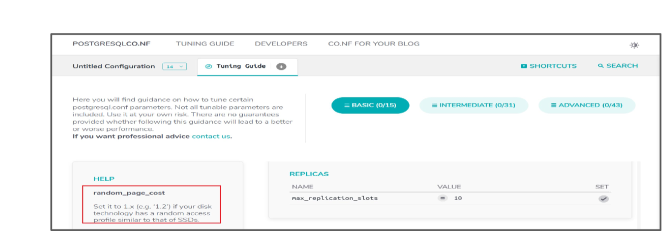
- A Tuning Lake is constructed as a structured knowledge repository, where each knob is associated with natural language tuning guidance derived from multiple sources.
- A knowledge-based knob selection strategy identifies workload-relevant knobs without requiring training data, using domain knowledge to prioritize high-impact knobs.
- A search space optimization technique narrows down the value ranges of each knob based on domain knowledge, reducing the risk of system crashes and improving convergence.
- A Coarse-to-Fine Bayesian Optimization framework first explores a discrete, knowledge-informed subspace for efficiency, then performs a fine-grained search over the full heterogeneous space to avoid missing optimal configurations.
- The system integrates factual consistency checks via LLMs to iteratively refine the knowledge base and ensure reliability before optimization.
Experimental results
Research questions
- RQ1Can LLM-extracted domain knowledge significantly reduce the configuration search space in database tuning without requiring extensive training data?
- RQ2How effective is a Coarse-to-Fine Bayesian Optimization strategy guided by structured domain knowledge in improving tuning efficiency and performance?
- RQ3To what extent can integrating heterogeneous knowledge sources (manuals, forums, LLMs) outperform purely feedback-driven tuning systems in terms of performance and tuning cost?
- RQ4Can knowledge-guided knob selection and value-range reduction improve the convergence speed and robustness of automated tuning?
- RQ5Does the proposed system achieve better performance and faster convergence than state-of-the-art automated tuning approaches across diverse workloads and DBMS platforms?
Key findings
- GPTuner identifies better-performing database configurations in 16x less time on average compared to state-of-the-art automated tuning systems.
- The system achieves up to 30% improvement in performance—measured as higher throughput or lower latency—over the best-performing alternative configuration found by existing methods.
- The knowledge-guided search space reduction significantly narrows the effective configuration space, reducing the risk of system instability and improving optimization efficiency.
- The Coarse-to-Fine Bayesian Optimization framework successfully balances exploration and exploitation, avoiding the pitfalls of coarse search while maintaining high efficiency.
- The integration of LLM-generated insights with official manuals and forum discussions yields actionable tuning guidance not found in vendor documentation alone.
- The system demonstrates consistent performance gains across multiple DBMS (PostgreSQL and MySQL) and workloads (TPC-C and TPC-H), validating its generalizability.
Read this paper
Open the full text in the Nubint reader and ask about any passage as you read.
Read this paper on NubintThis review was generated by AI from the original paper. Please check the paper before citing it.