
[Paper Review] How Can Applications of Blockchain and Artificial Intelligence Improve Performance of Internet of Things? -- A Survey
This survey investigates the integration of blockchain and artificial intelligence (AI) to enhance security, scalability, and intelligence in Internet of Things (IoT) systems. By leveraging blockchain’s decentralized trust and AI’s adaptive learning, the paper proposes a unified framework that improves authentication, threat detection, and real-time decision-making in resource-constrained IoT environments, with key contributions in identifying synergies, limitations, and open challenges for future secure and intelligent IoT applications.
In the era of the Internet of Things (IoT), massive computing devices surrounding us operate and interact with each other to provide several significant services in industries, medical as well as in daily life activities at home, office, education sectors, and so on. The participating devices in an IoT network usually have resource constraints and the devices are prone to different cyber attacks, leading to the loopholes in the security and authentication. As a revolutionized and innovated technology, blockchain, that is applied in cryptocurrency, market prediction, etc., uses a distributed ledger that records transactions securely and efficiently. To utilize the great potential of blockchain, both industries and academia have paid a significant attention to integrate it with the IoT, as reported by several existing literature. On the other hand, Artificial Intelligence (AI) is able to embed intelligence in a system, and thus the AI can be integrated with IoT devices in order to automatically cope with different environments according to the demands. Furthermore, both blockchain and AI can be integrated with the IoT to design an automated secure and robust IoT model, as mentioned by numerous existing works. In this survey, we present a discussion on the IoT, blockchain, and AI, along with the descriptions of several research works that apply blockchain and AI in the IoT. In this direction, we point out strengths and limitations of the related existing researches. We also discuss different open challenges to exploit the full capacities of blockchain and AI in designing an IoT-based model. Therefore, the highlighted challenging issues can open the door for the development of future IoT models which will be intelligent and secure based on the integration of blockchain and AI with the IoT.
Motivation & Objective
- To analyze the current state of integration between blockchain, AI, and IoT for improved system performance.
- To identify the strengths and limitations of existing research applying blockchain and AI in IoT applications.
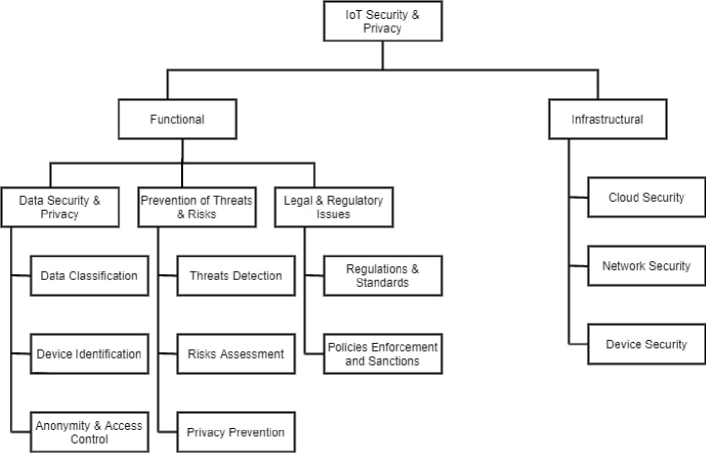
- To highlight open challenges in scalability, security, privacy, and computational efficiency for future IoT systems.
- To propose a framework for intelligent, secure, and decentralized IoT by synergizing blockchain and AI technologies.
- To guide future research by outlining key unresolved issues in deploying blockchain and AI in real-world IoT deployments.
Proposed method
- Systematic review of existing literature on blockchain, AI, and IoT integration across diverse application domains.
- Categorization of blockchain applications in IoT based on consensus mechanisms, scalability, and security models.
- Analysis of AI techniques—especially supervised and unsupervised learning—applied to IoT for anomaly detection and predictive analytics.
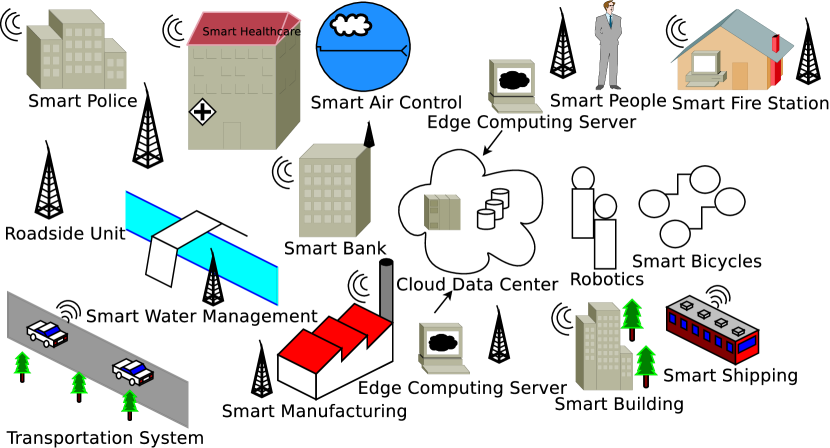
- Evaluation of edge computing architectures that offload AI inference to centralized nodes to reduce edge device workload.
- Examination of hybrid models combining AI-driven decision-making with blockchain’s immutable audit trails for trust and accountability.
- Identification of technical and architectural challenges such as communication overhead, latency, and computational constraints in wireless and edge environments.
Experimental results
Research questions
- RQ1How can blockchain technology enhance security, trust, and decentralization in resource-constrained IoT networks?
- RQ2In what ways can AI improve adaptability, automation, and real-time decision-making in dynamic IoT environments?
- RQ3What are the key technical and architectural challenges in integrating blockchain and AI with IoT systems?
- RQ4How do existing AI and blockchain models perform in terms of scalability, latency, and energy efficiency in IoT deployments?
- RQ5What are the open research challenges in designing a unified, intelligent, and secure IoT framework using blockchain and AI?
Key findings
- Blockchain enhances IoT security by enabling decentralized, immutable, and auditable transaction logs, reducing reliance on centralized authorities.
- AI-powered anomaly detection using supervised and unsupervised learning improves threat exposure evaluation and enables continuous security monitoring in IoT networks.
- Edge computing combined with centralized AI models reduces computational load on edge devices, though communication overhead remains a critical challenge.
- Human-centric AI models that learn from user behavior can bridge the human-machine gap by interpreting language, emotion, and context in IoT interactions.
- The integration of AI with 5G and wireless IoT networks enables adaptive resource management but requires new models to address spectrum, latency, and bandwidth constraints.
- Despite progress, significant challenges remain in scalability, energy efficiency, and interoperability, especially when deploying AI and blockchain on low-power IoT devices.
Read this paper
Open the full text in the Nubint reader and ask about any passage as you read.
Read this paper on NubintThis review was generated by AI from the original paper. Please check the paper before citing it.