
[Paper Review] How opinions get more extreme in an age of information abundance
This paper demonstrates that regular access to a vast, constantly updated stream of online content—Web 1.0—can drive opinion extremity even without social media algorithms or echo chambers. Using an empirically calibrated model of biased processing, it shows that information abundance amplifies confirmation bias, leading to significantly more extreme opinions compared to limited offline media exposure, with stronger initial prejudices intensifying under online conditions.
We live in an age of information abundance but know little about how this influences our opinions or attitudes. A common expectation is that people consulting numerous pieces of information, well balancing the different sides of an issue, will adopt a moderate attitude about the issue. We claim that this expectation is deceitful and suggest that people tend to get extreme and dogmatic about an issue when they consult abundant unbiased information. The cause for this extremization is a hardening confirmation bias -- when their attitude gets more extreme, people get more likely to ignore information that differs from their views. Our claim is based on simulations of two fundamentally different computational models: a Bounded Confidence model and an empirically calibrated Persuasive Argument model. For both models, the attitude tends to be extreme when the computational agent consults abundant unbiased information. We analyze the extremization pathways displayed in the models and discuss how our results may affect views on polarization, and on the role of online media.
Motivation & Objective
- To investigate whether the mere availability of vast, constantly renewed online content (Web 1.0) can drive opinion extremization, independent of social media dynamics.
- To examine the role of confirmation bias in shaping opinion evolution under conditions of high versus low information availability.
- To compare offline (limited media) and online (broad content access) information environments using a computationally grounded model of opinion dynamics.
- To assess how information overload modifies belief processing, favoring alignment with existing views rather than objective evaluation.
- To quantify the extent to which initial prejudice is amplified under online conditions due to biased processing of abundant content.
Proposed method
- The study employs an empirically calibrated persuasive argument model (PAM) grounded in Persuasive Argument Theory (PAT), where opinions are formed as aggregates of beliefs about individual arguments.
- Agents process arguments with confirmation bias: the probability of believing a new argument depends on its alignment with current beliefs, modeled via a sigmoid function with parameter β.
- In the offline setting, agents are exposed to a fixed, limited set of arguments (n_a), with probabilities of receiving new positive/negative arguments derived from hypergeometric distributions.
- In the online setting, agents select from a large, continuously updated content pool (2q items per time step), with content choice probability dependent on current belief balance (b), modeled via a sigmoid function with parameter γ.
- The model uses probability distributions μ_t(b) to track the evolution of belief balance b = b_p - b_n over time, with state transitions computed via multinomial and Bernoulli-like update rules.
- The key innovation lies in modeling how information abundance alters the dynamics of belief updating, particularly through the interplay between selection bias (content choice) and processing bias (belief formation).
Experimental results
Research questions
- RQ1Does increased access to constantly renewed online content (Web 1.0) alone lead to more extreme opinions, even without algorithmic filtering or social reinforcement?
- RQ2How does confirmation bias interact with information abundance to amplify initial prejudices in opinion formation?
- RQ3To what extent does the structure of content access—limited offline vs. broad online—alter the trajectory of opinion extremity?
- RQ4Can biased processing of abundant information explain the observed rise in political polarization independent of Web 2.0 mechanisms like echo chambers?
- RQ5What is the quantitative impact of information overload on the likelihood of belief change and opinion radicalization?
Key findings
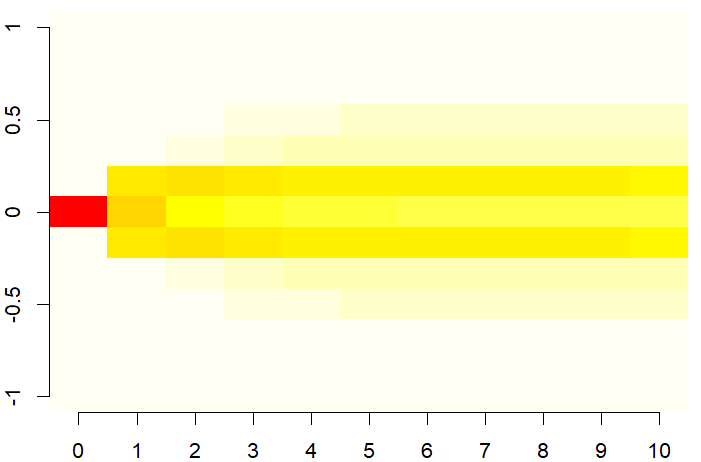
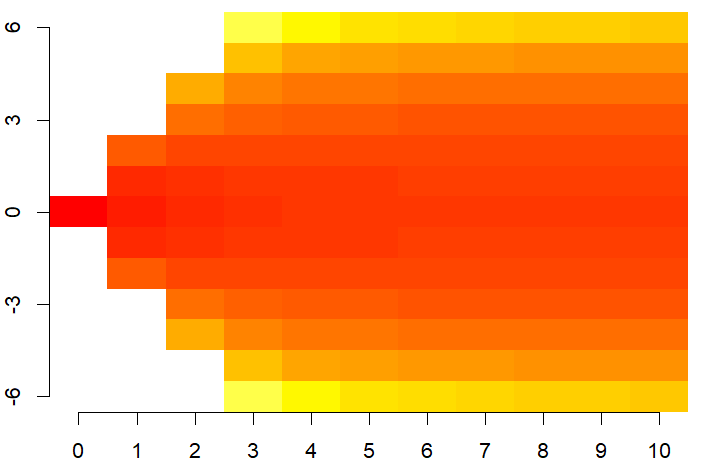
- The online setting leads to significantly more extreme opinions compared to the offline setting, even when positive and negative arguments are balanced.
- Initial prejudice is amplified under online conditions due to the compounding effect of confirmation bias on abundant content streams.
- The model shows that information abundance alone, without social media algorithms, can drive opinion extremization through biased processing of incoming arguments.
- The probability of believing a new argument increases with its alignment to current beliefs, and this effect is magnified when agents are exposed to a large number of options.
- In the online condition, agents are more likely to experience belief reinforcement due to the higher frequency and diversity of content that aligns with their current stance.
- The simulation results demonstrate that the distribution of opinion extremity shifts toward higher absolute values under online access, indicating a systemic tendency toward polarization.
Read this paper
Open the full text in the Nubint reader and ask about any passage as you read.
Read this paper on NubintThis review was generated by AI from the original paper. Please check the paper before citing it.