
[Paper Review] Ignore, Trust, or Negotiate: Understanding Clinician Acceptance of AI-Based Treatment Recommendations in Health Care
This study investigates clinician acceptance of AI-based treatment recommendations in intensive care using a mixed-methods approach with 24 clinicians evaluating real sepsis cases via an interpretable AI decision support tool. Key findings reveal that clinicians often 'negotiate' with AI recommendations—selectively adopting, rejecting, or delaying parts—rather than simply trusting or ignoring them, highlighting the need for granular, evidence-based human-AI collaboration in treatment-focused AI systems.
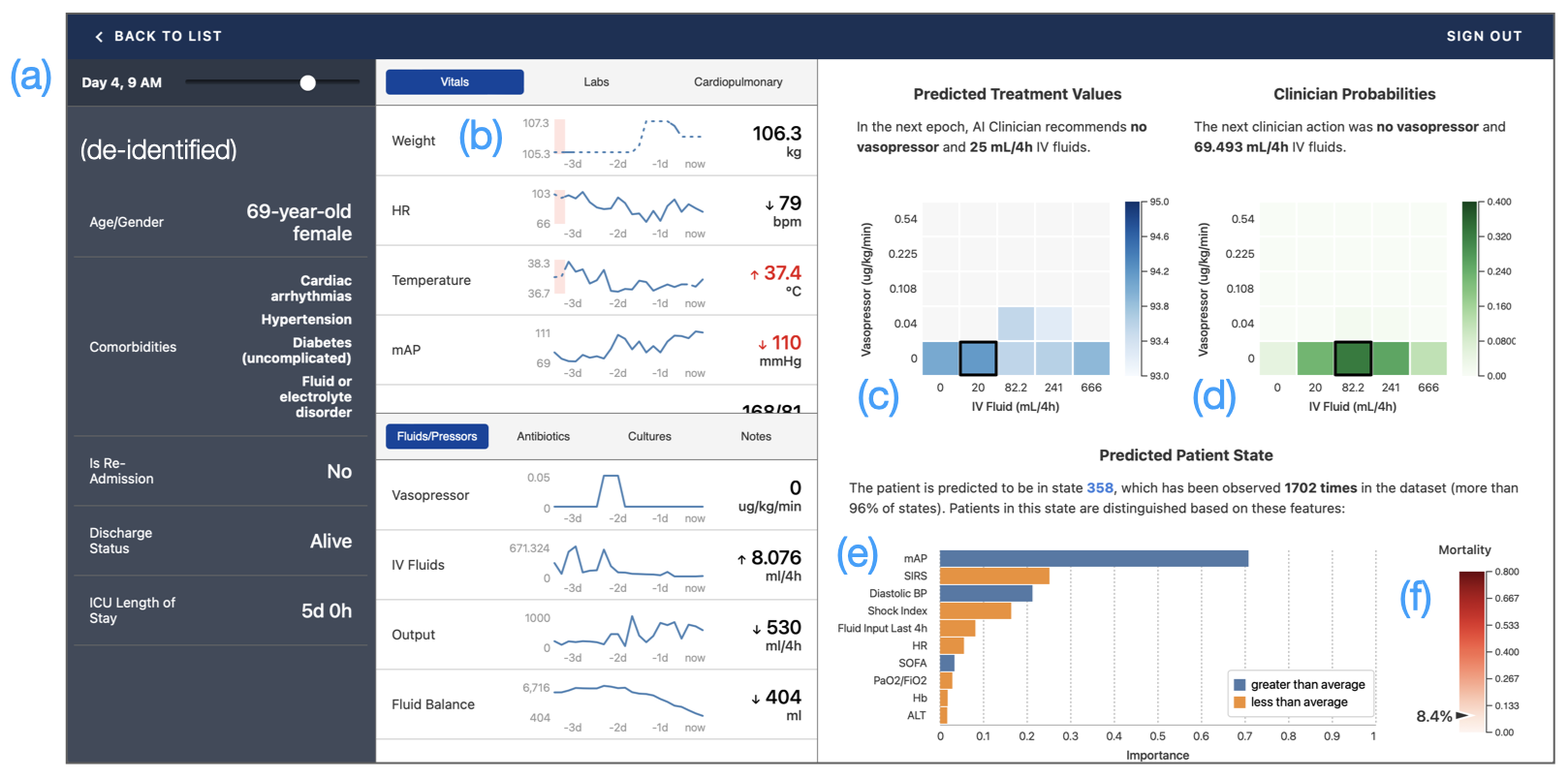
Artificial intelligence (AI) in healthcare has the potential to improve patient outcomes, but clinician acceptance remains a critical barrier. We developed a novel decision support interface that provides interpretable treatment recommendations for sepsis, a life-threatening condition in which decisional uncertainty is common, treatment practices vary widely, and poor outcomes can occur even with optimal decisions. This system formed the basis of a mixed-methods study in which 24 intensive care clinicians made AI-assisted decisions on real patient cases. We found that explanations generally increased confidence in the AI, but concordance with specific recommendations varied beyond the binary acceptance or rejection described in prior work. Although clinicians sometimes ignored or trusted the AI, they also often prioritized aspects of the recommendations to follow, reject, or delay in a process we term "negotiation." These results reveal novel barriers to adoption of treatment-focused AI tools and suggest ways to better support differing clinician perspectives.
Motivation & Objective
- To understand how clinicians interact with AI-based treatment recommendations in real clinical decision-making contexts.
- To investigate whether interpretability explanations improve clinician confidence and acceptance of AI recommendations.
- To explore the dynamics of human-AI collaboration beyond binary acceptance or rejection, especially in high-uncertainty, treatment-focused scenarios.
- To identify barriers to adoption of AI tools in clinical settings where treatment guidelines are ambiguous or contested.
- To propose a framework for designing AI decision support systems that support negotiation rather than passive acceptance or rejection.
Proposed method
- Developed an interpretable AI decision support interface for sepsis treatment recommendations using the AI Clinician model, trained on real MIMIC-IV ICU data.
- Conducted a mixed-methods study with 24 intensive care clinicians making AI-assisted decisions on real patient cases.
- Used think-aloud protocols to capture real-time decision-making processes, including reasoning, trust calibration, and negotiation behaviors.
- Provided SHAP-based explanations focused on the state clustering component of the AI model to enhance transparency.
- Analyzed qualitative data using thematic analysis to identify patterns in clinician interactions with AI recommendations.
- Evaluated clinician concordance with AI recommendations and assessed the impact of explanations on confidence and decision-making.
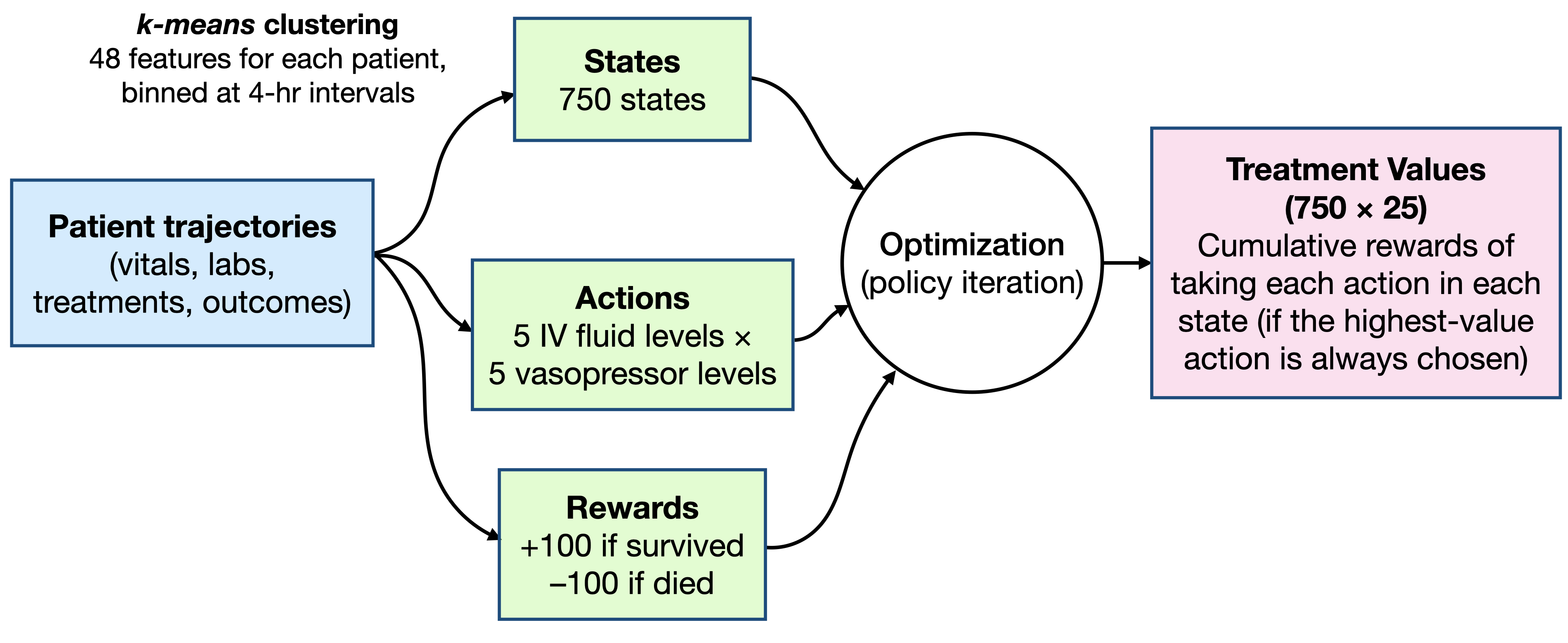
Experimental results
Research questions
- RQ1How do clinicians respond to AI-based treatment recommendations in real sepsis cases, particularly when treatment guidelines are uncertain or conflicting?
- RQ2To what extent do interpretability explanations influence clinician confidence and decision-making in AI-assisted treatment planning?
- RQ3Do clinicians primarily trust, ignore, or negotiate with AI recommendations, and what factors drive these behaviors?
- RQ4How does the presence of AI explanations affect the perceived credibility and utility of treatment recommendations?
- RQ5What are the key barriers to clinician adoption of treatment-focused AI tools in clinical practice?
Key findings
- Clinicians frequently engaged in 'negotiation' with AI recommendations, selectively adopting, rejecting, or delaying specific components rather than making binary acceptance or rejection decisions.
- Explanations significantly increased clinician confidence in the AI, but did not uniformly lead to higher concordance with recommendations.
- Even with explanations, clinicians often prioritized their own clinical judgment over AI suggestions, particularly when recommendations conflicted with established protocols or personal experience.
- The study revealed that clinicians viewed AI not as a decision-maker, but as a source of additional evidence to inform their own decisions.
- There was notable variation in how clinicians interpreted and used AI recommendations, indicating that a one-size-fits-all approach to AI design is insufficient.
- The findings suggest that treatment-focused AI tools should be designed not to replace clinicians, but to support individualized, context-sensitive decision-making through transparent, modular, and negotiable recommendations.
Read this paper
Open the full text in the Nubint reader and ask about any passage as you read.
Read this paper on NubintThis review was generated by AI from the original paper. Please check the paper before citing it.