
[Paper Review] Limits on High-Frequency Gravitational Waves in Planetary Magnetospheres
This paper proposes using planetary magnetospheres, particularly Earth's and Jupiter's, as natural laboratories to detect high-frequency gravitational waves (HFGWs) via the inverse Gertsenshtein effect, where HFGWs convert into detectable photons in strong magnetic fields. It presents the first observational limits from low-Earth-orbit satellites and Juno, demonstrating highly promising sensitivity across unexplored frequency bands due to long conversion paths and wide angular flux distribution.
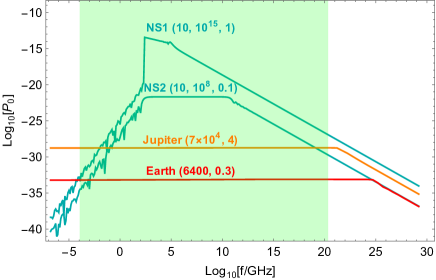
High-frequency gravitational waves (HFGWs) carry a wealth of information on the early Universe with a tiny comoving horizon and astronomical objects of small scale but with dense energy. We demonstrate that the nearby planets, such as Earth and Jupiter, can be utilized as a laboratory for detecting the HFGWs. These GWs are then expected to convert to signal photons in the planetary magnetosphere, across the frequency band of astronomical observation. As a proof of concept, we present the first limits from the existing low-Earth-orbit satellite for specific frequency bands and project the sensitivities for the future more-dedicated detections. The first limits from Juno, the latest mission orbiting Jupiter, are also presented. Attributed to the long path of effective GW-photon conversion and the wide angular distribution of signal flux, we find that these limits are highly encouraging, for a broad frequency range including a large portion unexplored before.
Motivation & Objective
- To explore novel detection strategies for high-frequency gravitational waves (HFGWs), which remain underexplored despite their cosmological and astrophysical significance.
- To address the challenge of weak gravitational coupling by leveraging the extended, strong magnetic fields of planetary magnetospheres as natural conversion media.
- To establish the feasibility of using existing and future space-based detectors in planetary orbits to set observational limits on HFGW amplitudes.
- To quantify the sensitivity of different orbital configurations—such as low-Earth orbit and high-inclination orbits—on HFGW detection performance.
- To compare the detection potential of planetary magnetospheres with terrestrial laboratory experiments, highlighting advantages in angular coverage and conversion path length.
Proposed method
- Utilizes the inverse Gertsenshtein effect, where high-frequency gravitational waves mix with photons in the presence of a transverse magnetic field, leading to GW-to-photon conversion.
- Models the GW-photon conversion probability using a mixing matrix that includes contributions from vacuum polarization (Δγ,vac) and plasma effects (Δγ,pla), with the effective mixing angle determined by the magnetic field strength and GW frequency.
- Applies the conversion probability to planetary magnetospheres, where the long path length and spatial extent of magnetic fields enhance the effective conversion rate compared to terrestrial experiments.
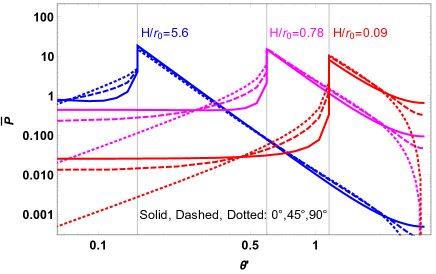
- Derives the expected photon flux at detectors using angular integration over incoming GW directions, accounting for the geometric and magnetic field structure of the planetary environment.
- Projects sensitivity limits by comparing the expected signal rate to observed event rates in existing missions like Juno and low-Earth-orbit satellites, using a statistical upper limit framework.
- Recasts limits from laboratory axion experiments (e.g., CAST, ALPS I, OSQAR II) to constrain HFGWs, adjusting for geometric suppression and angular distribution effects in cylindrical magnetic traps.
Experimental results
Research questions
- RQ1Can planetary magnetospheres serve as effective natural laboratories for detecting high-frequency gravitational waves through GW-photon conversion?
- RQ2What are the detectable frequency bands and sensitivity limits achievable using existing satellite missions like Juno and low-Earth-orbit platforms?
- RQ3How does the long path length and wide angular distribution of magnetic fields in planetary magnetospheres improve HFGW detection sensitivity compared to terrestrial experiments?
- RQ4What is the impact of orbital geometry—such as high-inclination versus low-Earth orbits—on the effective detection time and sensitivity for HFGW signals?
- RQ5How do the constraints from laboratory experiments (e.g., CAST, ALPS I) compare to those derived from planetary magnetospheres when recast for HFGW detection?
Key findings
- The first observational limits on high-frequency gravitational waves are established using data from low-Earth-orbit satellites, with a 95% confidence upper limit of $ h_{c,95\%} \sim 8 \times 10^{-26} $ for the CAST experiment when recast for HFGW constraints.
- Limits from the Juno mission orbiting Jupiter are presented for the first time, demonstrating the feasibility of using planetary missions as HFGW detectors.
- The SAFIR 2-like high-inclination orbit shows better sensitivity than low-inclination orbits due to enhanced conversion probability in high-latitude regions, despite shorter dark-orbit durations.
- The effective conversion path in planetary magnetospheres is significantly longer than in terrestrial experiments, leading to a substantial increase in signal flux and improved sensitivity across a broad frequency range.
- The wide angular distribution of signal flux in planetary magnetospheres enables detection over a broad range of directions, overcoming the directional limitations of laboratory-based cylindrical magnetic traps.
- The study shows that geometric suppression in laboratory experiments (e.g., $ \sim \ln(1/\theta_p) $) can be mitigated in planetary environments, where extended magnetic fields lead to more isotropic and stronger effective signals.
Read this paper
Open the full text in the Nubint reader and ask about any passage as you read.
Read this paper on NubintThis review was generated by AI from the original paper. Please check the paper before citing it.