
[Paper Review] Lo-Hi: Practical ML Drug Discovery Benchmark
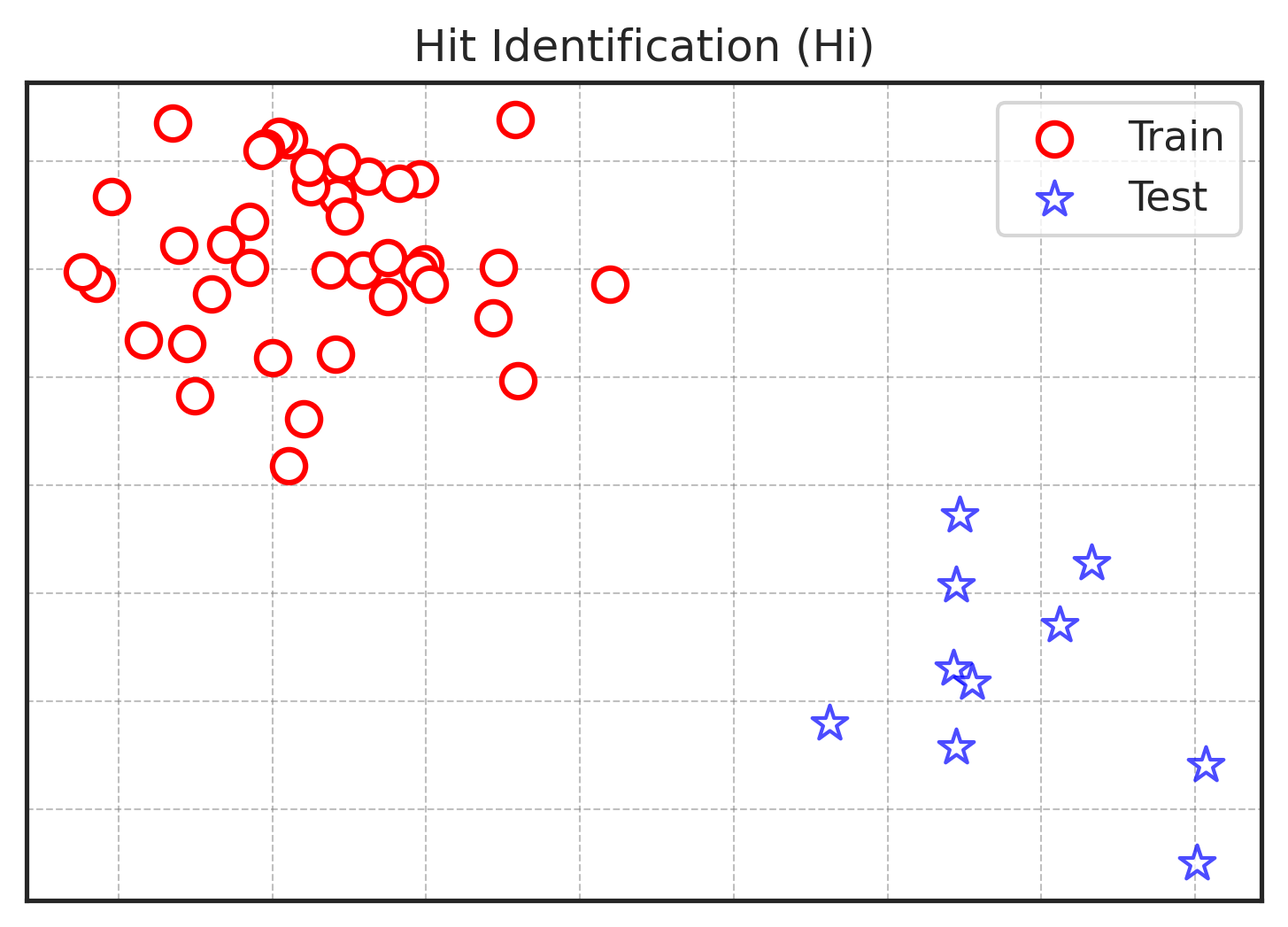
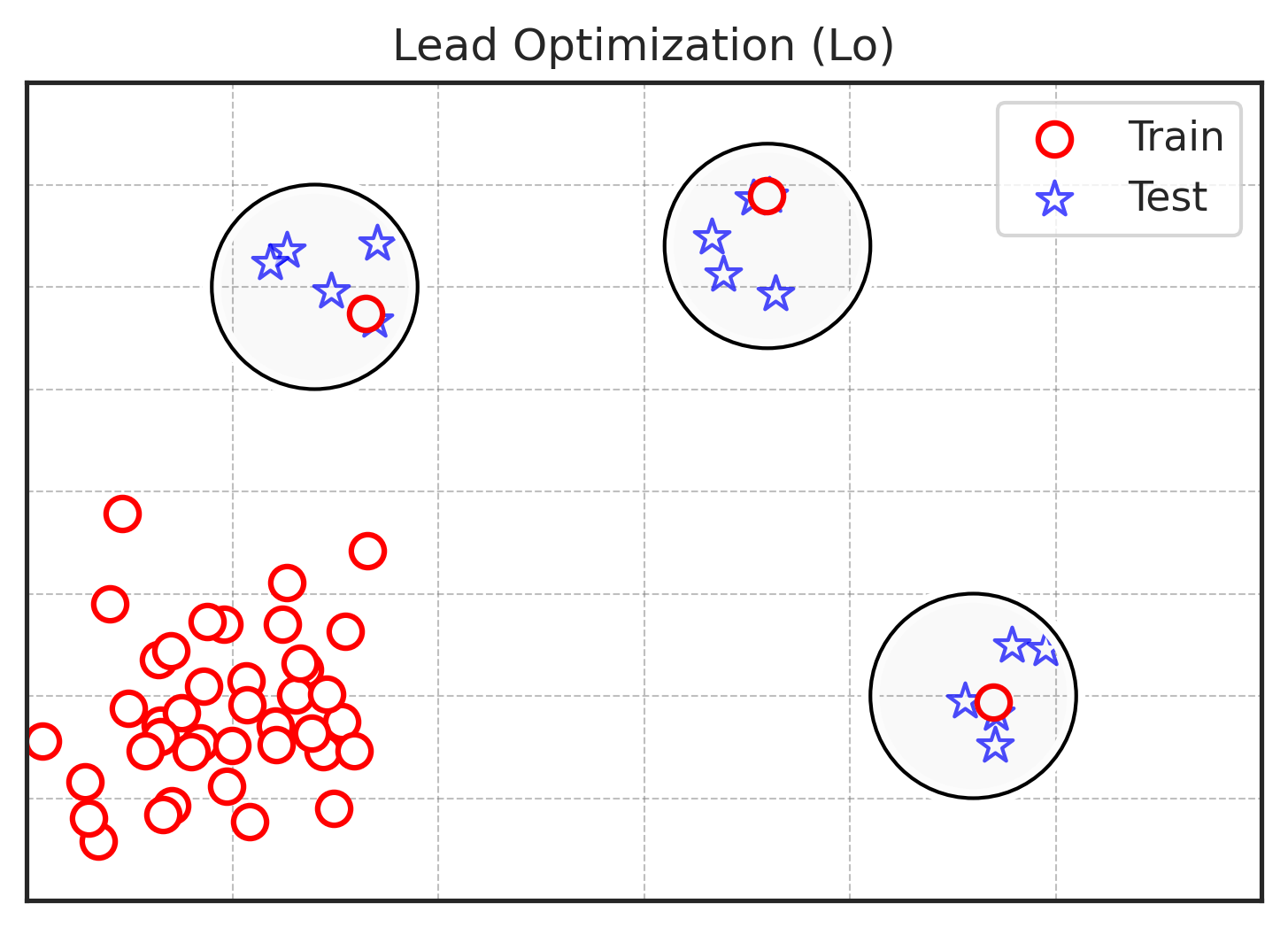
This paper introduces Lo-Hi, a practical machine learning benchmark for drug discovery that separates two distinct real-world tasks: Hit Identification (Hi), focusing on predicting properties of novel, structurally distinct molecules, and Lead Optimization (Lo), targeting minor structural modifications of known active compounds. The authors propose a novel molecular splitting algorithm based on the Balanced Vertex Minimum $k$-Cut problem to create realistic, non-overlapping datasets, revealing that models perform significantly differently on these tasks, with Chemprop outperforming others in Hi and SVM with ECFP4 excelling in Lo.
Finding new drugs is getting harder and harder. One of the hopes of drug discovery is to use machine learning models to predict molecular properties. That is why models for molecular property prediction are being developed and tested on benchmarks such as MoleculeNet. However, existing benchmarks are unrealistic and are too different from applying the models in practice. We have created a new practical \emph{Lo-Hi} benchmark consisting of two tasks: Lead Optimization (Lo) and Hit Identification (Hi), corresponding to the real drug discovery process. For the Hi task, we designed a novel molecular splitting algorithm that solves the Balanced Vertex Minimum $k$-Cut problem. We tested state-of-the-art and classic ML models, revealing which works better under practical settings. We analyzed modern benchmarks and showed that they are unrealistic and overoptimistic. Review: https://openreview.net/forum?id=H2Yb28qGLV Lo-Hi benchmark: https://github.com/SteshinSS/lohi_neurips2023 Lo-Hi splitter library: https://github.com/SteshinSS/lohi_splitter
Motivation & Objective
- To address the gap in existing benchmarks by creating a realistic evaluation framework for molecular property prediction in actual drug discovery workflows.
- To identify why current benchmarks like MoleculeNet are overly optimistic and fail to reflect real-world challenges in drug discovery.
- To develop a new dataset splitting method that ensures molecular novelty and non-overlap, simulating practical screening conditions.
- To evaluate state-of-the-art and classical ML models under realistic Hi and Lo scenarios to determine which architectures are best suited for each task.
- To demonstrate that model performance varies significantly depending on the task context, challenging the assumption that high benchmark scores imply real-world utility.
Proposed method
- Proposed a new benchmark framework with two distinct tasks: Hit Identification (Hi) and Lead Optimization (Lo), reflecting real drug discovery stages.
- Designed a novel molecular splitter based on Integer Linear Programming to solve the Balanced Vertex Minimum $k$-Cut problem, ensuring non-overlapping, diverse, and realistic training and test sets.
- Created seven new practical datasets for Hi and Lo tasks using real molecular data, with careful filtering to preserve novelty and structural diversity.
- Evaluated a range of models including XGBoost, SVM, MLP, Chemprop, and Graphormer on both tasks using standardized metrics such as AUC-PR and Spearman correlation.
- Applied hyperparameter tuning via random search and early stopping, with model selection based on validation performance to avoid data leakage.
- Used a cluster-based evaluation for Lo tasks, computing Spearman correlation within molecular clusters and averaging across clusters to reflect real-world optimization contexts.
Experimental results
Research questions
- RQ1How do state-of-the-art and classical ML models perform when evaluated under realistic drug discovery conditions, particularly in distinguishing novel molecules from known actives?
- RQ2To what extent do existing benchmarks like MoleculeNet overestimate model performance due to unrealistic data splits and task formulations?
- RQ3Which machine learning architectures are best suited for Hit Identification versus Lead Optimization, given their differing requirements for generalization and sensitivity to minor structural changes?
- RQ4Can a novel molecular splitting algorithm based on the Balanced Vertex Minimum $k$-Cut problem produce more realistic and practical benchmark datasets than standard random or scaffold splits?
- RQ5How does model performance vary when evaluated under cluster-based Spearman correlation (for Lo) versus standard AUC-PR (for Hi), and what does this imply for model selection in practice?
Key findings
- The Lo-Hi benchmark reveals that models optimized for MoleculeNet-style benchmarks often fail to generalize to truly novel molecules in Hit Identification, indicating that current benchmarks are overly optimistic.
- Chemprop consistently outperformed other models on the Hi task, achieving the highest AUC-PR across multiple datasets, including 0.92 on HIV-Hi and 0.88 on DRD2-Hi.
- For the Lo task, SVM with ECFP4 features achieved the best average Spearman correlation (0.78 on KDR-Lo), significantly outperforming deep learning models like Graphormer and Chemprop.
- The novel molecular splitter based on the Balanced Vertex Minimum $k$-Cut problem successfully generated non-overlapping, diverse datasets that better reflect real-world screening conditions.
- Graphormer showed poor performance and significant technical challenges, including dependency issues and slow training, limiting its practicality despite its architectural sophistication.
- The study demonstrates that model selection must be task-specific: Hi requires models with strong generalization to novel structures, while Lo demands high sensitivity to minor chemical modifications.
Read this paper
Open the full text in the Nubint reader and ask about any passage as you read.
Read this paper on NubintThis review was generated by AI from the original paper. Please check the paper before citing it.