
[논문 리뷰] Machine Learning Approaches in Agile Manufacturing with Recycled Materials for Sustainability
이 논문은 인공신경망(ANN), 랜덤 포레스트(RF), 그리고 컨volution 신경망(CNN)을 활용하여 재활용 및 재생된 재료를 사용한 유연하고 지속 가능한 제조를 위한 기계학습 기반 의사결정 지원 시스템을 제안한다. 이 시스템은 미세구조 및 기계적 성질을 최대 90%의 정확도로 예측할 수 있으며, 실험실 실험에 의존하는 것을 줄이고 데이터 기반 최적화를 통해 녹색 제조를 촉진한다.
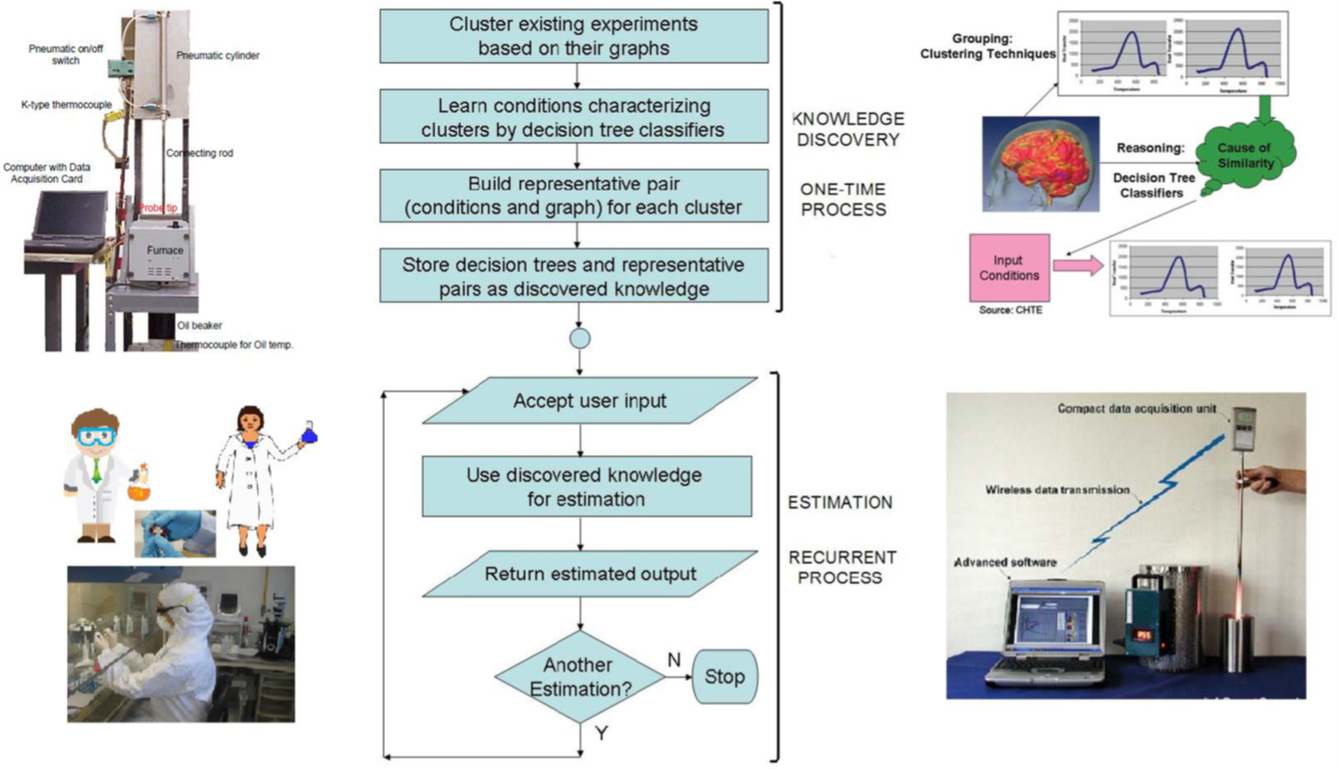
It is important to develop sustainable processes in materials science and manufacturing that are environmentally friendly. AI can play a significant role in decision support here as evident from our earlier research leading to tools developed using our proposed machine learning based approaches. Such tools served the purpose of computational estimation and expert systems. This research addresses environmental sustainability in materials science via decision support in agile manufacturing using recycled and reclaimed materials. It is a safe and responsible way to turn a specific waste stream to value-added products. We propose to use data-driven methods in AI by applying machine learning models for predictive analysis to guide decision support in manufacturing. This includes harnessing artificial neural networks to study parameters affecting heat treatment of materials and impacts on their properties; deep learning via advances such as convolutional neural networks to explore grain size detection; and other classifiers such as Random Forests to analyze phrase fraction detection. Results with all these methods seem promising to embark on further work, e.g. ANN yields accuracy around 90\% for predicting micro-structure development as per quench tempering, a heat treatment process. Future work entails several challenges: investigating various computer vision models (VGG, ResNet etc.) to find optimal accuracy, efficiency and robustness adequate for sustainable processes; creating domain-specific tools using machine learning for decision support in agile manufacturing; and assessing impacts on sustainability with metrics incorporating the appropriate use of recycled materials as well as the effectiveness of developed products. Our work makes impacts on green technology for smart manufacturing, and is motivated by related work in the highly interesting realm of AI for materials science.
연구 동기 및 목표
- 재활용 및 재생된 재료를 사용한 지속 가능한 민첩성 제조를 위한 AI 기반 의사결정 지원 도구 개발.
- 데이터 기반 예측 모델링을 통해 시간이 많이 소요되고 비싼 실험에 의존하는 것을 줄이기.
- 특히 방위 분야에서 폐기 금속 유량을 가치 있는 제품으로 전환함으로써 환경 지속 가능성 향상.
- 조성 및 가공 조건 기반으로 물질 성질을 신속하고 정확하게 예측함으로써 제조 민첩성 향상.
- 재활용 재료 사용 및 제품 효과성 기반으로 지속 가능성 영향을 평가하기 위한 지표 수립.
제안 방법
- 쿼칭 템퍼링 중 미세구조 발달을 예측하기 위해 인공신경망(ANN)을 활용하여 약 90%의 정확도를 달성.
- 미세구조 영상에서 입자 크기 탐지에 컨volution 신경망(CNN)을 적용하여 자동 분석 가능.
- 구절 분율 탐지에 랜덤 포레스트(RF)를 활용하여 높은 정확도와 해석 가능성 제공, 설명 가능한 AI 지원.
- 데이터 마이닝 및 기계학습 기법을 통합한 프레임워크를 구축하여 계산 기반 추정 및 공정 최적화 수행.
- 실제 실험 데이터를 활용해 모델를 훈련 및 검증하여 실용적 관련성 확보.
- 정확도, 효율성, 내구성 향상을 위해 VGG 및 ResNet과 같은 고급 컴퓨터 비전 모델의 잠재적 활용 탐색.
실험 결과
연구 질문
- RQ1기계학습 모델은 재활용 스틸 합금의 열처리 중 미세구조 변화를 얼마나 정확하게 예측할 수 있는가?
- RQ2ANN, RF, CNN 등 다양한 기계학습 모델은 입력 파rameter 기반으로 기계적 성질 및 미세구조 특징을 예측하는 데 어떤 성능을 보이는가?
- RQ3데이터 기반 모델은 재활용 재료를 사용한 민첩성 제조에서 고비용 및 고시간 소모 실험 시도를 줄일 수 있는가?
- RQ4VGG 및 ResNet과 같은 컴퓨터 비전 모델은 지속 가능한 제조에서 미세구조 분석의 정확도 및 내구성을 어떻게 향상시킬 수 있는가?
- RQ5재활용 재료 사용이 민첩성 제조 공정에 미치는 지속 가능성 영향을 정량화하기 위해 가장 효과적인 지표는 무엇인가?
주요 결과
- 인공신경망(ANN)은 쿼칭 템퍼링과 같은 핵심 열처리 공정 중 미세구조 발달을 약 90%의 정확도로 예측.
- 컨volution 신경망(CNN)은 입자 크기 탐지에서 뛰어난 성능을 보이며, 자동화되고 확장 가능한 영상 기반 분석 가능.
- 랜덤 포레스트(RF)는 높은 정확도와 해석 가능성 향상으로 기계적 성질 예측에서 설명 가능한 AI 지원.
- 분야 지식을 기계학습 모델에 통합함으로써 예측 결과의 관련성과 신뢰성 향상.
- 초기 결과에 따르면 기계학습 도구는 실험실 실험 비용과 시간을 크게 줄일 수 있으며, 지속 가능한 제조 목표 달성에 기여.
- 향후 VGG 및 ResNet과 같은 고급 모델 탐색을 통해 정확도 및 내구성 향상이 기대됨.
더 나은 연구,지금 바로 시작하세요
논문 읽기부터 검토까지, 연구 시간을 획기적으로 줄여보세요.
카드 등록 없음 · 무료 플랜 제공
이 리뷰는 AI가 만들고, 인간 에디터가 검토했습니다.