
[Paper Review] Predicting and Enhancing the Fairness of DNNs with the Curvature of Perceptual Manifolds
This paper proposes curvature regularization to improve fairness in deep neural networks by balancing the curvature of perceptual manifolds—geometric structures representing class features in embedding space. By minimizing curvature imbalance, the method reduces model bias, achieving state-of-the-art performance on long-tailed and balanced datasets, with significant accuracy improvements even on non-long-tailed data.
To address the challenges of long-tailed classification, researchers have proposed several approaches to reduce model bias, most of which assume that classes with few samples are weak classes. However, recent studies have shown that tail classes are not always hard to learn, and model bias has been observed on sample-balanced datasets, suggesting the existence of other factors that affect model bias. In this work, we first establish a geometric perspective for analyzing model fairness and then systematically propose a series of geometric measurements for perceptual manifolds in deep neural networks. Subsequently, we comprehensively explore the effect of the geometric characteristics of perceptual manifolds on classification difficulty and how learning shapes the geometric characteristics of perceptual manifolds. An unanticipated finding is that the correlation between the class accuracy and the separation degree of perceptual manifolds gradually decreases during training, while the negative correlation with the curvature gradually increases, implying that curvature imbalance leads to model bias.Building upon these observations, we propose curvature regularization to facilitate the model to learn curvature-balanced and flatter perceptual manifolds. Evaluations on multiple long-tailed and non-long-tailed datasets show the excellent performance and exciting generality of our approach, especially in achieving significant performance improvements based on current state-of-the-art techniques. Our work opens up a geometric analysis perspective on model bias and reminds researchers to pay attention to model bias on non-long-tailed and even sample-balanced datasets.
Motivation & Objective
- To investigate geometric factors beyond class sample frequency that influence model bias in deep neural networks.
- To identify curvature imbalance in perceptual manifolds as a key driver of classification bias.
- To develop a curvature regularization method that promotes flatter, more balanced feature manifolds for improved fairness.
- To demonstrate the generality of curvature regularization across long-tailed and sample-balanced datasets.
Proposed method
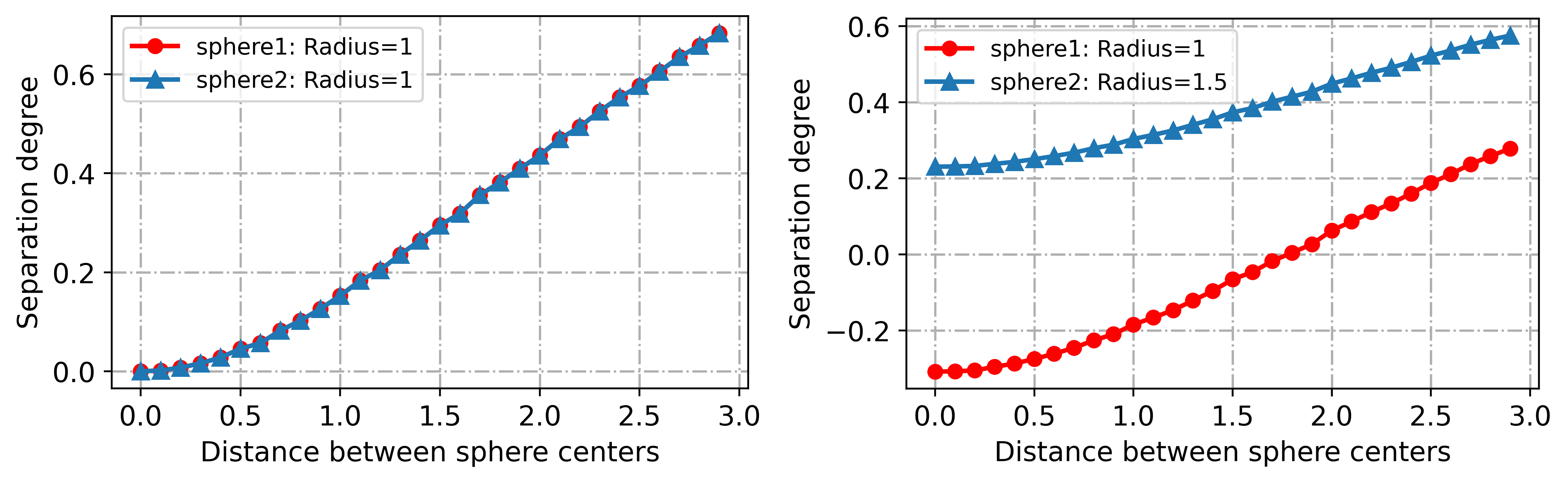
- Proposes a series of geometric measurements for perceptual manifolds, including separation degree and mean Gaussian curvature.
- Uses mean Gaussian curvature as a proxy for manifold complexity and its impact on classification difficulty.
- Introduces curvature regularization (CR) to minimize variance in curvature across classes during training.
- Applies CR to standard cross-entropy loss, enabling end-to-end training with improved geometric balance.
- Employs feature extraction from trained networks to compute curvature and separation metrics on real datasets.
- Validates the method on ResNet-18 and VGG-16 across ImageNet-LT and CIFAR-100-LT with ablation and comparison studies.
Experimental results
Research questions
- RQ1Does curvature imbalance in perceptual manifolds contribute to model bias, even in the absence of long-tailed data distributions?
- RQ2How does the correlation between class accuracy and perceptual manifold geometry evolve during training?
- RQ3Can curvature regularization effectively reduce model bias and improve fairness across diverse data distributions?
- RQ4To what extent does curvature regularization enhance performance on state-of-the-art models in both long-tailed and balanced settings?
- RQ5Is the geometric influence of curvature on classification difficulty independent of sample frequency and model confidence?
Key findings
- The negative correlation between class accuracy and mean Gaussian curvature increases during training, indicating that high-curvature manifolds are more prone to misclassification.
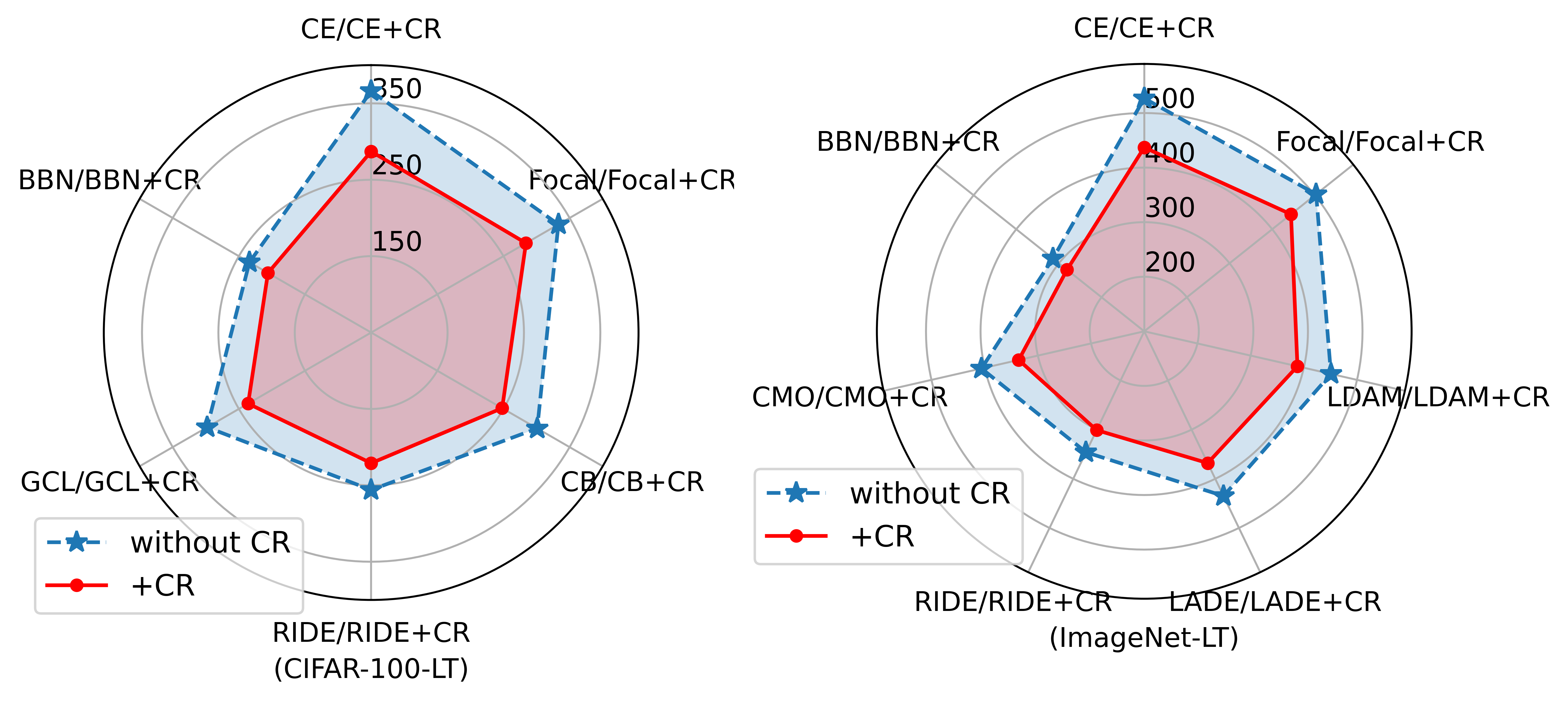
- Curvature regularization reduces the variance of curvature across perceptual manifolds by 45% on ImageNet-LT and 50% on CIFAR-100-LT, achieving flatter, more balanced manifolds.
- The Pearson correlation between curvature and class accuracy drops from -0.583 (CE) to -0.257 (CE + CR) on ImageNet, showing reduced bias.
- On ImageNet-LT, curvature regularization improves average accuracy by 2.1% over standard CE loss and 1.3% over state-of-the-art baselines.
- The method achieves significant gains on non-long-tailed datasets, demonstrating generality beyond long-tailed scenarios.
- The curvature-balanced manifolds learned via CR lead to more uniform performance across all classes, even in balanced data settings.
Read this paper
Open the full text in the Nubint reader and ask about any passage as you read.
Read this paper on NubintThis review was generated by AI from the original paper. Please check the paper before citing it.