
[Paper Review] Production of Alternate Realizations of DESI Fiber Assignment for Unbiased Clustering Measurement in Data and Simulations
This paper presents the Alternate Merged Target Ledgers (AMTL) method to generate multiple realistic DESI target realizations, enabling Pairwise Inverse Probability (PIP) weighting to correct small-scale clustering incompleteness in DESI data and mocks. It demonstrates validation on DESI SV3 and Year 1 data and mocks using AMTL with real observing conditions.
A critical requirement of spectroscopic large scale structure analyses is correcting for selection of which galaxies to observe from an isotropic target list. This selection is often limited by the hardware used to perform the survey which will impose angular constraints of simultaneously observable targets, requiring multiple passes to observe all of them. In SDSS this manifested solely as the collision of physical fibers and plugs placed in plates. In DESI, there is the additional constraint of the robotic positioner which controls each fiber being limited to a finite patrol radius. A number of approximate methods have previously been proposed to correct the galaxy clustering statistics for these effects, but these generally fail on small scales. To accurately correct the clustering we need to upweight pairs of galaxies based on the inverse probability that those pairs would be observed (Bianchi & Percival 2017). This paper details an implementation of that method to correct the Dark Energy Spectroscopic Instrument (DESI) survey for incompleteness. To calculate the required probabilities, we need a set of alternate realizations of DESI where we vary the relative priority of otherwise identical targets. These realizations take the form of alternate Merged Target Ledgers (AMTL), the files that link DESI observations and targets. We present the method used to generate these alternate realizations and how they are tracked forward in time using the real observational record and hardware status, propagating the survey as though the alternate orderings had been adopted. We detail the first applications of this method to the DESI One-Percent Survey (SV3) and the DESI year 1 data. We include evaluations of the pipeline outputs, estimation of survey completeness from this and other methods, and validation of the method using mock galaxy catalogs.
Motivation & Objective
- Motivate accurate correction of fiber assignment incompleteness for DESI clustering analyses, especially on small scales.
- Develop a practical Monte Carlo approach (AMTL) to estimate observation probabilities for target pairs.
- Integrate AMTL with existing PIP and angular upweighting to produce unbiased two-point statistics.
- Validate the method with DESI SV3/Y1 data and AbacusSummit mocks, assessing completeness and zero-probability issues.
Proposed method
- Introduce Alternate Merged Target Ledgers (AMTL) to estimate pairwise observation probabilities via nearly-maximal Monte Carlo realizations.
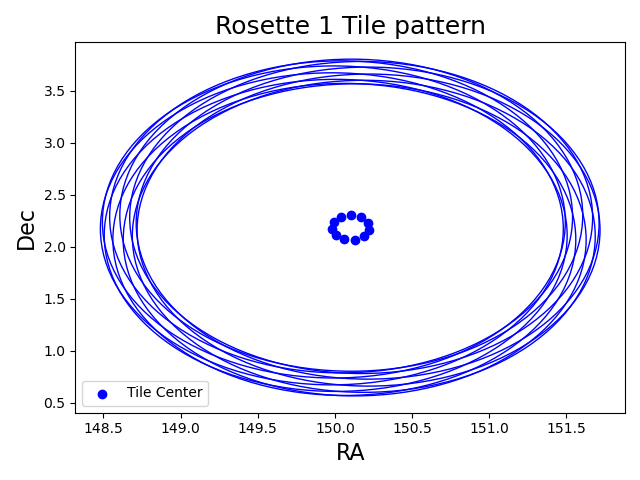
- Randomize subpriority in MTLs and apply BGS/ELG promotions to create alternate priority realizations.
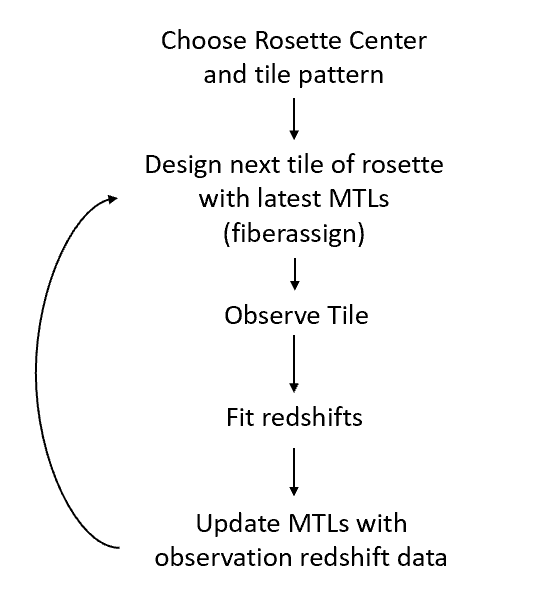
- Run an observation loop that mirrors the real DESI pipeline, mapping alternate observations to actual fiber assignments and incorporating real hardware status.
- Compute PIP weights (with angular upweighting PB17) using AMTL realizations to recover clustering down to <=0.1 Mpc/h in mocks and data.
- Output includes N realizations of AMTLs (128 for SV3, 128–256 for mocks) and bitweight files encoding observation frequencies for each TARGETID.
- Validate via mocks built from AbacusSummit and compare clustering measurements to demonstrate unbiased small-scale corrections.
Experimental results
Research questions
- RQ1Can AMTL-based PIP weights recover unbiased small-scale clustering in DESI data and mocks?
- RQ2What is the impact of using alternate target realizations on completeness estimates and zero-probability pairs?
- RQ3How do AMTL-generated weights compare to previous incompleteness correction methods in DESI analyses?
- RQ4Can the AMTL approach be integrated with existing angular upweighting to mitigate zero-probability issues?
- RQ5What are the practical computational requirements and validation outcomes for SV3 and Year 1 data?
Key findings
- AMTL enables nearly unbiased pairwise weights by Monte Carlo estimation of observation probabilities across realizations.
- In SV3, zero-probability pairs are negligible for QSOs and BGS_BRIGHT, with small fractions for LRGs and ELGs; in Y1, zero-probability fractions remain nonzero but manageable.
- AMTL integrates with BP17 PIP weighting and PB17 angular upweighting to correct for incompleteness across scales down to 0.1 Mpc/h in mocks and data.
- The observation loop realistically propagates alternate observations using actual hardware status and tile sequencing, improving fidelity of completeness modeling.
- AMTL outputs include 128 realizations and bitweight files mapping observation frequency, enabling seamless incorporation into LSS pipelines.
Read this paper
Open the full text in the Nubint reader and ask about any passage as you read.
Read this paper on NubintThis review was generated by AI from the original paper. Please check the paper before citing it.