
[Paper Review] Q-ball-like solitons on the M2-brane with worldvolume fluxes
This paper presents the first analytic construction of Q-ball-like solitons on an M2-brane compactified on $M_9 \times T^2$ with worldvolume fluxes, using light-cone gauge and flux-induced topological terms. It derives two families of dispersion-free and dispersive solutions in isotropic and anisotropic cases, revealing a novel interaction between Q-ball Noether charge and topological monopole charge, suggesting a new class of Q-monopole-ball solitons with potential enhanced stability.
In this paper we obtain a family of analytic solutions to the nonlinear partial differential equations that describe the dynamics of the bosonic part of the mass operator of a M2-brane compactified on $M_9 imes T^2$ in the LCG with worldvolume fluxes. Those fluxes can be induced by a constant and quantized supergravity 3-form. This sector of the theory, at supersymmetric level, has the interesting property of having a discrete spectrum. We have focused on the characterization of Q-ball-like (QBL) solitons on the M2-brane with worldvolume fluxes. Two scenarios are analysed: one in which the system is isotropic and the other anisotropic. In the isotropic case, we obtain analytic families of string-like solutions to the membrane equations of motion in the presence of a non-vanishing symplectic gauge field that satisfy all constraints. We explicitly show a localised family of QBL solutions. It is demonstrated that although the solutions generally exhibit dispersion, they also allow for dispersion-free solutions. In the non-isotropic case, we obtain full-fledged membrane QBL solutions by numerical methods. We characterize some other properties of the solutions found. The dynamics of the QBL solutions are also encountered. We analyze the Lorentz boosts and Galilean transformations. Since we work in the Light Cone Gauge, the Lorentz transformed solutions are not automatically solutions, rather some extra conditions must be imposed. Only a subset of the solutions remain. We discuss some examples. The QBL solitons of the M2-brane that have been discovered contain an interaction term between the Noether charge of the Q-ball and the topological monopole charge associated with the worldvolume flux. The monopole charge increases the stability of the analytic solutions against fission...
Motivation & Objective
- To construct exact analytic solutions for Q-ball-like solitons on the M2-brane in the presence of worldvolume fluxes.
- To investigate the role of symplectic gauge fields and flux-induced topological terms in stabilizing solitonic configurations.
- To explore the existence and properties of Q-ball solutions in both isotropic and anisotropic geometric settings.
- To analyze the interplay between the Noether charge (Q-ball) and the topological monopole charge (flux-induced) in the M2-brane mass spectrum.
- To examine the dynamics under Lorentz and Galilean transformations, identifying constraints on solution invariance.
Proposed method
- Formulating the M2-brane dynamics in the light-cone gauge (LCG) with a compact $T^2$ internal space and constant quantized 3-form flux.
- Solving the nonlinear equations of motion and constraints, including the area-preserving first-class constraint and flux-induced central charge condition.
- Employing an ansatz for the scalar fields to reduce the PDEs to a system of nonlinear ODEs, solvable analytically in the isotropic case.
- Applying finite-difference schemes to discretize the eigenvalue problem and solve the resulting nonlinear algebraic systems numerically in the isotropic case.
- Using a shooting method with finite-difference gradient approximations to numerically solve the non-isotropic case with non-vanishing $A_r$ gauge field.
- Analyzing Lorentz and Galilean transformations by imposing consistency conditions on the transformed solutions to preserve equations of motion.
Experimental results
Research questions
- RQ1Can analytic Q-ball-like solitons be constructed on the M2-brane with worldvolume fluxes in the light-cone gauge?
- RQ2How do flux-induced topological terms and symplectic gauge fields affect the dispersion and stability of Q-ball solutions?
- RQ3What is the nature of the interaction between the Q-ball Noether charge and the topological monopole charge arising from worldvolume fluxes?
- RQ4Do Q-ball solutions persist in anisotropic geometries, and can they be numerically approximated under such conditions?
- RQ5How do Lorentz and Galilean transformations constrain the set of valid Q-ball solutions in this framework?
Key findings
- Two analytic families of Q-ball-like solutions are derived in the isotropic case, with and without a non-vanishing symplectic gauge field, satisfying all constraints including the flux-induced central charge condition.
- Solutions exhibit generic dispersion, but dispersion-free solutions exist under specific frequency and flux conditions, indicating a restricted class of stable configurations.
- The solutions admit linear superposition only for a discrete, restricted set of frequencies, implying quantized excitation modes.
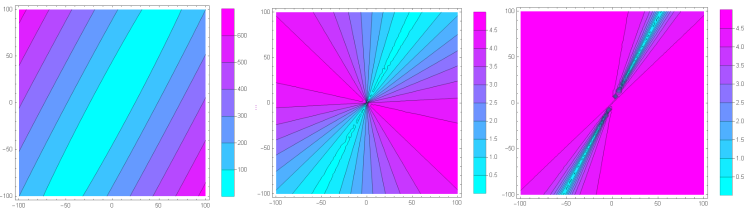
- Numerical solutions confirm the existence of Q-ball configurations in the non-isotropic case, even with simple background fluxes, using finite-difference and shooting methods with low approximation errors.
- The M2-brane mass operator contains a novel interaction term between the Q-ball Noether charge and the flux-induced topological monopole charge, modifying the standard $E \sim \omega Q$ relation.
- Lorentz and Galilean transformations do not preserve solutions automatically; only a subset of solutions satisfies the transformed equations, with Galilean boosts further restricting allowed solutions to those preserving the Q-ball shape (breathing modes only).
Read this paper
Open the full text in the Nubint reader and ask about any passage as you read.
Read this paper on NubintThis review was generated by AI from the original paper. Please check the paper before citing it.