
[Paper Review] Securing the Future of GenAI: Policy and Technology
This paper summarizes a workshop connecting GenAI policy with technology, detailing regulatory landscapes, risk management, and technical approaches to alignment, inspection, and provenance.
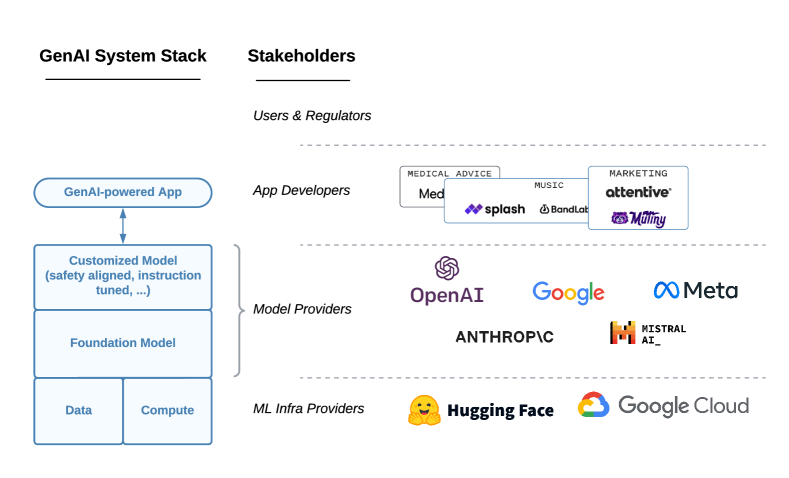
The rise of Generative AI (GenAI) brings about transformative potential across sectors, but its dual-use nature also amplifies risks. Governments globally are grappling with the challenge of regulating GenAI, balancing innovation against safety. China, the United States (US), and the European Union (EU) are at the forefront with initiatives like the Management of Algorithmic Recommendations, the Executive Order, and the AI Act, respectively. However, the rapid evolution of GenAI capabilities often outpaces the development of comprehensive safety measures, creating a gap between regulatory needs and technical advancements. A workshop co-organized by Google, University of Wisconsin, Madison (UW-Madison), and Stanford University aimed to bridge this gap between GenAI policy and technology. The diverse stakeholders of the GenAI space -- from the public and governments to academia and industry -- make any safety measures under consideration more complex, as both technical feasibility and regulatory guidance must be realized. This paper summarizes the discussions during the workshop which addressed questions, such as: How regulation can be designed without hindering technological progress? How technology can evolve to meet regulatory standards? The interplay between legislation and technology is a very vast topic, and we don't claim that this paper is a comprehensive treatment on this topic. This paper is meant to capture findings based on the workshop, and hopefully, can guide discussion on this topic.
Motivation & Objective
- Map the international regulatory landscape for GenAI (EU, US, China) and multilateral bodies.
- Identify gaps between regulatory requirements and current GenAI technical capabilities.
- Explore how policy can guide technical evolution without stifling innovation.
- Assess technical methods for GenAI safety, including alignment, inspection, and provenance.
- Propose future directions for regulators and technologists to collaborate on safe GenAI deployment.
Proposed method
- Synthesize regulatory policy discussions from EU, US, and China, plus multilateral governance efforts like the G7 and UN frameworks.
- Discuss technical approaches to GenAI safety, including model alignment, model inspection, and output provenance/watermarking.
- Incorporate lessons from military risk management for human-centered risk mitigation and governance.
- Analyze limitations of current alignment techniques and the need for standardized evaluation and red-teaming benchmarks.
- Outline a roadmap highlighting gaps between regulatory aims and technological capabilities and propose future directions.
Experimental results
Research questions
- RQ1What policy questions are most important for GenAI governance?
- RQ2What are the limits of GenAI safety alignment and is achieving perfect alignment feasible?
- RQ3What are the limits of detecting whether content is GenAI-generated?
- RQ4How can regulation be designed to guide technical evolution without hindering innovation?
- RQ5How should technology be developed to meet regulatory standards?
Key findings
- Regulatory approaches differ across the EU, US, and China, reflecting distinct societal and geopolitical priorities.
- Multilateral governance efforts (G7, UN, UNESCO, GPAI) are converging on safety, transparency, and responsibility in GenAI, with emphasis on collaboration and standards.
- Military risk management offers lessons on human-centered governance, qualifications, and organizational procedures for handling powerful technologies.
- Alignment faces fundamental challenges; guardrails and prompt injections have limitations, necessitating additional controls like controlled gateways and cybersecurity measures.
- There is a notable gap between regulatory requirements and current technical capabilities, requiring coordinated actions by policymakers and technologists to advance both safety and innovation.

Read this paper
Open the full text in the Nubint reader and ask about any passage as you read.
Read this paper on NubintThis review was generated by AI from the original paper. Please check the paper before citing it.