
[Paper Review] Split Ways: Privacy-Preserving Training of Encrypted Data Using Split Learning
This paper proposes a privacy-preserving machine learning framework that combines split learning with homomorphic encryption (HE) to protect client data during model training. The client encrypts activation maps using HE before sending them to the server, enabling secure computation on encrypted data—achieving only a 2.65% accuracy drop compared to plaintext training while fully preserving data privacy.
Split Learning (SL) is a new collaborative learning technique that allows participants, e.g. a client and a server, to train machine learning models without the client sharing raw data. In this setting, the client initially applies its part of the machine learning model on the raw data to generate activation maps and then sends them to the server to continue the training process. Previous works in the field demonstrated that reconstructing activation maps could result in privacy leakage of client data. In addition to that, existing mitigation techniques that overcome the privacy leakage of SL prove to be significantly worse in terms of accuracy. In this paper, we improve upon previous works by constructing a protocol based on U-shaped SL that can operate on homomorphically encrypted data. More precisely, in our approach, the client applies Homomorphic Encryption (HE) on the activation maps before sending them to the server, thus protecting user privacy. This is an important improvement that reduces privacy leakage in comparison to other SL-based works. Finally, our results show that, with the optimum set of parameters, training with HE data in the U-shaped SL setting only reduces accuracy by 2.65% compared to training on plaintext. In addition, raw training data privacy is preserved.
Motivation & Objective
- To address privacy leakage in split learning, where activation maps can be used to reconstruct raw client data.
- To integrate homomorphic encryption (HE) into split learning to protect activation maps without compromising model accuracy.
- To evaluate the trade-offs between HE parameter choices, training efficiency, and model performance in a privacy-preserving setting.
- To demonstrate that encrypted activation maps in split learning can maintain high model accuracy while ensuring data confidentiality.
- To provide a practical, secure alternative to traditional split learning for sensitive applications like medical AI.
Proposed method
- The client trains a U-shaped 1D CNN on raw data and computes activation maps before sending them to the server.
- Activation maps are encrypted using fully homomorphic encryption (FHE) on the client side prior to transmission.
- The server performs backpropagation and gradient updates on the encrypted activation maps, enabling computation without decryption.
- The model uses a U-shaped architecture to reduce communication and improve feature representation in split learning.
- Five different HE parameter sets were evaluated, varying polynomial modulus (P), coefficient modulus (C), and scaling factor (Δ), to balance accuracy, training time, and communication cost.
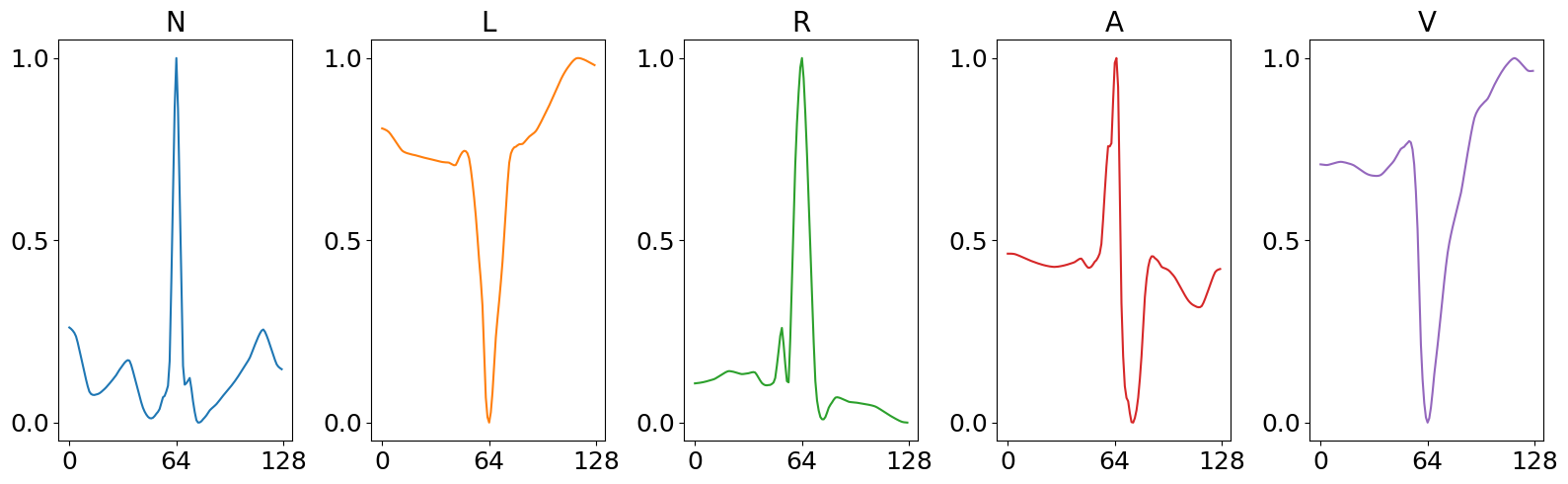
- Training and evaluation were conducted on the MIT-BIH arrhythmia dataset using plaintext and homomorphically encrypted activation maps.
Experimental results
Research questions
- RQ1Can homomorphic encryption be effectively integrated into split learning to prevent privacy leakage from activation maps?
- RQ2What is the impact of different HE parameter configurations on model accuracy, training time, and communication overhead in split learning?
- RQ3How does the accuracy of a model trained on encrypted activation maps compare to one trained on plaintext in a split learning setup?
- RQ4Does the use of HE in split learning preserve data privacy while maintaining acceptable model performance?
- RQ5Can a U-shaped 1D CNN architecture improve privacy and performance in split learning with encrypted data?
Key findings
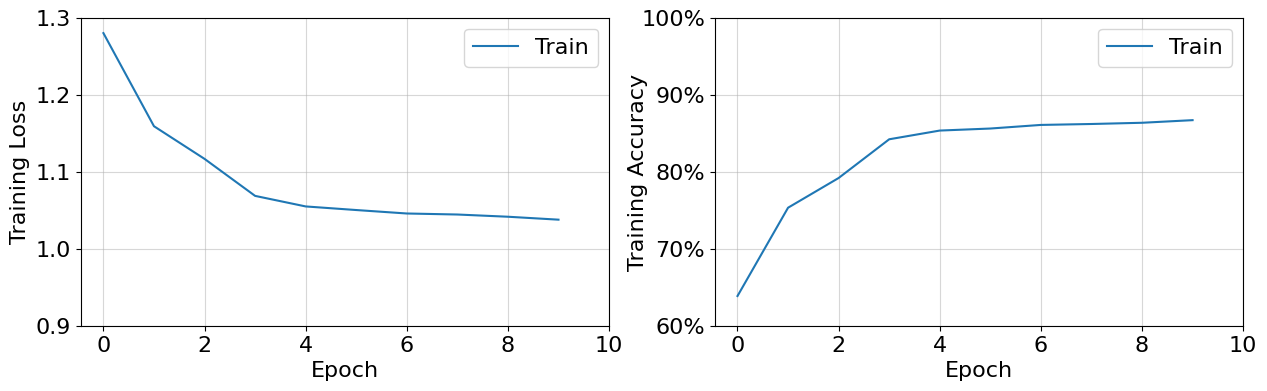
- The best HE parameter set (P=4096, C=[40,20,20], Δ=2^21) achieved a test accuracy of 85.41%, only 2.65% lower than plaintext training (88.06%).
- Training with HE parameters P=8192 achieved 85.31% accuracy but required 3.67 times longer training time and 8.43 times higher communication cost than the optimal P=4096 configuration.
- The smallest HE parameter set (P=2048, C=[18,18,18], Δ=2^16) required the least training time (5,018s) and communication (0.58 Tb), though accuracy dropped to 22.65%.
- The U-shaped split learning architecture reduced privacy leakage compared to prior work by eliminating the need to share raw inputs and labels with the server.
- Visual analysis confirmed that plaintext activation maps showed high similarity to raw input data, indicating significant privacy leakage—mitigated by encryption in the proposed method.
- The results demonstrate that HE-based split learning is viable for privacy-preserving training, with a minimal accuracy drop of 2.65% when using optimal HE parameters.
Read this paper
Open the full text in the Nubint reader and ask about any passage as you read.
Read this paper on NubintThis review was generated by AI from the original paper. Please check the paper before citing it.