
[Paper Review] Status Report on the Chicago-Carnegie Hubble Program (CCHP): Measurement of the Hubble Constant Using the Hubble and James Webb Space Telescopes
The paper reports three independent JWST-based determinations of the Hubble constant (TRGB, JAGB, Cepheids) and a combined H0, calibrated with NGC 4258, showing TRGB and JAGB agree at ~1% while Cepheids differ by 2.5–4%.
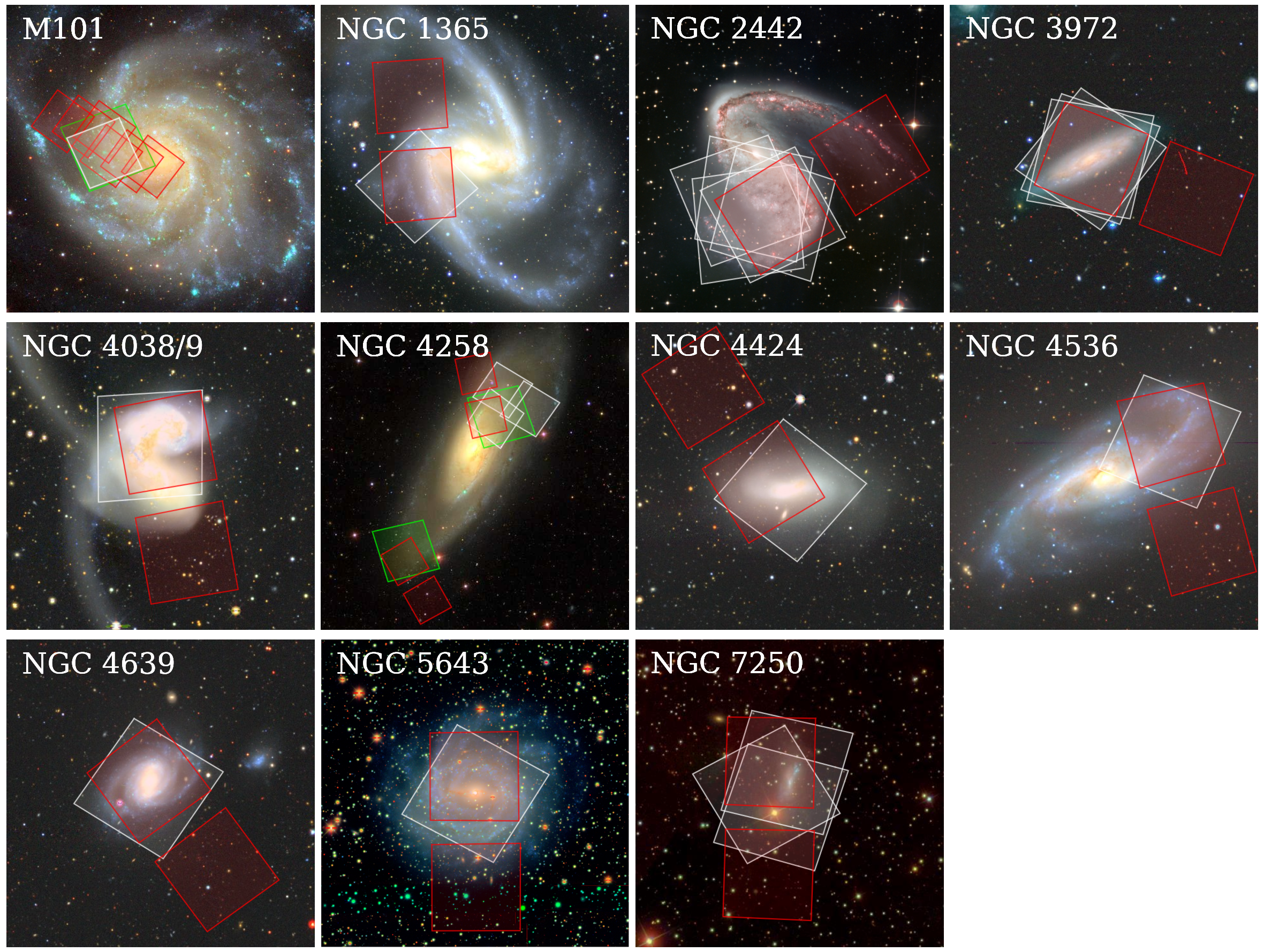
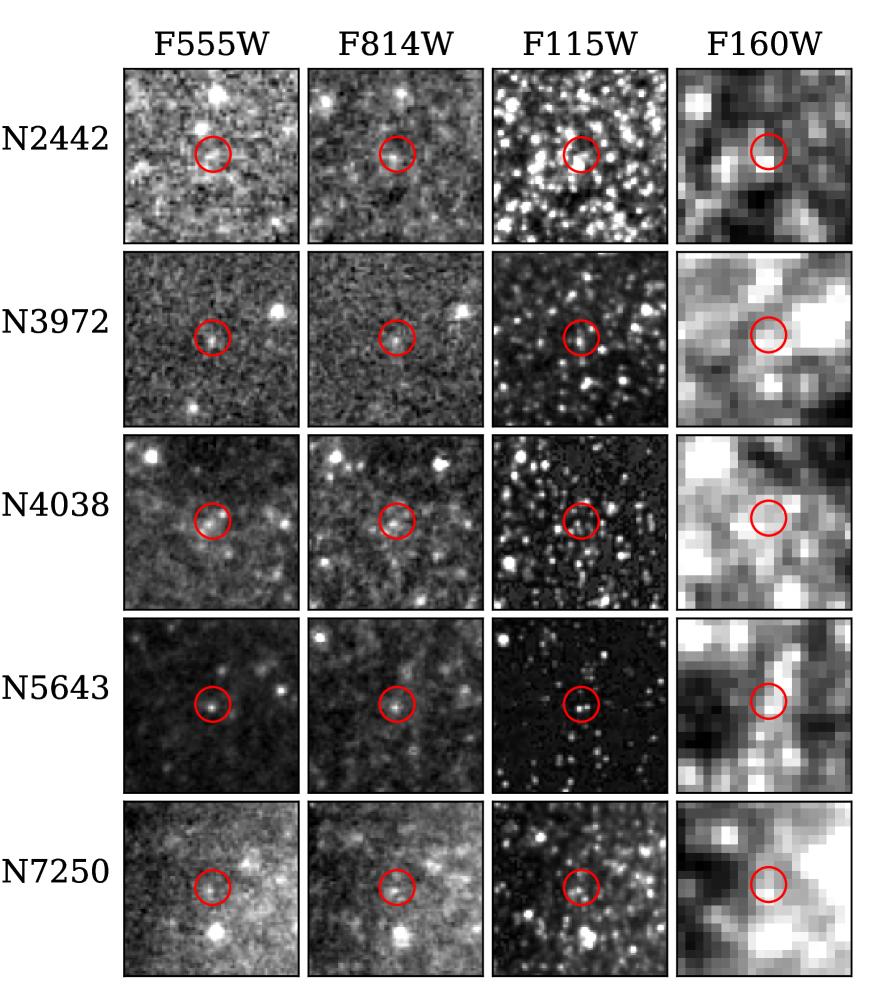
We present the latest results from the Chicago-Carnegie Hubble Program (\cchp) to measure the Hubble constant, using data from the James Webb Space Telescope (JWST). The overall program aims to calibrate three independent methods: (1) Tip of the Red Giant Branch (TRGB) stars, (2) JAGB (J-Region Asymptotic Giant Branch) stars, and (3) Cepheids. To date, our program includes 10 nearby galaxies, hosting 11 Type Ia supernovae (SNe Ia) suitable for measuring the Hubble constant ($H_0$). It also includes the galaxy NGC 4258, whose geometric distance provides the zero-point calibration. In this paper we discuss our results from the TRGB and JAGB methods. Our current best (highest precision) estimate is $H_0$ = 70.39 $\pm$ 1.22 (stat) $\pm$ 1.33 (sys) $\pm$ 0.70 ($σ_{SN}$), based on the TRGB method alone, with a total of 24 SN Ia calibrators from both HST and JWST data. Based on our new JWST data only, and tying into SNe Ia, we find values of $H_0$ = 68.81 $\pm$ 1.79 (stat) $\pm$ 1.32 (sys) for the TRGB, and $H_0$ = 67.80 $\pm$ 2.17 (stat) $\pm$ 1.64 (sys) km/s/Mpc for the JAGB method. The distances measured using the TRGB and the JAGB method agree, on average, at a level better than 1%, and with the SH0ES Cepheid distances at just over the 1% level. Our results are consistent with the current standard LambdaCDM model, without the need for the inclusion of additional new physics. Future JWST data will be required to increase the precision and accuracy of the local distance scale.
Motivation & Objective
- Reduce systematic uncertainties in the local distance scale to refine H0.
- Provide three independent distance determinations (TRGB, JAGB, Cepheids) for SN Ia calibration.
- Utilize JWST's higher resolution and infrared capabilities to minimize crowding and extinction effects.
- Calibrate distances using NGC 4258 as a geometric anchor.
- Assess agreement and potential metallicity or dust effects across methods.
Proposed method
- Use JWST NIRCam imaging (F115W, F356W, F444W) to obtain distances via TRGB, JAGB, and Cepheids in 10 SN Ia host galaxies plus NGC 4258.
- Apply a unified photometric reduction framework (DOLPHOT, DAOPHOT) with a warmstart approach for source extraction.
- Implement artificial star tests to quantify crowding corrections, especially in Cepheid fields; compare reductions across software.
- Adopt a blinding procedure to prevent bias in distance determinations, particularly for JAGB and TRGB (Cepheids partially blinded).
- Calibrate the absolute distance scale using NGC 4258’s maser-based geometric distance; propagate metallicity considerations via [O/H].
- Combine the three distance indicators to infer H0 with a flat prior, after tying to SNe Ia calibrators.
Experimental results
Research questions
- RQ1What are the JWST-era H0 values from TRGB, JAGB, and Cepheids independently?
- RQ2How do JWST-based distances compare in terms of statistical and systematic uncertainties across the three methods?
- RQ3To what extent do TRGB and JAGB agree, and how do Cepheid-based distances differ?
- RQ4What is the impact of metallicity and dust corrections on the distance indicators when using JWST data?
- RQ5What is the resulting H0 when the three JWST indicators are tied to SN Ia calibrators with a flat prior?
Key findings
- H0(TRGB) = 69.85 ± 1.75 (stat) ± 1.54 (sys) km s−1 Mpc−1.
- H0(JAGB) = 67.96 ± 1.85 (stat) ± 1.90 (sys) km s−1 Mpc−1.
- H0(Cepheids) = 72.05 ± 1.86 (stat) ± 3.10 (sys) km s−1 Mpc−1.
- Combined H0 (three methods with flat prior) = 69.96 ± 1.05 (stat) ± 1.12 (sys) km s−1 Mpc−1.
- TRGB and JAGB distances agree at the ~1% level; Cepheid distances differ from these by ~2.5–4%.
- H0 values from JWST-only two-method (TRGB/JAGB) data = 69.03 ± 1.75 total (km s−1 Mpc−1).
- Results are consistent with the standard ΛCDM model without new physics; future JWST data needed for higher precision.
Read this paper
Open the full text in the Nubint reader and ask about any passage as you read.
Read this paper on NubintThis review was generated by AI from the original paper. Please check the paper before citing it.