
[Paper Review] Survey and Analysis of DNS Filtering Components
This paper proposes an open-source framework integrating Response Policy Zones (RPZ), Threat Intelligence Feeds (TIF), and Domain Generation Algorithm (DGA) detection to enhance DNS resolver filtering. By combining blocklisting/allowlisting via RPZ, real-time threat intelligence from anonymized query data, and AI-driven DGA detection, the framework improves detection of malicious domains while minimizing false positives and preserving user privacy through privacy-preserving data sharing and transparency.
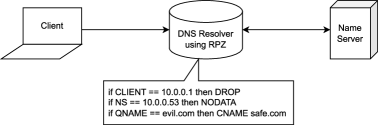
The Domain Name System (DNS) comprises name servers translating domain names into, commonly, IP addresses. Authoritative name servers hosts the resource records (RR) for certain zones, and resolver name servers are responsible for querying and answering DNS queries on behalf of their clients. Unfortunately, cybercriminals often use DNS for malicious purposes, such as phishing, malware distribution, and botnet communication. To combat these threats, filtering resolvers have become increasingly popular, employing various techniques to identify and block malicious requests. In this paper, we survey several techniques to implement and enhance the capabilities of filtering resolvers including response policy zones, threat intelligence feeds, and detection of algorithmically generated domains. We identify the current trends of each area and find missing intersections in the literature, which could be used to improve the effectiveness of filtering resolvers. In addition, we propose future work designing a framework for filtering resolvers using state-of-the-art approaches identified in this study.
Motivation & Objective
- To identify gaps and trends in DNS filtering techniques, particularly between RPZ, TIF, and DGA detection.
- To address the lack of integrated literature covering RPZ and TIF together, despite their complementary strengths.
- To propose a unified, open-source framework that enhances detection of malicious domains using state-of-the-art techniques.
- To improve transparency and trust in DNS filtering by making filter lists publicly available and enabling community scrutiny.
- To preserve user privacy through anonymized traffic data sharing and end-to-end encryption in the threat intelligence pipeline.
Proposed method
- Implementing RPZ as a policy enforcement layer that blocks or redirects queries based on predefined blocklists and allowlists.
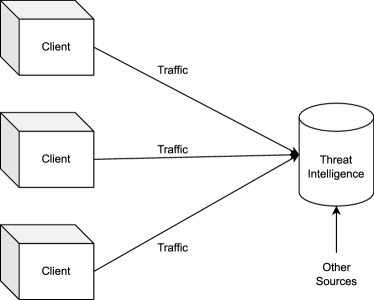
- Integrating real-time threat intelligence feeds (TIF) that consume anonymized resolver query data to detect and classify malicious domains.
- Applying state-of-the-art DGA detection techniques to identify algorithmically generated domains often used in botnet C2 communications.
- Using explainable AI (XAI) to improve transparency and help users understand why certain domains are blocked.
- Enabling privacy-preserving intelligence sharing between organizations by transmitting only aggregated, anonymized traffic patterns.
- Securing the system with access controls, encryption, and regular penetration testing to prevent tampering and unauthorized access.
Experimental results
Research questions
- RQ1How do RPZ, TIF, and DGA detection techniques compare in effectiveness for identifying malicious DNS traffic?
- RQ2Why is there a lack of literature integrating RPZ and TIF despite their complementary roles in DNS filtering?
- RQ3What are the key challenges in combining these three techniques into a unified filtering framework?
- RQ4How can privacy be preserved while enabling effective threat intelligence sharing from DNS resolvers?
- RQ5What design principles can ensure transparency and prevent misuse of DNS filtering for censorship?
Key findings
- No existing literature covers both Response Policy Zones (RPZ) and Threat Intelligence Feeds (TIF) together, indicating a significant research gap.
- RPZ is effective for known threats but limited by the need for manual or static policy updates and risks false positives if not maintained.
- Threat intelligence feeds enhance detection by providing up-to-date indicators of compromise (IOCs), but depend on data quality and timely updates.
- DGA detection adds value by identifying unknown or zero-day malicious domains through behavioral and pattern analysis.
- Combining RPZ, TIF, and DGA detection can significantly improve detection accuracy and reduce false positives through layered, adaptive filtering.
- Privacy-preserving data sharing and transparency in rule publication can enhance trust without compromising security or enabling evasion by attackers.
Read this paper
Open the full text in the Nubint reader and ask about any passage as you read.
Read this paper on NubintThis review was generated by AI from the original paper. Please check the paper before citing it.