
[Paper Review] Ten Lessons We Have Learned in the New "Sparseland": A Short Handbook for Sparse Neural Network Researchers
This paper provides a concise, practical handbook for researchers in sparse neural networks (SNNs), clarifying common confusions around sparsity types, training paradigms, and evaluation fairness. It synthesizes ten key Q&As on topics like dense vs. sparse, pruning vs. sparse training, and static vs. dynamic sparsity, offering standardized guidance to improve reproducibility and reduce misunderstandings in SNN research.
This article does not propose any novel algorithm or new hardware for sparsity. Instead, it aims to serve the "common good" for the increasingly prosperous Sparse Neural Network (SNN) research community. We attempt to summarize some most common confusions in SNNs, that one may come across in various scenarios such as paper review/rebuttal and talks - many drawn from the authors' own bittersweet experiences! We feel that doing so is meaningful and timely, since the focus of SNN research is notably shifting from traditional pruning to more diverse and profound forms of sparsity before, during, and after training. The intricate relationships between their scopes, assumptions, and approaches lead to misunderstandings, for non-experts or even experts in SNNs. In response, we summarize ten Q\&As of SNNs from many key aspects, including dense vs. sparse, unstructured sparse vs. structured sparse, pruning vs. sparse training, dense-to-sparse training vs. sparse-to-sparse training, static sparsity vs. dynamic sparsity, before-training/during-training vs. post-training sparsity, and many more. We strive to provide proper and generically applicable answers to clarify those confusions to the best extent possible. We hope our summary provides useful general knowledge for people who want to enter and engage with this exciting community; and also provides some "mind of ease" convenience for SNN researchers to explain their work in the right contexts. At the very least (and perhaps as this article's most insignificant target functionality), if you are writing/planning to write a paper or rebuttal in the field of SNNs, we hope some of our answers could help you!
Motivation & Objective
- Address widespread confusion in sparse neural network (SNN) research due to overlapping terminology and ambiguous distinctions between sparsity types and training paradigms.
- Provide a unified, accessible reference to clarify core concepts such as unstructured vs. structured sparsity, dense-to-sparse vs. sparse-to-sparse training, and pre-, during-, and post-training sparsity.
- Promote fair and rigorous evaluation by advocating standardized protocols for comparing SNN algorithms across tasks, architectures, and configurations.
- Support researchers in writing clearer papers and rebuttals by offering contextually appropriate explanations of SNN methods and their assumptions.
- Encourage the community to move beyond simplistic benchmarks and adopt diverse, challenging tasks and hardware-aware metrics to better assess SNN performance.
Proposed method
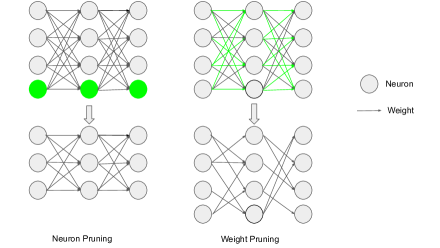
- Categorize SNN methods along key axes: sparsity type (unstructured vs. structured), training phase (before, during, after training), and topology evolution (static vs. dynamic).
- Distinguish between dense-to-sparse training (e.g., iterative magnitude pruning) and sparse-to-sparse training (e.g., Dynamic Sparse Training, Pruning at Initialization), emphasizing their differing assumptions and computational costs.
- Clarify the relationship between Lottery Ticket Hypothesis (LTH) and Static Sparse Training (SST), noting that while LTH discovers sparse subnetworks, its construction process is dense-to-sparse, not sparse-to-sparse.
- Advocate for standardized evaluation by recommending consistent pre-trained models, hyperparameters, data augmentations, and training schedules across baselines.
- Recommend using diverse benchmarks beyond CIFAR-10/100, including vision and NLP tasks, and incorporating hardware-aware metrics like real throughput and latency.
- Emphasize reporting results with error bars from multiple random seeds (3–5) to ensure statistical reliability and reproducibility.
Experimental results
Research questions
- RQ1How do unstructured and structured sparsity differ in terms of model efficiency and hardware support?
- RQ2What distinguishes dense-to-sparse training from sparse-to-sparse training, and why does the distinction matter for performance and resource use?
- RQ3Why is it misleading to compare sparse-to-sparse training methods directly with LTH, and how should LTH be fairly positioned in evaluations?
- RQ4What are the key confounding factors in SNN comparisons, and how can they be controlled for in benchmarking?
- RQ5How can researchers ensure fair and meaningful evaluation of SNN algorithms across diverse tasks and hardware platforms?
Key findings
- LTH is best understood as a dense-to-sparse method due to its reliance on pre-training and iterative pruning, despite its final outcome being a trainable sparse subnetwork.
- Dynamic Sparse Training (DST) and Pruning at Initialization (PaI) are both sparse-to-sparse methods, but DST dynamically updates the sparse mask during training, while PaI uses a fixed, gradient-based mask at initialization.
- Comparing SNN methods without controlling for pre-training, hyperparameters, or training time leads to misleading conclusions, as confounding variables can have large performance impacts.
- Using only small, outdated datasets like CIFAR-10/100 for evaluation is insufficient for drawing meaningful conclusions, as all SNN methods perform similarly on them.
- Hardware-aware metrics such as real throughput and latency are critical for evaluating practical efficiency, and should be reported alongside accuracy and FLOPs.
- Reporting results with standard deviations across 3–5 random seeds is essential for establishing statistical reliability and reproducibility in SNN research.
Read this paper
Open the full text in the Nubint reader and ask about any passage as you read.
Read this paper on NubintThis review was generated by AI from the original paper. Please check the paper before citing it.