
[Paper Review] The Dawn of AI-Native EDA: Opportunities and Challenges of Large Circuit Models
A perspective proposing a shift from AI4EDA to AI-native EDA, advocating large multimodal circuit models (LCMs) that integrate diverse circuit data across design stages to enhance synthesis, verification, and optimization.
Within the Electronic Design Automation (EDA) domain, AI-driven solutions have emerged as formidable tools, yet they typically augment rather than redefine existing methodologies. These solutions often repurpose deep learning models from other domains, such as vision, text, and graph analytics, applying them to circuit design without tailoring to the unique complexities of electronic circuits. Such an AI4EDA approach falls short of achieving a holistic design synthesis and understanding, overlooking the intricate interplay of electrical, logical, and physical facets of circuit data. This paper argues for a paradigm shift from AI4EDA towards AI-native EDA, integrating AI at the core of the design process. Pivotal to this vision is the development of a multimodal circuit representation learning technique, poised to provide a comprehensive understanding by harmonizing and extracting insights from varied data sources, such as functional specifications, RTL designs, circuit netlists, and physical layouts. We champion the creation of large circuit models (LCMs) that are inherently multimodal, crafted to decode and express the rich semantics and structures of circuit data, thus fostering more resilient, efficient, and inventive design methodologies. Embracing this AI-native philosophy, we foresee a trajectory that transcends the current innovation plateau in EDA, igniting a profound shift-left in electronic design methodology. The envisioned advancements herald not just an evolution of existing EDA tools but a revolution, giving rise to novel instruments of design tools that promise to radically enhance design productivity and inaugurate a new epoch where the optimization of circuit performance, power, and area (PPA) is achieved not incrementally, but through leaps that redefine the benchmarks of electronic systems' capabilities.
Motivation & Objective
- Motivate a paradigm shift from AI4EDA to AI-native EDA to better capture circuit-specific complexities.
- Advocate for multimodal circuit representation learning that harmonizes data from specifications, RTL, netlists, and layouts.
- Propose large circuit models (LCMs) capable of integrating diverse circuit data to improve design productivity and PPA.
- Highlight the potential to enable a shift-left approach, identifying issues earlier in the design process.
Proposed method
- Argues for developing dedicated foundation models tailored to circuits, with separate representations for each design modality.
- Outlines unimodal circuit representation learning as foundation for multimodal LCMs.
- Discusses techniques to align and integrate representations across design stages while preserving design intent.
- Reviews the potential architectures and learning paradigms inspired by foundation models in NLP, vision, and multimodal learning.
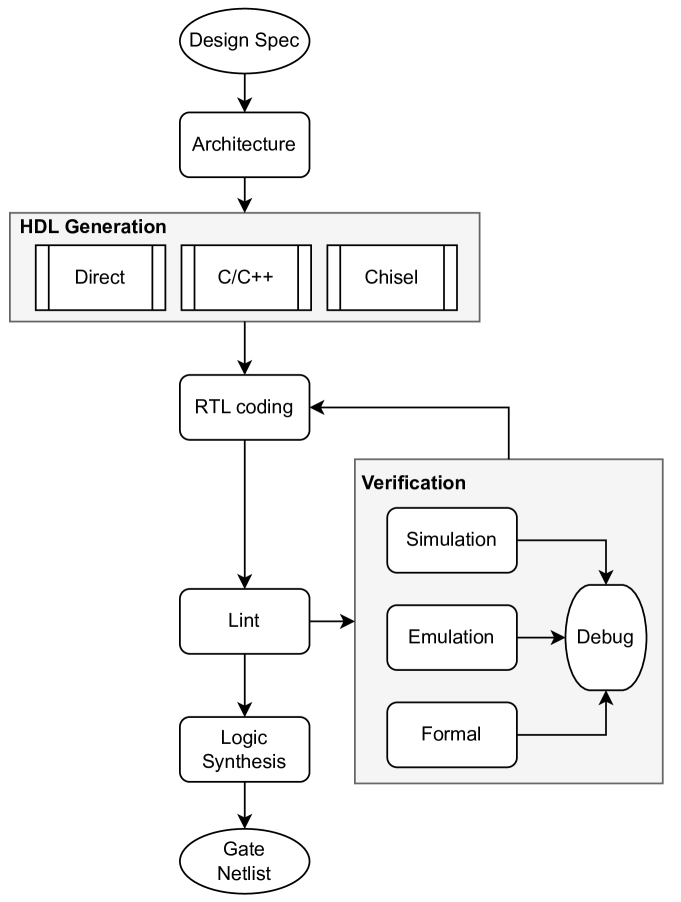
- Proposes a roadmap for building LCMs that unify high-level specifications with low-level physical layouts.
Experimental results
Research questions
- RQ1How can large circuit models (LCMs) be designed to multimodally represent circuit data across design stages?
- RQ2What are the key challenges and opportunities in shifting from AI4EDA to AI-native EDA?
- RQ3How can multimodal representations be aligned to preserve design intent from specification to physical layout?
- RQ4What impact can LCMs have on design productivity, PPA, and time-to-market in EDA?
Key findings
- LCMs offer a vision of integrating and interpreting diverse circuit data types to create a unified design narrative.
- AI-native EDA aims to surpass AI augmentation by tightly embedding AI into the core design process.
- Multimodal circuit representation learning is proposed as essential to decode the semantics and structure of circuit data.
- A shift-left design methodology could streamline identification of bottlenecks and potential issues early in development.
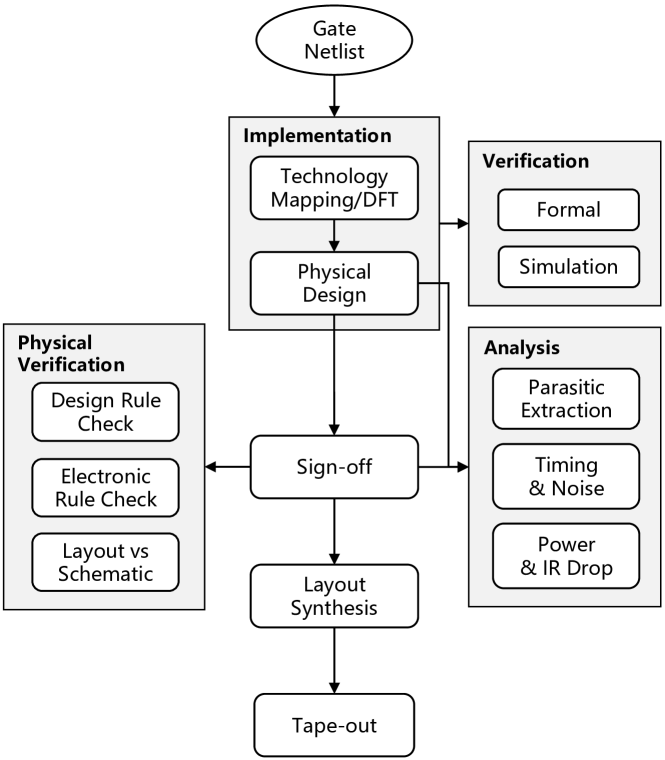
- The perspective outlines potential applications across front-end, back-end, and specialized circuit domains, with attention to data scarcity and scalability challenges.
Read this paper
Open the full text in the Nubint reader and ask about any passage as you read.
Read this paper on NubintThis review was generated by AI from the original paper. Please check the paper before citing it.