
[논문 리뷰] The Great Wave: Evidence of a large-scale vertical corrugation propagating outwards in the Galactic disc
논문은 두 가지 젊은 별 샘플(거성과 Cepheids)을 분석하여 은하 왜곡을 매핑하고 왜곡 너머 디스크에서 대규모 수직 주름이 밖으로 전파되고 있음을 밝혀내며, 약 150–200 pc의 진폭을 가진 수평으로 ~10 kpc 규모의 퍼진 수직 운동과 전파 파동 패턴을 보인다.
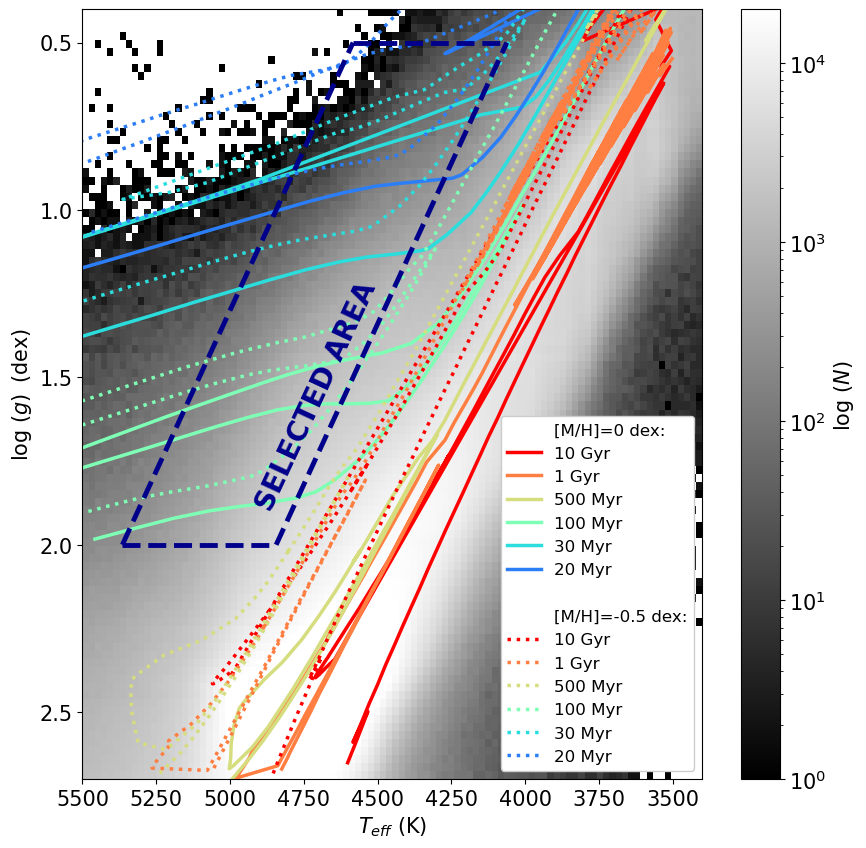
We analyse the three-dimensional structure and kinematics of two samples of young stars in the Galactic disc, containing respectively young giants ($\sim$17$\, $000 stars out to heliocentric distances of $\sim$7 kpc) and classical Cepheids ($\sim$3400 stars out to heliocentric distances of $\sim$15 kpc). The vertical structure of the two samples exhibit a consistent shape of the Milky Way's warp, whose amplitude reaches $\sim$700 pc at a Galactocentric radius R $\sim$ 14 kpc. Moreover, both samples show evidence of a large-scale vertical corrugation on top of the warp with a vertical height of $\sim$150-200 pc, extending over a large portion of the Galactic disc between Galactocentric radii $R \sim$ 10-12 kpc in the third Galactic quadrant (galactic longitudes $180^\circ < l < 270^\circ$) and $\sim$12-14 kpc in the second Galactic quadrant ($90^\circ < l < 180^\circ$). Its total length is at least 10 kpc and can possibly reach $\sim$ 20 kpc with the Cepheid sample. The stars in the corrugation exhibit both radial and vertical systematic motions, with Galactocentric radial velocities towards the outer disc of about 10-15 km/s. In the vertical motions, once the warp signature is subtracted, the residuals show a large-scale feature of systematically positive vertical velocities, which is shifted to slightly larger Galactocentric radii with respect to the spatial vertical corrugation (with a phase difference of roughly $π/2$), indicating an oscillatory behaviour. A comparison of the observed shift with a simple toy model suggests that the corrugation can be interpreted as a wave propagating towards the outer disc. The wave mapped in this work is located at larger heliocentric distances compared to the Radcliffe wave, a $\sim$2.7 kpc filament of dense gas clouds close to the Sun, and exhibits a larger coverage of the Galactic disc.
연구 동기 및 목표
- 은하 디스크의 3차원 구조와 운동학을 두 가지 젊은 별 샘플(거성과 Cepheids)로 특징지음.
- 왜곡을 매핑하고 외곽 디스크의 왜곡 위에 추가적인 수직 교란을 탐색함.
- 수직 주름의 진폭, 반경 의존성, 운동학 신호를 정량화함.
- 왜곡 모델링 후 잔차가 수직 파동을 전파하는지 여부를 평가함.
- 독립적인 트레이서들(거성 대비 Cepheids) 간의 왜곡 결과를 비교하여 견고성을 검증함.
제안 방법
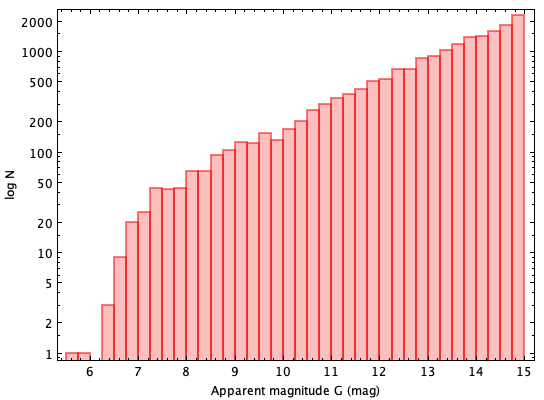
- Gaia DR3 및 보조 데이터에서 두 가지 젊은 별 샘플을 선택: 약 16,000명의 젊은 거성과 약 3,400명의 고전 Cepheids.
- 원거리 Bayesian 거리 추정치를 사용하고 원형 디스크 기반 사전분포와 선택 함수 보정된 광도 함수로 거리를 추정함.
- m=1 기울인 띠(tilted-ring) 접근법과 진폭 h_w(R), 선-노드 각도 phi_LON(R)을 포함하는 전역 모수 적합으로 왜곡을 모델링함.
- 왜곡 예측으로 Z_w(R,phi)=h_w(R) sin(phi - phi_LON(R))를 계산하고 관측된 Z와 비교하여 왜곡 매개변수를 도출함.
- 왜곡 모형화 후 잔차를 검사하여 비왜곡 구조를 식별하고, 반경 방향의 주름 특징을 드러냄.
- 두 샘플로 결과를 검증하고(디스크 두께, 차폐, 선택 등) 시스템오차 가능성을 논의함.
실험 결과
연구 질문
- RQ1젊은 별들로 추적했을 때 알려진 왜곡을 넘어 은하 디스크의 대규모 수직 구조는 어떠한가?
- RQ2단순한 m=1 왜곡이 수직 분포를 적절히 설명하는가, 아니면 잔차 주름이 존재하는가?
- RQ3젊은 거성 및 Cepheids가 묘사하는 은하 왜곡의 진폭, 반경 의존성, 위상은 무엇인가?
- RQ4왜곡 제거 후 잔차가 외곽 디스크에서 전파하는 수직 파동을 나타내는가?
- RQ5독립적인 젊은 별 트레이서(거성 vs Cepheids) 간 왜곡 측정은 얼마나 일관되는가?
주요 결과
- 젊은 거성과 Cepheids 모두에서 수직 높이가 150–200 pc인 왜곡과 반경 폭이 약 ~3 kpc이며 길이(최소) 10 kpc( Cepheids를 사용할 경우 잠재적으로 20 kpc)인 왜곡을 보인다.
- 왜곡 진폭은 갈락틱 반지름에 따라 증가하며 위상 각은 R ≈ 11–12 kpc 부근에서 변화를 보이고 노드 선의 방향이 더 큰 반경으로 비스듬하게 비튼다.
- 방향 속도(V_R)에서 내향/외향으로 ~10–15 km/s의 속도 성분이 나타난다.
- 왜곡을 빼고 남은 잔차는 지도의 가장자리에서 대칭적인 가능성 있는 피처 2와 함께 약 10 kpc에 걸친 150–200 pc 진폭의 일관된 대규모 수직 주름(피처 1)을 드러낸다.
- 주름 패턴은 은하 디스크에서 밖으로 전파되는 수직 파동과 일치하며, 최대치는 거의 변위의 0선과 평행한 선을 따른다.
더 나은 연구,지금 바로 시작하세요
연구 설계부터 논문 작성까지, 연구 시간을 획기적으로 줄여보세요.
카드 등록 없음 · 무료 플랜 제공
이 리뷰는 AI가 만들고, 인간 에디터가 검토했습니다.