
[Paper Review] The Impact of ChatGPT and LLMs on Medical Imaging Stakeholders: Perspectives and Use Cases
This paper proposes the BIGR-H framework to analyze the impact of Large Language Models (LLMs) like ChatGPT on medical imaging stakeholders—businesses, insurers, governments, research institutions, and hospitals. It demonstrates how LLMs enhance radiologist interpretation, streamline clinical workflows, improve patient communication, and support medical education and research through real-world use cases, while addressing ethical, privacy, and regulatory challenges in AI integration.
This study investigates the transformative potential of Large Language Models (LLMs), such as OpenAI ChatGPT, in medical imaging. With the aid of public data, these models, which possess remarkable language understanding and generation capabilities, are augmenting the interpretive skills of radiologists, enhancing patient-physician communication, and streamlining clinical workflows. The paper introduces an analytic framework for presenting the complex interactions between LLMs and the broader ecosystem of medical imaging stakeholders, including businesses, insurance entities, governments, research institutions, and hospitals (nicknamed BIGR-H). Through detailed analyses, illustrative use cases, and discussions on the broader implications and future directions, this perspective seeks to raise discussion in strategic planning and decision-making in the era of AI-enabled healthcare.
Motivation & Objective
- To investigate the transformative role of LLMs such as ChatGPT in medical imaging across diverse stakeholders in healthcare.
- To develop the BIGR-H framework (Businesses, Insurers, Governments, Research institutions, Hospitals) for systematic analysis of LLM impacts.
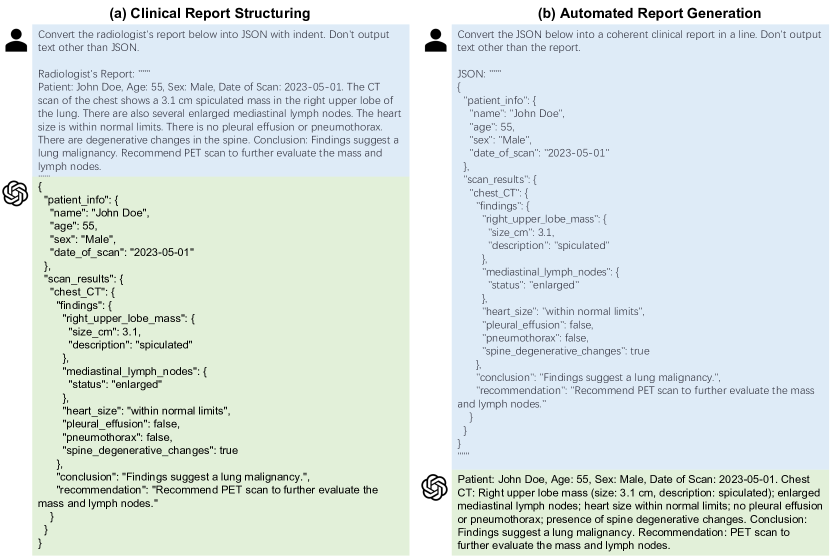
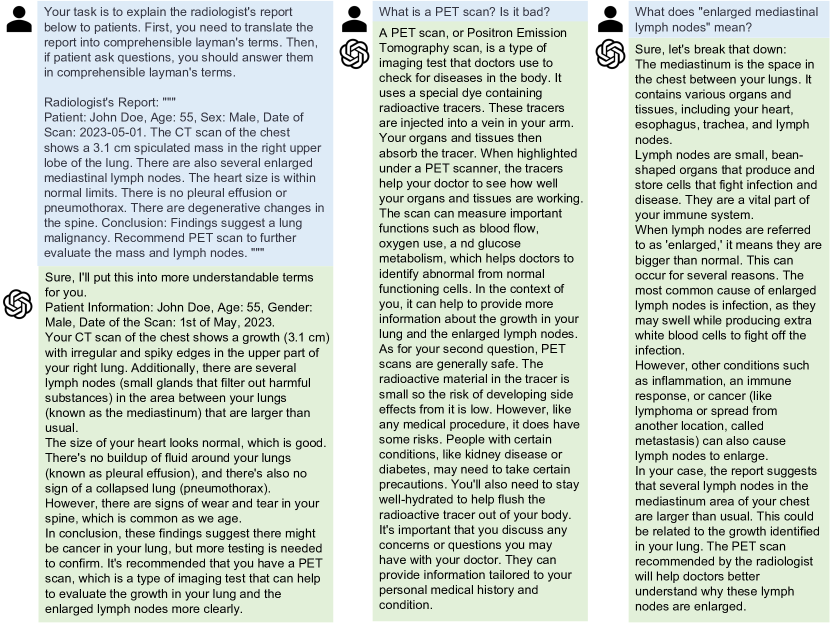
- To present concrete use cases demonstrating LLM applications in radiology reporting, clinical workflow automation, patient communication, and medical education.
- To examine ethical, privacy, and regulatory challenges associated with LLM deployment in medical imaging.
- To guide strategic decision-making in AI-enabled healthcare through interdisciplinary insights and future research directions.
Proposed method
- The authors propose the BIGR-H framework as a structured lens to analyze stakeholder interactions with LLMs in medical imaging.
- They conduct a qualitative, perspective-driven analysis using public data and real-world examples to illustrate LLM applications.
- Use cases are derived from observed LLM capabilities in natural language understanding, generation, and reasoning, particularly with medical text and imaging reports.
- The method integrates insights from radiology, clinical workflow, medical education, and health policy to evaluate LLM impacts across domains.
- The framework is applied to analyze LLM effects on diagnostic interpretation, report standardization, patient engagement, and research planning.
- Ethical and regulatory implications are evaluated through critical analysis of data privacy, bias, liability, and trust in AI outputs.
Experimental results
Research questions
- RQ1How do LLMs like ChatGPT influence radiologists’ interpretive accuracy and efficiency in analyzing medical imaging reports?
- RQ2In what ways can LLMs improve communication between patients and healthcare providers regarding imaging results?
- RQ3How can LLMs streamline clinical workflows in hospitals and reduce administrative burden for radiologists?
- RQ4What role can LLMs play in advancing medical education and research in medical imaging?
- RQ5What ethical, privacy, and regulatory challenges arise from integrating LLMs into clinical and research settings in medical imaging?
Key findings
- LLMs significantly enhance radiologists’ ability to interpret and generate structured radiology reports, improving consistency and reducing variability.
- LLMs enable patient-friendly explanations of complex imaging results, increasing patient understanding and engagement in care decisions.
- LLMs automate time-consuming documentation tasks, reducing workload and freeing clinicians for direct patient care.
- LLMs support medical education by providing personalized, interactive learning aids for students and trainees, such as clarifying complex imaging sequences.
- LLMs assist in research planning by generating hypotheses, suggesting methodologies, and identifying relevant literature, aligning with established scientific practices.
- Despite benefits, LLMs pose risks related to data privacy, model bias, and liability, necessitating robust governance and regulatory frameworks.
Read this paper
Open the full text in the Nubint reader and ask about any passage as you read.
Read this paper on NubintThis review was generated by AI from the original paper. Please check the paper before citing it.