
[Paper Review] The Role of ChatGPT in Democratizing Data Science: An Exploration of AI-facilitated Data Analysis in Telematics
The paper argues that ChatGPT can democratize data science by assisting in telematics data analysis across cleaning, feature engineering, EDA, and visualization, while also noting biases and reasoning limitations. It demonstrates these ideas using a synthetically generated telematics dataset.
The realm of data science, once reserved for specialists, is undergoing a revolution with the rapid emergence of generative AI, particularly through tools like ChatGPT. This paper posits ChatGPT as a pivotal bridge, drastically lowering the steep learning curve traditionally associated with complex data analysis. By generating intuitive data narratives and offering real-time assistance, ChatGPT democratizes the field, enabling a wider audience to glean insights from intricate datasets. A notable illustration of this transformative potential is provided through the examination of a synthetically generated telematics dataset, wherein ChatGPT aids in distilling complex patterns and insights. However, the journey to democratization is not without its hurdles. The paper delves into challenges presented by such AI, from potential biases in analysis to ChatGPT's limited reasoning capabilities. While the promise of a democratized data science landscape beckons, it is imperative to approach this transition with caution, cognizance, and an ever-evolving understanding of the tool's capabilities and constraints.
Motivation & Objective
- Demonstrate how ChatGPT can lower the learning curve for data analysis tasks in telematics.
- Showcase ChatGPT-assisted workflows for data cleaning, feature engineering, EDA, and visualization.
- Discuss benefits, limitations, and responsible use of AI tools in data science.
Proposed method
- Use Python and Pandas to illustrate data analysis workflows with ChatGPT-generated code.
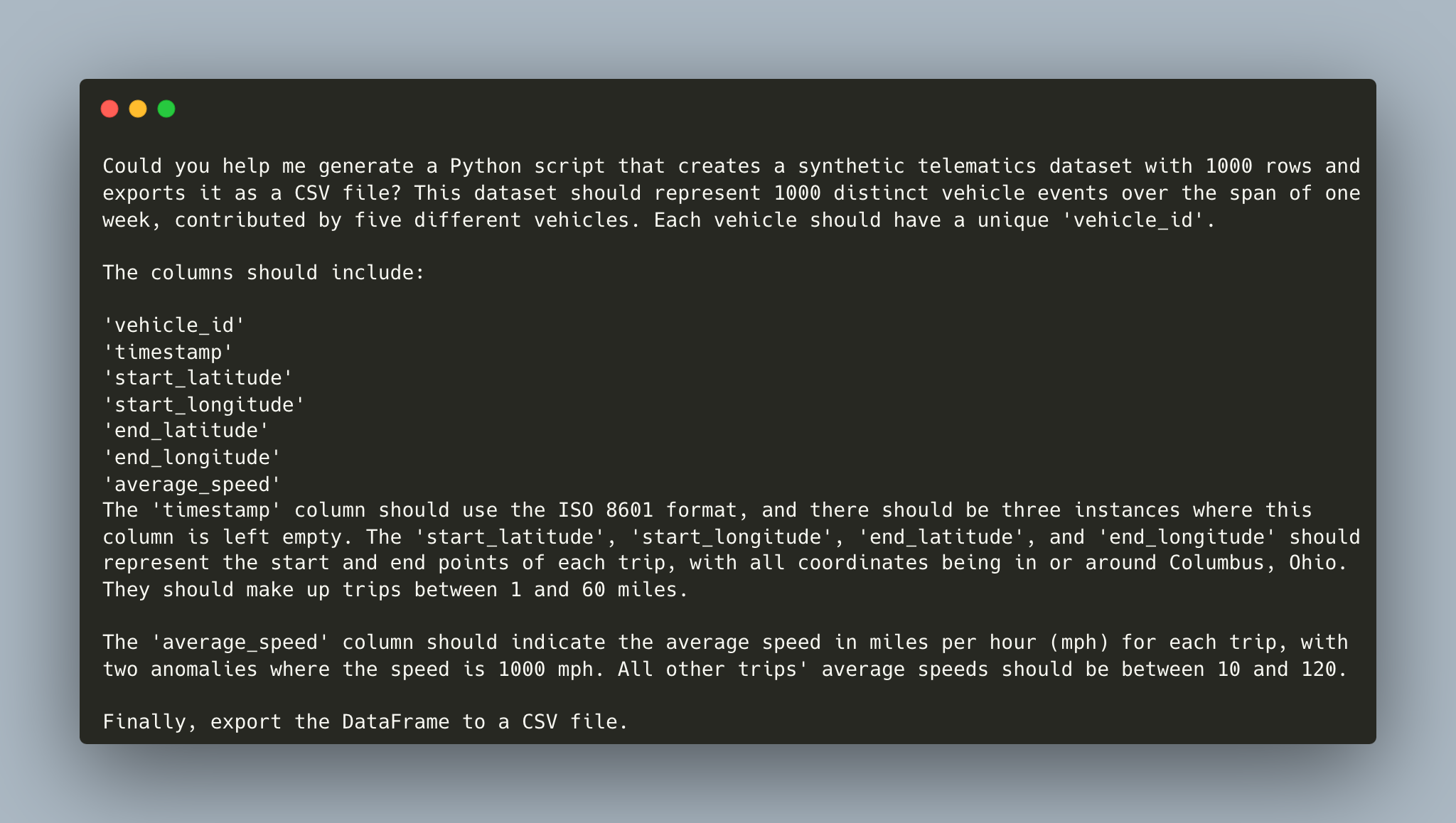
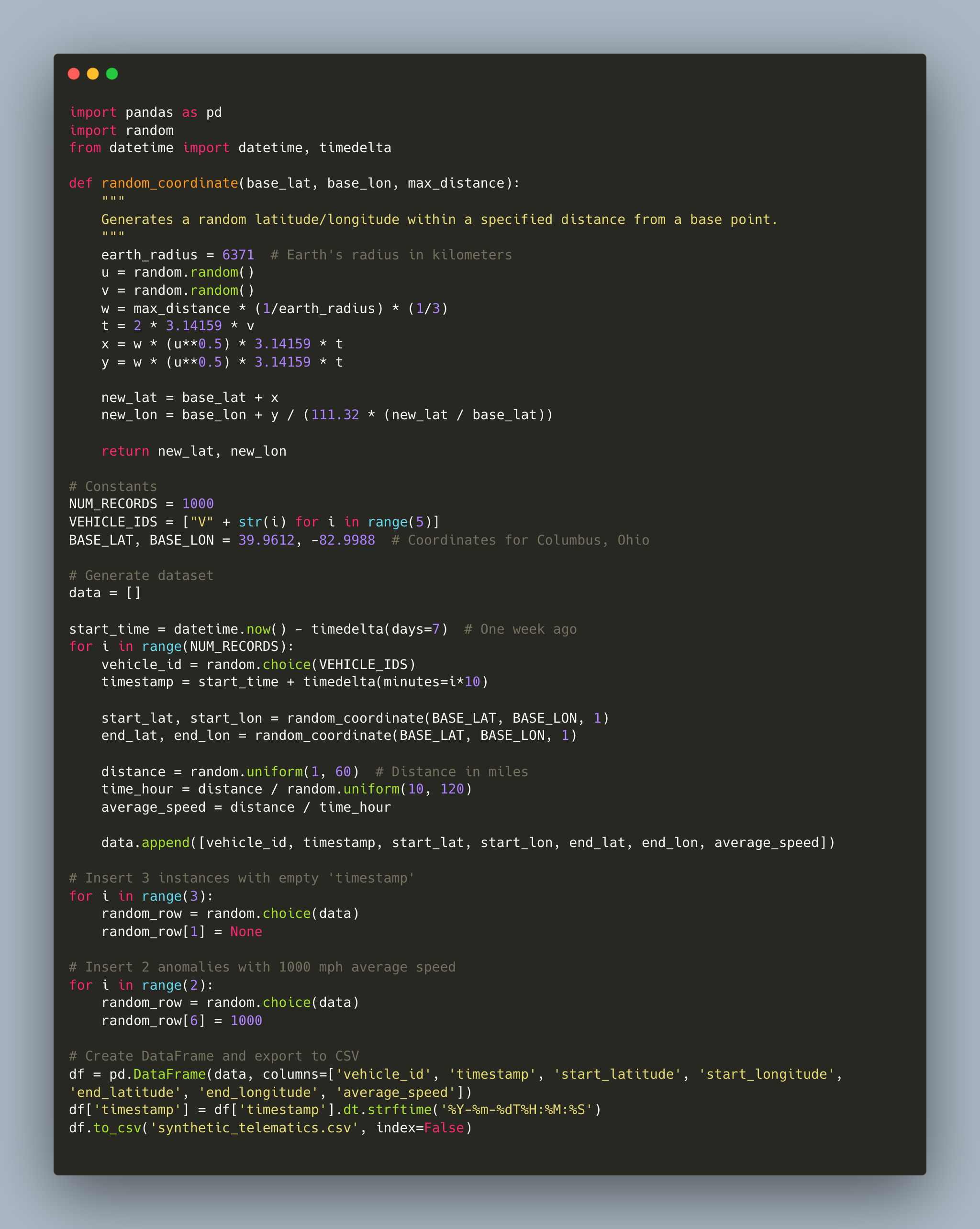
- Create a synthetic telematics dataset as a consistent, privacy-preserving reference.
- Guide data cleaning, missing value handling, data type conversions, and outlier management with ChatGPT prompts and outputs.
- Demonstrate feature engineering steps including day-of-week extraction, vehicle-average speed, and distance calculations.
- Employ ChatGPT to assist in exploratory data analysis and interpretation of results.
Experimental results
Research questions
- RQ1Can ChatGPT meaningfully aid beginners and non-technical domain experts in telematics data analysis?
- RQ2What are the practical capabilities and limitations of ChatGPT in data cleaning, feature engineering, EDA, and visualization for telematics data?
- RQ3How does synthetic telematics data facilitate demonstration of AI-assisted data analysis workflows?
- RQ4What safeguards are needed to mitigate biases and overreliance when using ChatGPT for data analysis?
Key findings
- ChatGPT can interpret and generate Python/Pandas code to assist data analysis tasks.
- A synthetic telematics dataset can effectively demonstrate data cleaning, feature engineering, EDA, and visualization workflows.
- ChatGPT helps in generating features like day_of_week, average_speed, and distance_traveled from telematics data.
- Guided prompts and outputs show how to identify and address missing values and outliers with statistical and procedural methods.
- Limitations include potential biases in outputs and the absence of true machine reasoning, requiring human oversight.
- The study advocates responsible, evaluative use of AI tools in data science workflows.
Read this paper
Open the full text in the Nubint reader and ask about any passage as you read.
Read this paper on NubintThis review was generated by AI from the original paper. Please check the paper before citing it.