
[Paper Review] Zero-shot performance of the Segment Anything Model (SAM) in 2D medical imaging: A comprehensive evaluation and practical guidelines
This paper evaluates the zero-shot performance of the Segment Anything Model (SAM) in 2D medical imaging across six datasets from four modalities (X-ray, ultrasound, dermatoscopy, colonoscopy). It proposes a practical, minimal-interaction prompting framework—starting with bounding box prompts and refining with point prompts—that achieves state-of-the-art or superior results with minimal user input, demonstrating SAM’s strong generalization and clinical utility in medical segmentation without fine-tuning.
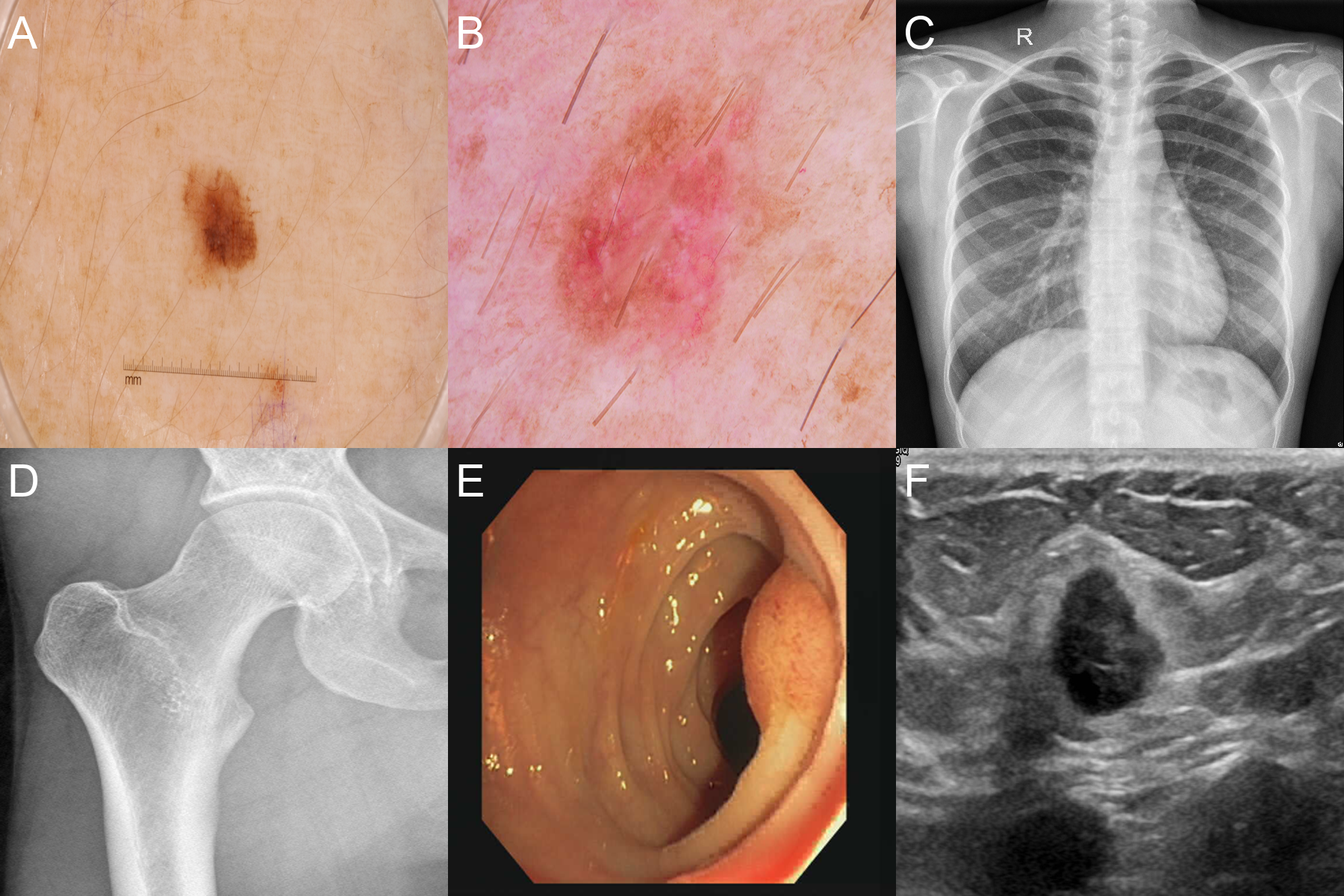
Segmentation in medical imaging is a critical component for the diagnosis, monitoring, and treatment of various diseases and medical conditions. Presently, the medical segmentation landscape is dominated by numerous specialized deep learning models, each fine-tuned for specific segmentation tasks and image modalities. The recently-introduced Segment Anything Model (SAM) employs the ViT neural architecture and harnesses a massive training dataset to segment nearly any object; however, its suitability to the medical domain has not yet been investigated. In this study, we explore the zero-shot performance of SAM in medical imaging by implementing eight distinct prompt strategies across six datasets from four imaging modalities, including X-ray, ultrasound, dermatoscopy, and colonoscopy. Our findings reveal that SAM's zero-shot performance is not only comparable to, but in certain cases, surpasses the current state-of-the-art. Based on these results, we propose practical guidelines that require minimal interaction while consistently yielding robust outcomes across all assessed contexts. The source code, along with a demonstration of the recommended guidelines, can be accessed at https://github.com/Malta-Lab/SAM-zero-shot-in-Medical-Imaging.
Motivation & Objective
- To evaluate the zero-shot generalization capability of the Segment Anything Model (SAM) in diverse 2D medical imaging modalities.
- To identify effective prompting strategies that maximize segmentation accuracy with minimal user interaction.
- To provide practical, actionable guidelines for physicians to apply SAM in clinical workflows.
- To assess whether SAM can outperform or match existing state-of-the-art models without fine-tuning.
- To investigate the potential of SAM-generated masks to improve ground truth annotation quality and efficiency.
Proposed method
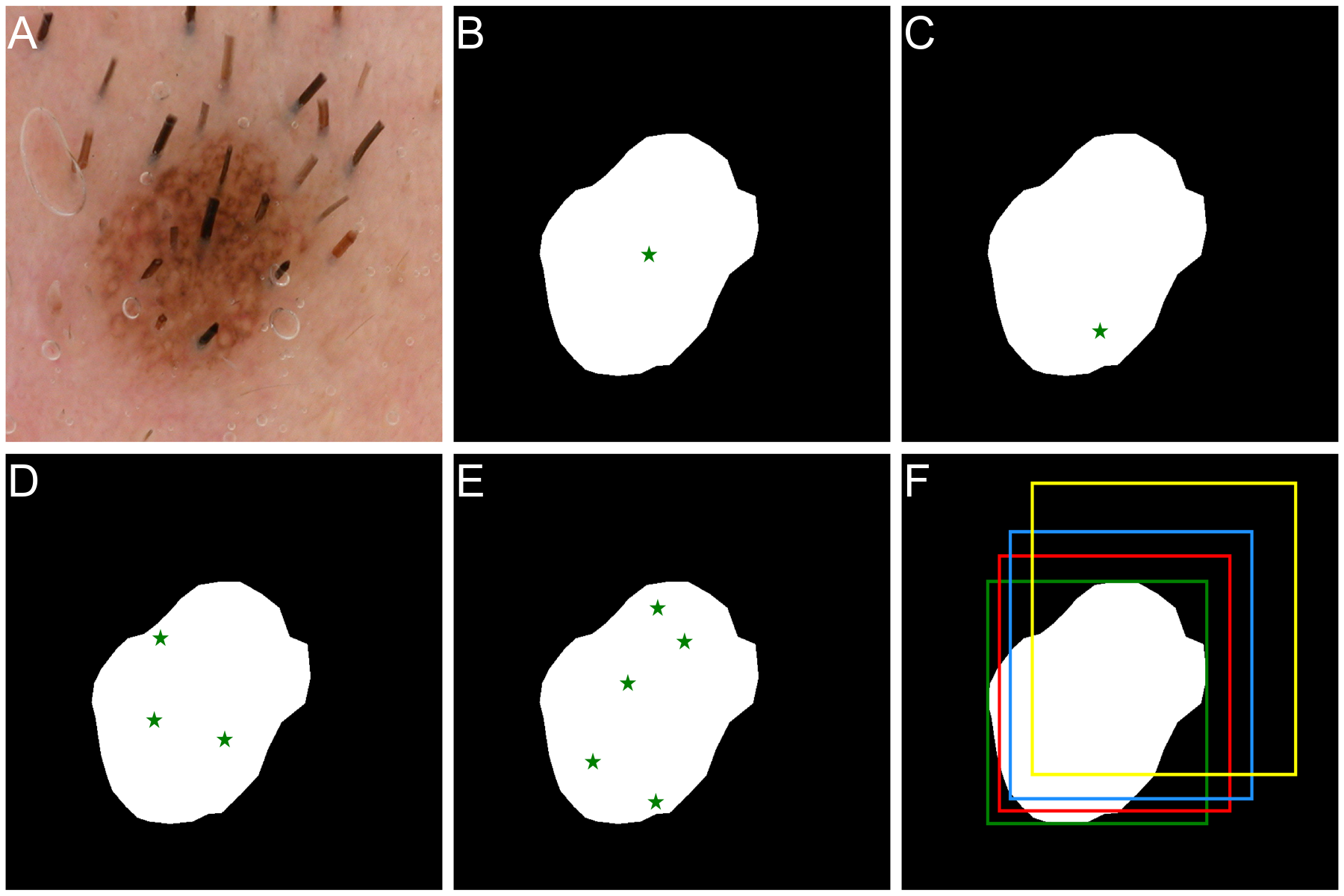
- The study employs eight distinct prompting strategies—bounding box, multiple points, and combinations—across six medical imaging datasets.
- SAM is applied in zero-shot inference using its original ViT-based architecture and pre-trained weights, without any fine-tuning on medical data.
- Segmentation performance is evaluated using standard metrics such as Dice, IoU, and DSC across all datasets and prompting strategies.
- The proposed framework starts with a bounding box prompt, selects the best prediction, and refines it using point prompts (positive or negative) to correct errors.
- The method leverages SAM’s high-capacity vision transformer to generate multiple candidate masks per prompt, enabling selection of the most accurate output.
- A demonstration and source code are released to enable reproducibility and clinical integration of the proposed workflow.
Experimental results
Research questions
- RQ1Can SAM achieve competitive or superior segmentation performance in 2D medical imaging without any fine-tuning?
- RQ2Which prompting strategy—bounding box, point, or hybrid—yields the most robust and accurate results across diverse medical imaging modalities?
- RQ3How does SAM’s zero-shot performance compare to state-of-the-art models specifically trained for medical segmentation tasks?
- RQ4To what extent can SAM-generated masks improve the quality and efficiency of manual ground truth annotation?
- RQ5Can a minimal-interaction prompting framework consistently produce high-quality segmentation across different clinical imaging contexts?
Key findings
- SAM achieved state-of-the-art performance on the BUSI dataset, significantly outperforming existing methods without any fine-tuning.
- The model demonstrated strong zero-shot generalization across four distinct medical imaging modalities: X-ray, ultrasound, dermatoscopy, and colonoscopy.
- The proposed prompting framework—starting with a bounding box and refining with point prompts—consistently yielded high-quality segmentation with minimal user interaction.
- SAM’s predictions were more accurate than the ground truth in some cases, suggesting potential for improving manual annotation quality and efficiency.
- All three SAM ViT sizes (small, base, large) performed comparably, allowing practitioners to select based on computational constraints.
- The framework enabled physicians to achieve accurate segmentation by selecting the best prediction and refining it with just a few point prompts, demonstrating clinical feasibility.
Read this paper
Open the full text in the Nubint reader and ask about any passage as you read.
Read this paper on NubintThis review was generated by AI from the original paper. Please check the paper before citing it.