
[论文解读] Persuading to Prepare for Quitting Smoking with a Virtual Coach: Using States and User Characteristics to Predict Behavior
本研究评估了用户状态与特征在基于强化学习(RL)的虚拟戒烟教练中对行为预测的影响。研究发现,状态显著提升了对行为及未来状态的预测能力,而用户特征(如参与度)仅在与状态结合时才具有帮助,支持在个性化电子健康说服算法中整合两者。
Despite their prevalence in eHealth applications for behavior change, persuasive messages tend to have small effects on behavior. Conditions or states (e.g., confidence, knowledge, motivation) and characteristics (e.g., gender, age, personality) of persuadees are two promising components for more effective algorithms for choosing persuasive messages. However, it is not yet sufficiently clear how well considering these components allows one to predict behavior after persuasive attempts, especially in the long run. Since collecting data for many algorithm components is costly and places a burden on users, a better understanding of the impact of individual components in practice is welcome. This can help to make an informed decision on which components to use. We thus conducted a longitudinal study in which a virtual coach persuaded 671 daily smokers to do preparatory activities for quitting smoking and becoming more physically active, such as envisioning one's desired future self. Based on the collected data, we designed a Reinforcement Learning (RL)-approach that considers current and future states to maximize the effort people spend on their activities. Using this RL-approach, we found, based on leave-one-out cross-validation, that considering states helps to predict both behavior and future states. User characteristics and especially involvement in the activities, on the other hand, only help to predict behavior if used in combination with states rather than alone. We see these results as supporting the use of states and involvement in persuasion algorithms. Our dataset is available online.
研究动机与目标
- 理解算法组件(用户状态与特征)对电子健康应用中说服性干预后行为预测的个体影响。
- 通过识别对行为预测最有效的组件,减少数据收集负担,降低用户负担并提高成本效益。
- 评估在纵向行为改变干预中,状态(如自信心、动机)与用户特征(如年龄、性别、参与度)哪个是行为预测的更有效指标。
- 评估结合状态与特征是否能提升预测准确率,超越单独使用任一组件的效果。
- 通过识别电子健康系统中应纳入的高影响力组件,支持设计更高效、用户友好的说服性算法。
提出的方法
- 开展一项针对671名每日吸烟者的纵向研究,使用虚拟教练鼓励其参与戒烟准备活动及增加体力活动。
- 在多个时间点收集用户状态(通过COM-B自我评估问卷)和用户特征(如年龄、性别、人格、参与度)的数据。
- 应用强化学习(RL)框架,同时建模当前与未来状态,以最大化用户在准备活动上的投入程度。
- 采用留一法交叉验证,评估仅使用状态、仅使用特征或两者结合的模型的预测性能。
- 训练RL模型以学习基于状态-动作对的转移概率与预期投入,其中状态特征源自行为改变理论(COM-B)。
- 以自我报告的投入程度作为行为结果,评估模型在预测行为与未来状态方面的准确率。
实验结果
研究问题
- RQ1在纵向电子健康干预中,用户状态在多大程度上能预测后续行为与未来状态?
- RQ2当单独使用时,用户特征(如年龄、性别、人格、参与度)在预测行为方面表现如何?
- RQ3结合用户状态与特征是否能提升预测准确率,相较于单独使用任一组件?
- RQ4在预测随时间推移的行为改变时,状态与特征的相对贡献如何?
- RQ5结合当前与未来状态的RL模型能否有效预测用户在准备性健康活动中的参与度?
主要发现
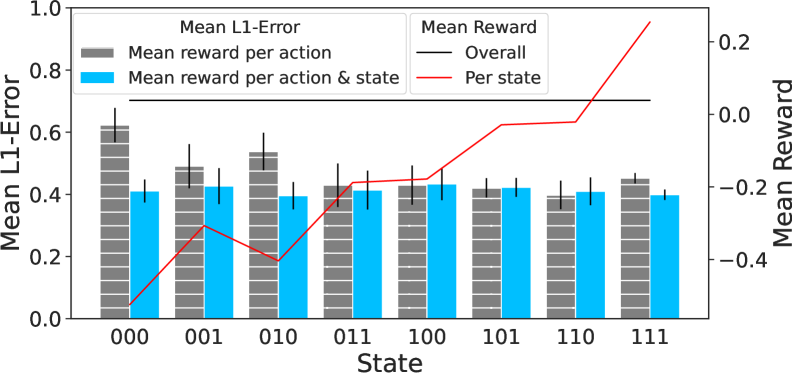
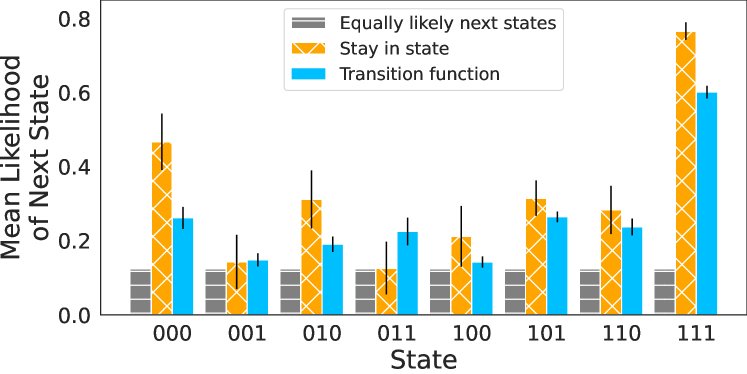
- 考虑用户状态能显著提升虚拟教练干预中对当前行为与未来状态的预测能力。
- 仅使用用户特征(包括参与度)无法可靠预测行为,除非与状态信息结合。
- 将状态与活动参与度结合使用,其预测性能优于单独使用任一成分。
- 基于RL的方法成功建模了状态与动作之间的动态转移,证明在说服策略中考虑未来状态具有重要价值。
- 本研究的数据集已公开,支持可复现性及个性化电子健康干预的进一步研究。
- 研究结果表明,状态在建模行为改变方面比单独使用特征更有效,支持在基于RL的说服算法中整合状态信息。
更好的研究,从现在开始
从阅读论文到最终审阅,大幅缩短您的研究时间。
无需绑定信用卡
本解读由 AI 生成,并经人工编辑审核。