
[论文解读] Renewable Energy Expansion under Taxes and Subsidies: A Transmission Operator's Perspective
本文提出一种双层优化模型,其中以福利最大化的输电系统运营商(TSO)规划输电扩容,同时预期在碳税和可再生能源激励下,价格接受型发电厂的投资决策。结果表明,高输电投资预算与可再生能源激励相结合,能显著提升可再生能源占比和系统福利,而碳税单独作用则效果更可预测但影响较小。
This paper investigates the role of a transmission system operator within a carbon footprint reduction strategy incorporating carbon taxes and renewable energy generation subsidies in the decentralised energy market. This is achieved via an optimisation bi-level model in which a welfare-maximizing transmission system operator makes investments in transmission lines at the upper level while considering power market dynamics at the lower level. To account for the deregulated energy market structure, this paper assumes that the generation companies at the lower level make capacity investments as price-takers in perfect competition. Considering alternative transmission infrastructure expansion budgets, carbon emission taxes and monetary incentives for renewable energy generation capacity expansion, the impact of alternative compositions of these factors is analysed against three output factors: the share of renewable energy in the generation mix, total generation amount, and social welfare. The proposed modelling assessment is applied to an illustrative three-node instance and a case study considering a simplified representation of the energy system of the Nordic and Baltic countries. The results highlight that, under certain circumstances, renewable energy generation subsidies may lead to an increase of renewable energy in the generation mix followed by a simultaneous fall in the total generation amount. Nevertheless, when applied together, these three measures demonstrated a positive impact on all output factors within Nordics' and Baltics' energy systems. The experiments additionally suggest that considering the high value of the carbon tax does not have an impact on the output factors while the composition of high values of renewable energy generation subsidies and budget for transmission infrastructure expansion has the strongest effect.
研究动机与目标
- 分析输电扩容、碳税与可再生能源发电激励如何共同影响自由化电力市场中的电源结构。
- 评估单一与组合政策工具在促进可再生能源整合方面的效率。
- 在完全竞争条件下,建模以福利最大化为目标的TSO与以利润最大化为目标的发电厂之间的战略互动。
- 利用双层优化框架,评估这些政策对可再生能源占比、系统福利及总发电容量的影响。
- 为在计算可行性简化假设下的北欧与波罗的海能源系统提供具有政策相关性的见解。
提出的方法
- 构建一个双层优化模型,TSO位于上层,通过最大化社会福利来制定输电投资决策。
- 在下层建模发电厂为完全竞争市场中的价格接受者,根据市场出清结果制定容量投资决策。
- 整合三种政策工具:输电扩容预算(TEB)、碳税和可再生能源发电激励(激励)。
- 将模型应用于三节点示例案例和简化的北欧-波罗的海能源系统,由于求解器限制,采用上层决策的离散枚举法。
- 采用分解方法求解双层问题,通过枚举可行的输电投资组合,并选择使福利最大化的方案。
- 通过应用基尔霍夫电压定律、省略TSO收入流以及缩短规划周期,对系统进行简化,以确保计算可行性。
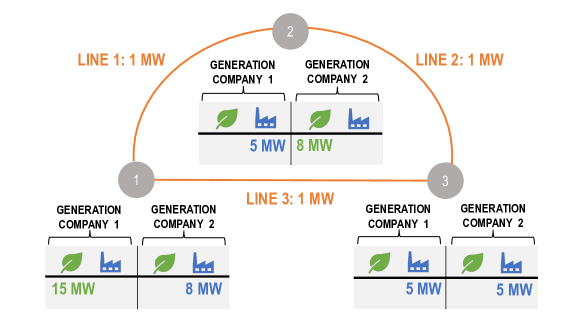
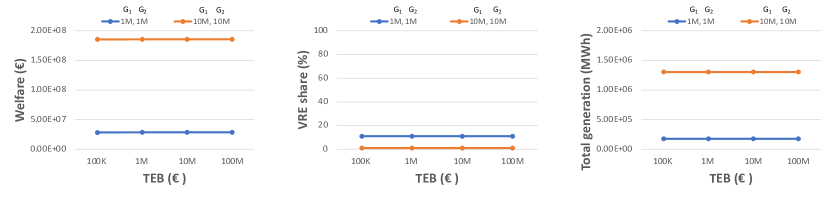
实验结果
研究问题
- RQ1当发电厂为价格接受者时,提高输电扩容预算对可再生能源发电占比和系统福利有何影响?
- RQ2碳税与可再生能源激励的单独及组合影响如何作用于发电结构中可变可再生能源(VRE)的占比?
- RQ3输电投资在多大程度上增强或削弱了可再生能源激励与碳定价政策的有效性?
- RQ4不同政策工具水平组合(低 vs. 高)如何影响整体系统结果,包括VRE占比、福利和总发电容量?
- RQ5当市场信号不完善或不足时,TSO在协调可再生能源整合方面发挥何种作用?
主要发现
- 单独来看,碳税、输电扩容预算和可再生能源激励在提升可再生能源占比或系统福利方面效率有限。
- 高输电扩容预算与高可再生能源激励的组合,无论发电扩容预算水平如何,均能带来可再生能源发电占比和系统福利的最大提升。
- 碳税单独作用时,一旦传统发电的边际成本失去竞争力,即可产生明确且直接的VRE占比提升。
- 将输电和激励水平从“低”提升至“高”的影响,显著取决于发电扩容预算水平,表明存在强烈的交互效应。
- TSO的战略投资决策在推动可再生能源转型中起着关键作用,尤其在与强有力的政策信号相结合时。
- 尽管进行了简化,模型的政策洞见依然稳健,尤其体现在输电扩容与可再生能源激励协同作用的显著效应上。
更好的研究,从现在开始
从阅读论文到最终审阅,大幅缩短您的研究时间。
无需绑定信用卡
本解读由 AI 生成,并经人工编辑审核。