
[论文解读] Supercooling in Radiative Symmetry Breaking: Theory Extensions, Gravitational Wave Detection and Primordial Black Holes
该论文将一种模型无关的框架扩展至辐射对称性自发破缺(RSB)场景中的一阶相变研究,使在更广泛的模型类别中能够精确预测引力波(GW)谱和原初黑洞(PBH)形成。通过在有效势中引入立方项来改进超冷膨胀方法,该方法即使在中等程度超冷(ε ~ 1)时也保持有效,从而可对引力波振幅、峰值频率及PBH暗物质分数进行定量估算,相关参数为四个关键参数:χ₀、β̄、g 和 ḡ。
First-order phase transitions, which take place when the symmetries are predominantly broken (and masses are then generated) through radiative corrections, produce observable gravitational waves and primordial black holes. We provide a model-independent approach that is valid for large-enough supercooling to quantitatively describe these phenomena in terms of few parameters, which are computable once the model is specified. The validity of a previously-proposed approach of this sort is extended here to a larger class of theories. Among other things, we identify regions of the parameter space that correspond to the background of gravitational waves recently detected by pulsar timing arrays (NANOGrav, CPTA, EPTA, PPTA) and others that are either excluded by the observing runs of LIGO and Virgo or within the reach of future gravitational wave detectors. Furthermore, we find regions of the parameter space where primordial black holes produced by large over-densities due to such phase transitions can account for dark matter. Finally, it is shown how this model-independent approach can be applied to specific cases, including a phenomenological completion of the Standard Model with right-handed neutrinos and gauged $B-L$ undergoing radiative symmetry breaking.
研究动机与目标
- 将超冷膨胀方法的适用范围扩展至模型无关的辐射对称性自发破缺(RSB)一阶相变研究,超越原始的小-ε极限。
- 发展一种系统性改进的超冷膨胀方法,包含有效势中的立方项,以在超冷程度适中(ε ~ 1)时仍保持精度。
- 将扩展后的框架应用于模型无关地预测引力波谱与原初黑洞(PBH)的产生。
- 识别与当前(LIGO/Virgo)及未来(LISA、CE、ET、DECIGO)引力波探测器观测结果相容或被排除的参数空间区域。
- 评估RSB相变期间形成的原初黑洞作为暗物质候选者的可行性,特别是通过晚期爆发机制。
提出的方法
- 通过在有效势中引入此前被忽略的立方项,改进超冷膨胀形式化方法,以提升中等程度超冷时的精度。
- 定义四个关键的模型无关参数:χ₀(对称性破缺尺度)、β̄(χ粒子四次耦合的β函数)、g(集体耦合强度)和 ḡ(立方耦合强度)。
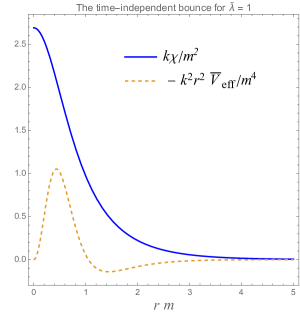
- 利用包含立方项的改进泡核作用量计算,确定成核温度 Tₙ 和相变强度 α。
- 基于相变参数计算引力波谱振幅与峰值频率 fₚₑₐₖ,假设快速再热。
- 将该框架应用于具体模型,包括一个简单的RSB模型和一个含右手中微子的规范B-L模型,以检验其预测能力。
- 评估超冷之后的再热动力学,以验证引力波与PBH计算中所采用的快速再热假设。
实验结果
研究问题
- RQ1模型无关的超冷膨胀方法能否被扩展至中等程度超冷(ε ~ 1)情形,超越原始的小-ε区域?
- RQ2在有效势中引入立方项如何提升超冷膨胀中相变预测的精度?
- RQ3哪些参数空间区域会产生可被脉冲星计时阵列(NANOGrav、CPTA等)探测到的引力波背景?
- RQ4哪些参数区域被LIGO/Virgo O3观测结果排除,或可被未来探测器(如LISA与爱因斯坦望远镜)探测到?
- RQ5在RSB相变期间形成的原初黑洞是否可能构成可观测暗物质密度的显著部分?在何种条件下?
主要发现
- 包含有效势中立方项的改进超冷膨胀方法,可对 ε ~ 1 情况下的相变参数(Tₙ、α、β⁻¹)进行精确预测,显著扩展了模型无关方法的适用范围。
- 识别出 fₚₑₐₖ ~ 10⁻⁹–10⁻⁶ Hz 且引力波振幅可探测的参数区域,与NANOGrav 12.5年引力波背景结果一致。
- 引力波谱超过LIGO/Virgo O3灵敏度的参数区域被排除,而其他区域则处于未来探测器(如LISA与爱因斯坦望远镜)的探测范围内。
- 模型无关框架预测,通过晚期爆发机制产生的PBH可在特定参数区域中占据可观测暗物质密度的显著份额。
- 在含右手中微子的规范B-L模型中,对于某些参数选择(如 χ₀ ~ 10⁵ GeV),快速再热是可能的,验证了引力波与PBH计算中所用快速再热假设的合理性。
- 该方法提供了无需对每个模型进行完整数值模拟的半解析、基于参数的引力波谱与PBH产率预测。
更好的研究,从现在开始
从阅读论文到最终审阅,大幅缩短您的研究时间。
无需绑定信用卡
本解读由 AI 生成,并经人工编辑审核。