
[論文レビュー] A dynamic network model of societal complexity and resilience inspired by Tainter's theory of collapse
本稿は、Tainterの社会的崩壊理論にインspiredされた動的ネットワークモデルを構築し、外部からのストレスに応じて複雑性が増加することで、限界収益の減少と最終的な崩壊に至ることをモデル化している。このモデルは、管理的複雑性の増加が生産性とレジリエンスを低下させることを示しており、解析的および数値的結果から、複雑性が制御不能に増加する継続的ストレス下では崩壊が避けられないことを示している。
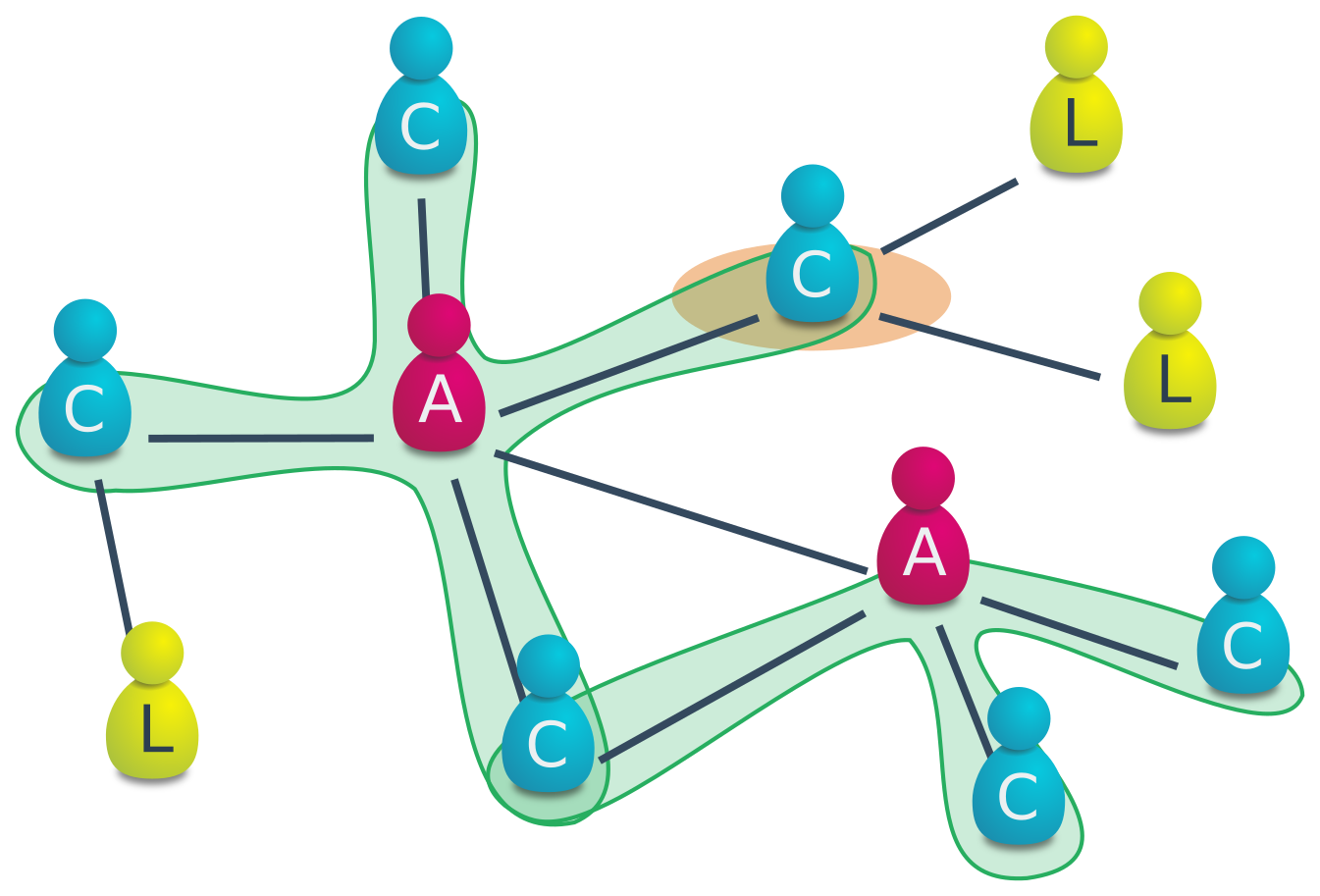
In recent years, several global events have severely disrupted economies and social structures, undermining confidence in the resilience of modern societies. While empirical evidence on the dynamics and drivers of past societal collapse is mounting, a process-based understanding of these dynamics is still in its infancy. Here we aim to identify and illustrate the underlying drivers of such societal instability or even collapse. The inspiration for this work is Joseph Tainter's theory of the "collapse of complex societies", which postulates that the complexity of societies increases as they solve problems, leading to diminishing returns on complexity investments, and ultimately to collapse. In this work we have abstracted this theory into a low-dimensional and stylised model of two classes of networked agents, hereafter referred to as "laborers" and "administrators". We numerically modeled the dynamics of societal complexity, measured as the fraction of "administrators", which is assumed to affect the productivity of connected energy-producing "laborers". We show that collapse becomes increasingly likely as the complexity of the model society continuously increases in response to external stresses that emulate Tainter's abstract notion of problems that societies must solve. We also provide an analytical approximation of the system's dominant dynamics, which matches well with the numerical experiments, and use it to study the influence on network link density, social mobility and productivity. Our work advances the understanding of social-ecological collapse and illustrates its potentially direct link to an ever-increasing societal complexity in response to external shocks or stresses via a self-reinforcing feedback.
研究の動機と目的
- Tainterの崩壊理論にインspiredされた、スタイライズドで低次元のネットワークモデルを構築すること。
- 外部ストレスへの反応としての複雑性の増加が限界収益の減少を引き起こし、最終的に社会的崩壊に至ることを調査すること。
- ネットワーク構造、社会的流動性、生産性の役割が、レジリエンスと崩壊ダイナミクスにどのように影響するかを分析すること。
- 数値シミュレーションと一致する、システムの支配的ダイナミクスの解析的近似を提供すること。
- 特定の形態の複雑性が崩壊リスクの増加を回避できる可能性があるかどうかを検討し、よりレジリエントなシステム設計の原則を導くこと。
提案手法
- モデルは、エネルギー生産者である労働者と複雑性エージェントである管理者という2種類のエージェントを使用し、リンク密度が可変なネットワークで接続されている。
- 社会的複雑性は管理者の割合として測定され、非線形関数を通じて労働者の生産性に影響を与える。
- 外部ストレス要因が、問題解決の反応として、連続的に複雑性(管理者)の増加を引き起こす。
- 生産性はネットワーク構造と管理者-労働者間の相互作用に依存し、パラメータa, b, c, およびϱを含む2つの項の合成としてエネルギー入力E0で表される。
- エネルギー入力関数の解析的近似が導出され、数値シミュレーションと照合された。
- リンク密度、社会的流動性、生産性パラメータに対する感度分析が行われ、崩壊の可能性に与える影響が評価された。
実験結果
リサーチクエスチョン
- RQ1外部ストレスへの反応としての社会的複雑性の増加が、どのように限界収益の減少を経て最終的に崩壊に至るのか?
- RQ2ネットワーク構造とリンク密度は、複雑性とレジリエンスの関係をどのように媒介するのか?
- RQ3社会的流動性と生産性パラメータは、システムの安定性と崩壊閾値にどのように影響するのか?
- RQ4解析的近似は、複雑なエージェントベースモデルの支配的ダイナミクスを正確に捉えられるか?
- RQ5どのような条件下で複雑性が崩壊リスクの増加を引き起こさず、よりレジリエントなシステムを支える設計原則は何か?
主な発見
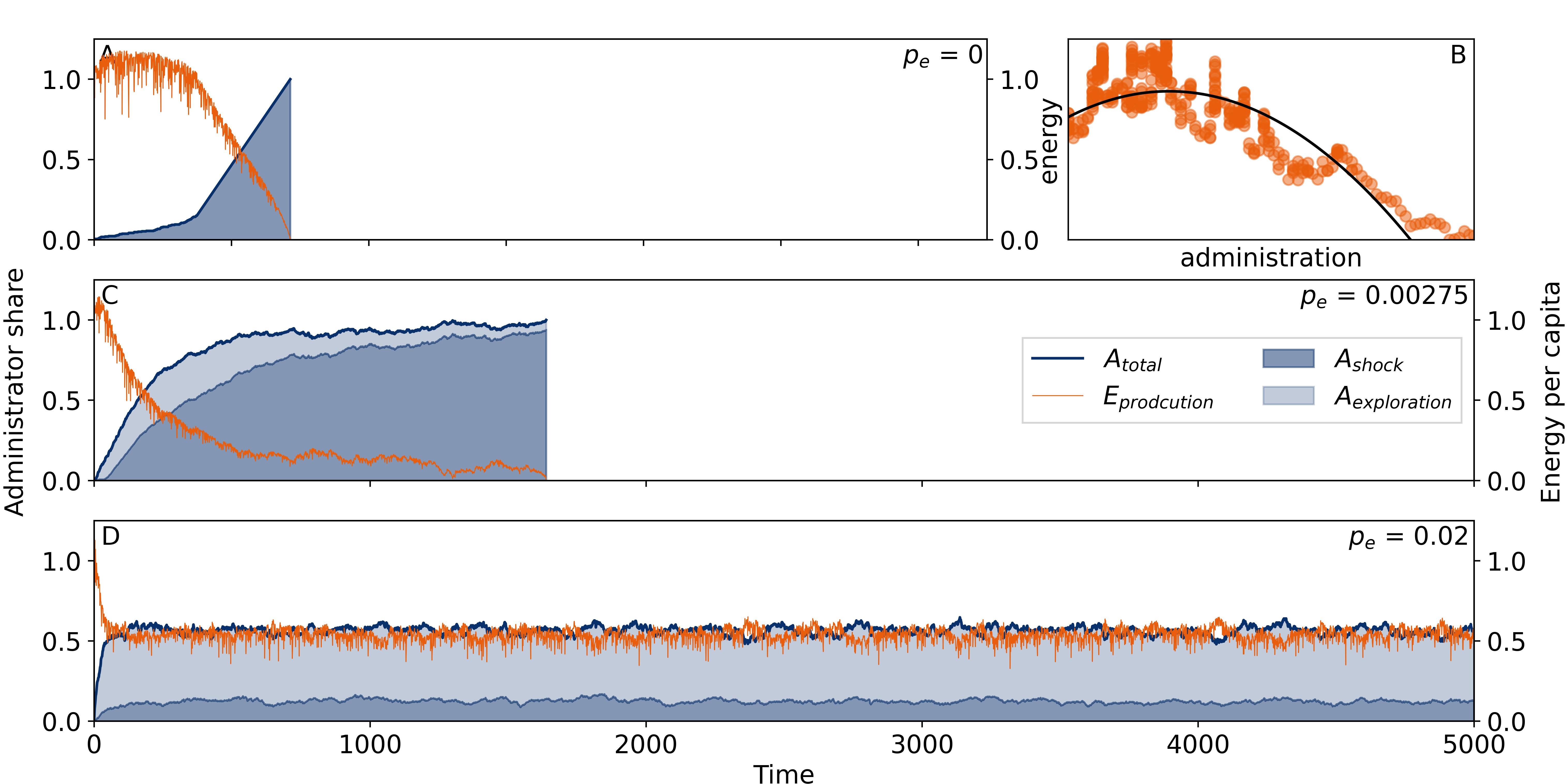
- モデルは、ストレスへの反応として複雑性が増加するにつれ、生産性が一時的に上昇するが、限界収益の減少により最終的に低下し、崩壊に至ることを示している。
- N=400、ϱ=0.02、a=b=0.75、c=1.05の場合、最適な管理者数は約22(人口の6%)であり、エネルギー出力を最大E≈461に高める。
- エネルギー入力関数の解析的近似は、数値シミュレーションとよく一致しており、モデルの核心的ダイナミクスが妥当であることが裏付けられた。
- 高いネットワークリンク密度と増加する社会的流動性は、システムのレジリエンスに影響を与えることが示されたが、正確な閾値はパラメータのレジームに依存する。
- 結果は、Tainterの仮説を支持しており、複雑性のコストが利益を上回る場合、自らが自己防衛的であることが社会的崩壊を直接引き起こす。
- 本研究は、すべての複雑性が同じリスクを伴うわけではないことを強調しており、特定の構成が崩壊を回避できる可能性を示唆し、よりレジリエントなシステム設計の道筋を示している。
より良い研究を、今すぐ始めましょう
論文の読解から最終レビューまで、研究時間を劇的に削減しましょう。
クレジットカード登録不要
このレビューはAIが作成し、人間の編集者が確認しました。