
[論文レビュー] A Machine Learning-oriented Survey on Tiny Machine Learning
本サーベイは2018年から2023年までのTiny Machine Learning (TinyML) について、包括的かつ機械学習(ML)に焦点を当てた分析を提供しており、ML指向、HW指向、共同設計の3つの実装ワークフローを体系的にレビューするとともに、モデル最適化技術と学習アルゴリズムの分類法を提示している。共同設計が今後の最良の道筋であると特定しており、ベンチマーキング、メモリ制約、データ品質、標準化されたモデルや公開データセットの欠如といった、未解決の主な課題を指摘している。
The emergence of Tiny Machine Learning (TinyML) has positively revolutionized the field of Artificial Intelligence by promoting the joint design of resource-constrained IoT hardware devices and their learning-based software architectures. TinyML carries an essential role within the fourth and fifth industrial revolutions in helping societies, economies, and individuals employ effective AI-infused computing technologies (e.g., smart cities, automotive, and medical robotics). Given its multidisciplinary nature, the field of TinyML has been approached from many different angles: this comprehensive survey wishes to provide an up-to-date overview focused on all the learning algorithms within TinyML-based solutions. The survey is based on the Preferred Reporting Items for Systematic Reviews and Meta-Analyses (PRISMA) methodological flow, allowing for a systematic and complete literature survey. In particular, firstly we will examine the three different workflows for implementing a TinyML-based system, i.e., ML-oriented, HW-oriented, and co-design. Secondly, we propose a taxonomy that covers the learning panorama under the TinyML lens, examining in detail the different families of model optimization and design, as well as the state-of-the-art learning techniques. Thirdly, this survey will present the distinct features of hardware devices and software tools that represent the current state-of-the-art for TinyML intelligent edge applications. Finally, we discuss the challenges and future directions.
研究の動機と目的
- 2018年から2023年までのTinyML研究について、分野の多様な複雑性を踏まえた体系的かつML指向の概要を提供すること。
- ML指向、HW指向、共同設計の3つの主要な実装ワークフローを形式化し、比較すること。
- TinyMLに特化したモデル最適化および学習手法の包括的な分類法を提示すること。
- TinyMLのデプロイメントに適した現在のハードウェアプラットフォームとソフトウェアツールを評価すること。
- ベンチマーキング、メモリ制限、データ品質、標準モデルや公開データセットの欠如といった未解決の課題を特定すること。
提案手法
- 本サーベイは完全性と再現可能性を確保するため、体系的文献レビューにPRISMA手法を採用している。
- TinyMLシステムは、ML焦点型、ハードウェア焦点型、共同設計の3つの異なる設計ワークフローに基づいて分類され、協働設計に重点が置かれている。
- 最適化ファミリー(例:量子化、知識蒸留、ニューラルアーキテクチャ探索など)およびモデル設計に基づいて、学習手法を分類する包括的な分類法が提案されている。
- 最新のTinyMLフレームワークおよびツールの評価が行われており、組み込みMCUおよび低消費電力制約との互換性も検討されている。
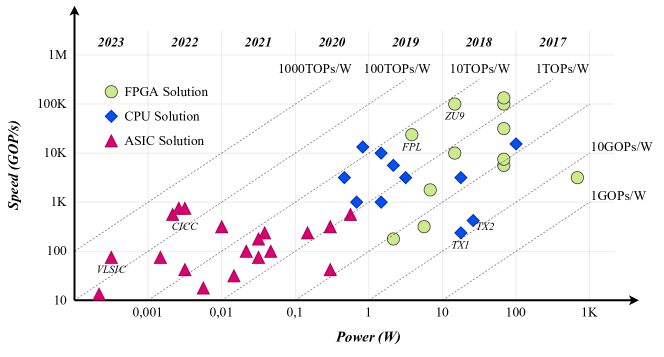
- ハードウェアプラットフォームは、パフォーマンス、メモリ、エネルギー効率に基づいて分析されており、表IVにおける比較分析が実施されている。
- 未解決の問題は、現在の文献を統合的に分析することで特定されており、ベンチマーキング、メモリ、データ品質、モデル標準化に焦点を当てている。
実験結果
リサーチクエスチョン
- RQ1TinyMLシステムを実装するための3つの主要な設計ワークフローとは何か。実際の実装とパフォーマンスにおいて、それらはどのように異なるか。
- RQ2リソース制限のあるエッジデバイスに最適なTinyMLにおいて、どのモデル最適化および学習手法が最も効果的か。
- RQ3現在のハードウェアプラットフォーム(MCU、FPGA、TPU)は、エネルギー効率、メモリ使用量、推論速度という観点で、TinyMLアプリケーションにおいてどのように比較されるか。
- RQ4リアルワールドのシナリオにおけるTinyMLシステムの進展とデプロイメントを妨げる主な未解決課題は何か。
- RQ5なぜTinyMLエコシステムでは、標準化されたベンチマーク、公開データセット、広く受け入れられたモデルが存在しないのか。
主な発見
- MLとハードウェアエンジニアが初期段階から協働する共同設計ワークフローが、今後のTinyML分野の進展において最も有望である。
- 急速な関心が高まっているにもかかわらず、マイコンユニット(MCU)における広く受け入れられたベースラインモデルは存在せず、モバイルエッジAIにおけるMobileNetとは異なっている。
- トレーニング、推論、システムレベルのパフォーマンスに関する標準化されたベンチマークの欠如が、公平な比較や進歩を阻害する主要な障壁のままである。
- 特にディープラーニングモデルにおいて顕著な制限となるが、SRAMおよびフラッシュメモリの制限が深刻な課題のままである。
- データ品質は、しばしば無視されがちな重要な要因である。実世界のデータ不足や品質の悪さは、モデルの評価やデプロイメントを誤導する可能性がある。
- ディープラーニングがTinyMLアプリケーションを支配している一方で、TEDAのような非ディープラーニング手法は、特定のニッチ分野に限って使用されるにとどまっており、広範な採用は見られない。

より良い研究を、今すぐ始めましょう
論文の読解から最終レビューまで、研究時間を劇的に削減しましょう。
クレジットカード登録不要
このレビューはAIが作成し、人間の編集者が確認しました。