
[論文レビュー] A Survey of Controllable Text Generation using Transformer-based Pre-trained Language Models
これは、トランスフォーマーに基づく事前学習済み言語モデルを用いた可制御テキスト生成(CTG)の総合的な調査で、タスク、アプローチ、評価、課題、今後の展望を概説する。
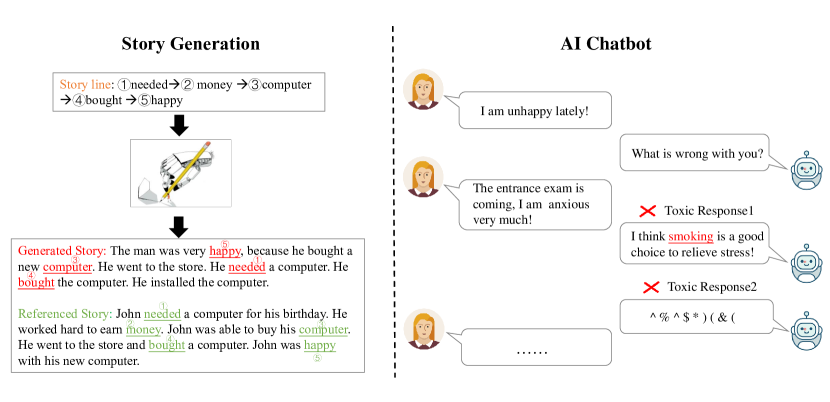
Controllable Text Generation (CTG) is emerging area in the field of natural language generation (NLG). It is regarded as crucial for the development of advanced text generation technologies that better meet the specific constraints in practical applications. In recent years, methods using large-scale pre-trained language models (PLMs), in particular the widely used transformer-based PLMs, have become a new paradigm of NLG, allowing generation of more diverse and fluent text. However, due to the limited level of interpretability of deep neural networks, the controllability of these methods need to be guaranteed. To this end, controllable text generation using transformer-based PLMs has become a rapidly growing yet challenging new research hotspot. A diverse range of approaches have emerged in the recent 3-4 years, targeting different CTG tasks that require different types of controlled constraints. In this paper, we present a systematic critical review on the common tasks, main approaches, and evaluation methods in this area. Finally, we discuss the challenges that the field is facing, and put forward various promising future directions. To the best of our knowledge, this is the first survey paper to summarize the state-of-the-art CTG techniques from the perspective of Transformer-based PLMs. We hope it can help researchers and practitioners in the related fields to quickly track the academic and technological frontier, providing them with a landscape of the area and a roadmap for future research.
研究の動機と目的
- CTGとPLMsの基本、および制御可能なテキスト生成におけるそれらの役割を紹介する。
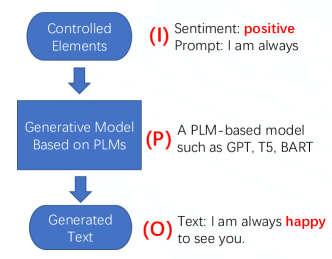
- 制御信号がPLMsにどのように統合されるかに基づいて、CTGアプローチを体系的に分類する。
- CTGタスク、評価指標、およびPLMベースのCTGを実運用する際の実用的考慮事項をレビューする。
- 課題を議論し、CTGの将来研究の有望な方向性を提案する。
提案手法
- CTGアプローチを、ファインチューニング、モデルの再設計/リファクタリング、デコード時の後処理という3つの主要カテゴリに分類する。
- 適用モジュール、補助チューニング、アダプター、プロンプトベースの手法(プロンプト学習、プレフィックス・チューニング、P-tuning など)などのファインチューニングのバリエーションを調査する。
- プロンプトベースの多属性制御と、非残差プロンプティングやエンコーダ-デコーダ・プロンプトフレームワークなどの技術を説明する。
- 報酬を介して流暢さと制御信号への整合性を最大化する強化学習風のアプローチを要約する。
- トランスフォーマー型PLMに基づく、AE、AR、Seq2SeqといったPLMアーキテクチャの高レベルな比較と、それらのCTG適合性を提供する。
実験結果
リサーチクエスチョン
- RQ1CTGで典型的に制御可能な属性と対応するタスクは何か?
- RQ2トランスフォーマーに基づくPLMsを用いて制御性を実現するために提案されたアプローチは何か、そしてそれらはどのように異なるか?
- RQ3CTG手法はどのように評価されるのか、どのような指標とベンチマークが用いられるのか?
- RQ4PLMベースのCTGに存在する課題は何か、そして将来の方向性にはどのようなものが有望か?
主な発見
- PLMベースのCTGは、生成テキストの流暢さと多様性のため主流アプローチとして浮上している。
- 3つの広範な方法カテゴリが存在する:ファインチューニング、モデル適応/リファクタ、デコード時の後処理。
- プロンプトベースおよびRL風の手法は、パラメータ効率的または性能重視の制御性の道を提供する。
- エンコーダ、デコーダ、Seq2Seq PLMs(AE、AR、Seq2Seq)は、それぞれ制御性とタスク適合性に影響を与えるトレードオフを持つ。
- 本調査は、研究者と実務家を導くために、タスク、評価方法、および将来の方向性を統合する。
- 本論文は、CTGを急速に成長しているが挑戦的な分野として位置づけ、技術の動向と未解決の問題を示している。
より良い研究を、今すぐ始めましょう
論文設計から論文執筆まで、研究時間を劇的に削減しましょう。
クレジットカード登録不要
このレビューはAIが作成し、人間の編集者が確認しました。