
[論文レビュー] A Systematic Literature Review of Explainable AI for Software Engineering
この論文は、Software Engineering (XAI4SE) における Explainable AI (XAI) 手法を整理する系統的文献調査を実施し、どの SE 領域とタスクが研究されているか、どの XAI アプローチが用いられているか、XAI が SE においてどれほど有用であったかを評価し、将来の研究のロードマップを提示する。
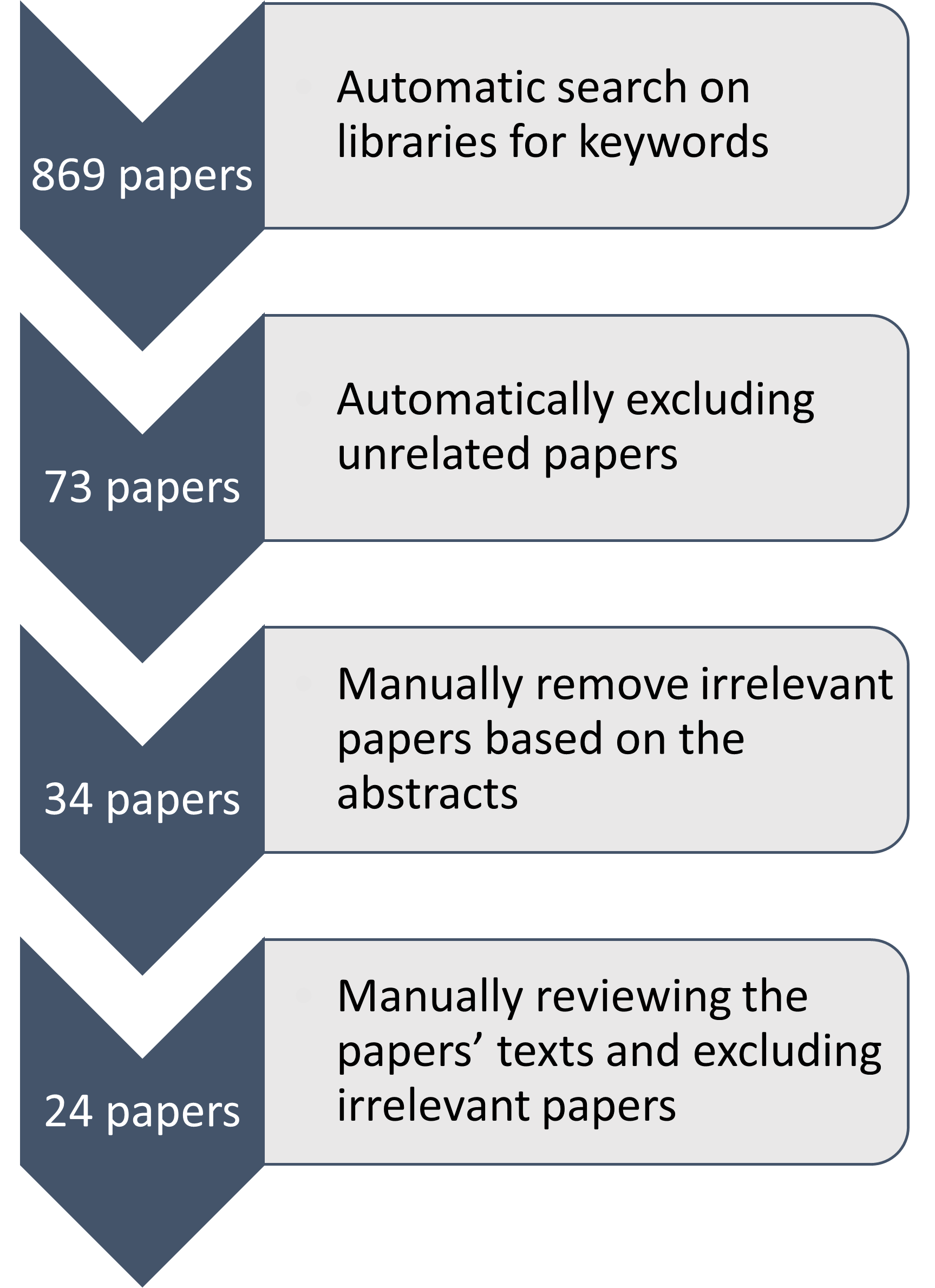
Context: In recent years, leveraging machine learning (ML) techniques has become one of the main solutions to tackle many software engineering (SE) tasks, in research studies (ML4SE). This has been achieved by utilizing state-of-the-art models that tend to be more complex and black-box, which is led to less explainable solutions that reduce trust and uptake of ML4SE solutions by professionals in the industry. Objective: One potential remedy is to offer explainable AI (XAI) methods to provide the missing explainability. In this paper, we aim to explore to what extent XAI has been studied in the SE community (XAI4SE) and provide a comprehensive view of the current state-of-the-art as well as challenge and roadmap for future work. Method: We conduct a systematic literature review on 24 (out of 869 primary studies that were selected by keyword search) most relevant published studies in XAI4SE. We have three research questions that were answered by meta-analysis of the collected data per paper. Results: Our study reveals that among the identified studies, software maintenance (\%68) and particularly defect prediction has the highest share on the SE stages and tasks being studied. Additionally, we found that XAI methods were mainly applied to classic ML models rather than more complex models. We also noticed a clear lack of standard evaluation metrics for XAI methods in the literature which has caused confusion among researchers and a lack of benchmarks for comparisons. Conclusions: XAI has been identified as a helpful tool by most studies, which we cover in the systematic review. However, XAI4SE is a relatively new domain with a lot of untouched potentials, including the SE tasks to help with, the ML4SE methods to explain, and the types of explanations to offer. This study encourages the researchers to work on the identified challenges and roadmap reported in the paper.
研究の動機と目的
- XAI 手法で調査されたソフトウェア工学の領域とタスクを評価する。
- SE研究で適用されたXAI技術と説明を特定する。
- SEにおけるXAIの有用性を評価し、制限と将来のロードマップを要約する。
提案手法
- Kitchenhamのガイドラインに従って系統的文献調査を実施する。
- 解釈可能/説明可能な用語、SEタスク、機械学習用語を網羅する構造化キーワードで、5つの主要データベースを検索する。
- Screen 869 initial papers to 24 primary studies that meet inclusion criteria.
- Extract 17 properties per paper to answer the research questions.
- Synthesize results with descriptive statistics and meta-analysis per paper.
実験結果
リサーチクエスチョン
- RQ1RQ1: Explainable AI アプローチがこれまで使用されてきた主なソフトウェア工学の領域とタスクは何ですか?
- RQ2RQ2: SEタスクに採用されたExplainable AIアプローチは何ですか?
- RQ3RQ3: XAIはSEにどの程度有用であったか、そして説明はどのように評価されていますか?
主な発見
- ソフトウェア保守は最も研究対象となっているSDLC段階であり(タスクの68%)、欠陥予測が主要なタスクとして突出している(欠陥関連作業の44%)。
- Most XAI applications in SE rely on self-explaining or model-internal explanations, with limited use of higher-level explanations like visualization or natural language justifications.
- LIME and ANOVA are among the most frequently used XAI methods in the reviewed studies.
- There is a notable lack of standard evaluation metrics for XAI in SE and limited human-centered evaluation, signaling a need for benchmarks and rigorous user studies.
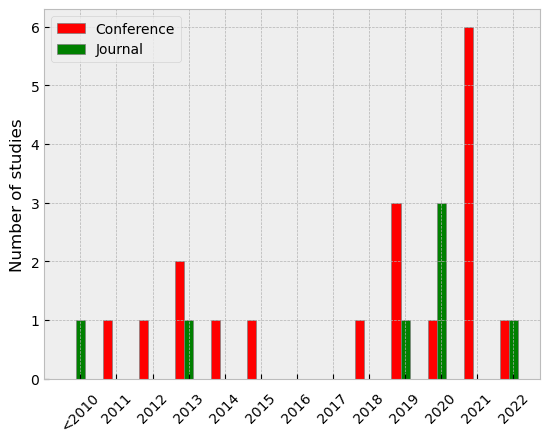
- The review identifies a nascent XAI4SE field with growth after 2019 and highlights gaps across SE tasks, ML4SE methods, and explanation types.
より良い研究を、今すぐ始めましょう
論文設計から論文執筆まで、研究時間を劇的に削減しましょう。
クレジットカード登録不要
このレビューはAIが作成し、人間の編集者が確認しました。