
[論文レビュー] AI Ethics: An Empirical Study on the Views of Practitioners and Lawmakers
本研究は、20か国から99名の実務家および政策立案者を対象とした世界的なアンケートを通じて、AI倫理の原則と課題を実証的に調査している。透明性、責任性、プライバシーが最も重要な倫理的原則であると特定された一方で、倫理的知識の欠如、法的枠組みの不在、監視機関の弱体化といった課題が顕在化した。これらは、倫理的配慮を備えたAI開発および成熟度モデル構築の基盤を提供する。
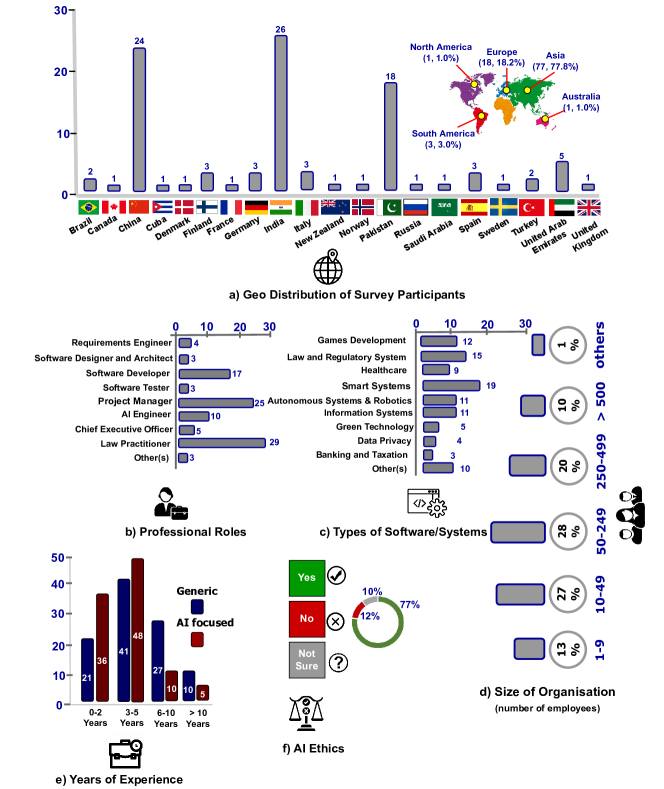
Artificial Intelligence (AI) solutions and technologies are being increasingly adopted in smart systems context, however, such technologies are continuously concerned with ethical uncertainties. Various guidelines, principles, and regulatory frameworks are designed to ensure that AI technologies bring ethical well-being. However, the implications of AI ethics principles and guidelines are still being debated. To further explore the significance of AI ethics principles and relevant challenges, we conducted a survey of 99 representative AI practitioners and lawmakers (e.g., AI engineers, lawyers) from twenty countries across five continents. To the best of our knowledge, this is the first empirical study that encapsulates the perceptions of two different types of population (AI practitioners and lawmakers) and the study findings confirm that transparency, accountability, and privacy are the most critical AI ethics principles. On the other hand, lack of ethical knowledge, no legal frameworks, and lacking monitoring bodies are found the most common AI ethics challenges. The impact analysis of the challenges across AI ethics principles reveals that conflict in practice is a highly severe challenge. Moreover, the perceptions of practitioners and lawmakers are statistically correlated with significant differences for particular principles (e.g. fairness, freedom) and challenges (e.g. lacking monitoring bodies, machine distortion). Our findings stimulate further research, especially empowering existing capability maturity models to support the development and quality assessment of ethics-aware AI systems.
研究の動機と目的
- AI実務家および政策立案者の間で、AIの核心的倫理原則と課題に対する認識を実証的に検証すること。
- 特定された課題が異なるAI倫理原則に与える深刻度の影響を評価すること。
- 実務家と政策立案者の間で、倫理原則および課題に対する認識の違いを比較・対比すること。
- 証拠に基づくガイドラインを通じて、強固で法的かつ倫理的に整合性のあるAIシステムの開発に向けた実行可能なイン사이트を提供すること。
- 実世界のステークホルダーの視点から、主要な原則と課題を特定することで、AI倫理能力成熟度モデルの構築を支援すること。
提案手法
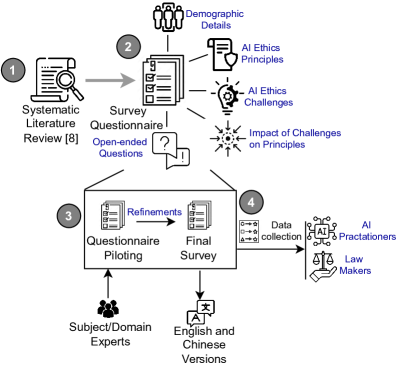
- AIエンジニア、弁護士、政策立案者を含む20か国から99名の参加者を対象にした横断的アンケート調査を実施した。
- 構造化されたアンケートを用いて、15のAI倫理原則および12の主要な課題に関する認識を収集した。
- 実務家と政策立案者の間の認識の違いを比較するために、統計的分析(例:相関分析および有意性検定)を適用した。
- 深刻度影響分析を用いて、異なる倫理原則にわたる課題の長期的影響を評価した。
- 先行する系統的文献レビュー(SLR)と照合することで、既存の理論的枠組みと整合性があることを検証した。
- 将来のAI倫理成熟度モデル構築および産業応用に使用するための、原則と課題の最終リストを構築した。
実験結果
リサーチクエスチョン
- RQ1実務家および政策立案者は、AI倫理の原則と課題に関してどのような洞察を持っているか?
- RQ2特定された課題がAI倫理原則に与える深刻度の影響は何か?
- RQ3実務家と政策立案者は、これらの原則および課題をどのように異なるように認識しているか?
主な発見
- 透明性、責任性、プライバシーは、実務家および政策立案者の両方によって最も重要なAI倫理原則と評価された。
- 最も深刻な課題として、倫理的知識の欠如、法的枠組みの不在、監視機関の不在が特定された。
- 実務上の矛盾は、特に公平性および自由の原則に深刻な影響を与える深刻な課題であると特定された。
- 実務家と政策立案者の認識の間に有意な統計的相関が認められたが、公平性および自由の原則に関しては顕著な違いが見られた。
- 政策立案者の方が、監視機関の不在や機械的歪みを実務家よりも深刻な課題と認識していた。
- 本研究の最終的な原則および課題のリストは、将来のAI倫理成熟度モデル開発の検証された基盤を提供する。
より良い研究を、今すぐ始めましょう
論文の読解から最終レビューまで、研究時間を劇的に削減しましょう。
クレジットカード登録不要
このレビューはAIが作成し、人間の編集者が確認しました。