
[論文レビュー] Asynchronous Trajectory Matching-Based Multimodal Maritime Data Fusion for Vessel Traffic Surveillance in Inland Waterways
本稿では、内河川船舶交通監視におけるAISおよびビデオデータの非同期的でマルチモーダルなデータ統合を目的とした深層学習ベースの手法、DeepSORVFを提案する。AISおよびビデオストリームから軌跡特徴を抽出し、事前知識に基づく遮断耐性トラッキングを用いた軌跡マッチング機構を採用することで、遮断や非同期データ条件下でも高精度でリアルタイムの統合を実現した。FVesselベンチマークデータセットを用いた検証では、平均97.02%のMOFAおよび0.196のMOFPを達成した。
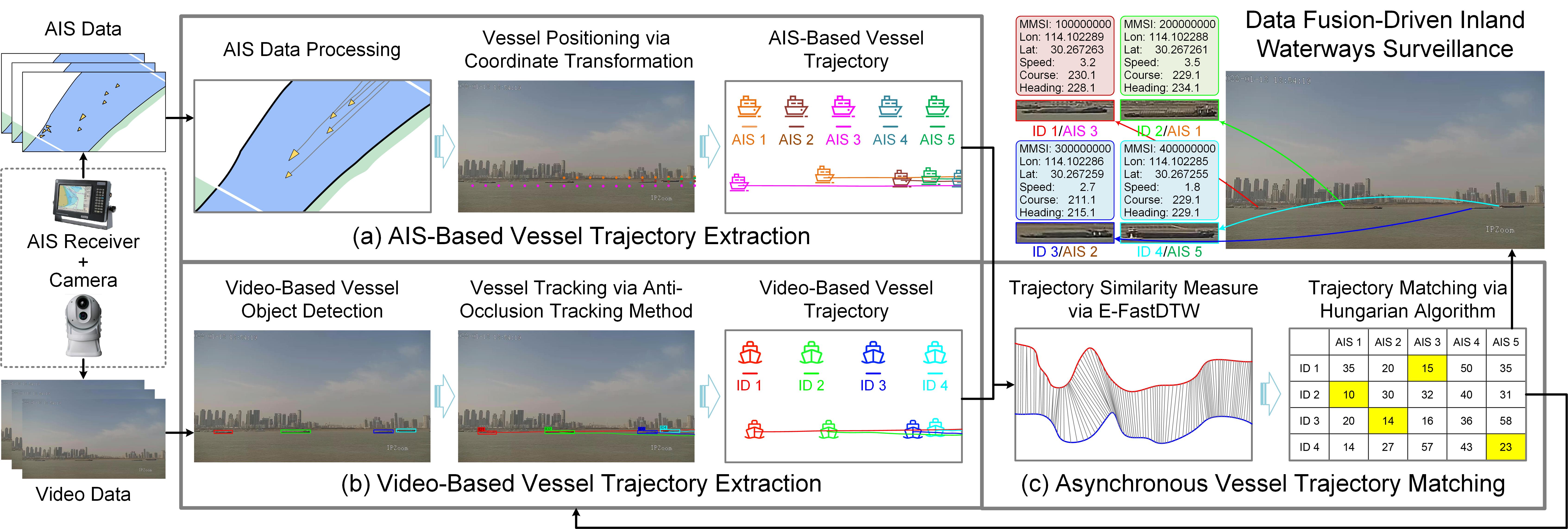
The automatic identification system (AIS) and video cameras have been widely exploited for vessel traffic surveillance in inland waterways. The AIS data could provide the vessel identity and dynamic information on vessel position and movements. In contrast, the video data could describe the visual appearances of moving vessels, but without knowing the information on identity, position and movements, etc. To further improve vessel traffic surveillance, it becomes necessary to fuse the AIS and video data to simultaneously capture the visual features, identity and dynamic information for the vessels of interest. However, traditional data fusion methods easily suffer from several potential limitations, e.g., asynchronous messages, missing data, random outliers, etc. In this work, we first extract the AIS- and video-based vessel trajectories, and then propose a deep learning-enabled asynchronous trajectory matching method (named DeepSORVF) to fuse the AIS-based vessel information with the corresponding visual targets. In addition, by combining the AIS- and video-based movement features, we also present a prior knowledge-driven anti-occlusion method to yield accurate and robust vessel tracking results under occlusion conditions. To validate the efficacy of our DeepSORVF, we have also constructed a new benchmark dataset (termed FVessel) for vessel detection, tracking, and data fusion. It consists of many videos and the corresponding AIS data collected in various weather conditions and locations. The experimental results have demonstrated that our method is capable of guaranteeing high-reliable data fusion and anti-occlusion vessel tracking.
研究の動機と目的
- 内河川船舶交通監視におけるAISおよびビデオカメラからの非同期的でマルチモーダルなデータ統合の課題に対処すること。
- 遮断、欠損データ、時間遅延の条件下でも、データ統合の精度と耐性を向上させること。
- 識別子、動的特徴、視覚的特徴を統合した実用的でリアルタイムな手法を開発し、状況認識を向上させること。
- 多様な環境条件下での船舶検出、追跡、データ統合の評価を目的とした、新規ベンチマークデータセット(FVessel)を構築すること。
提案手法
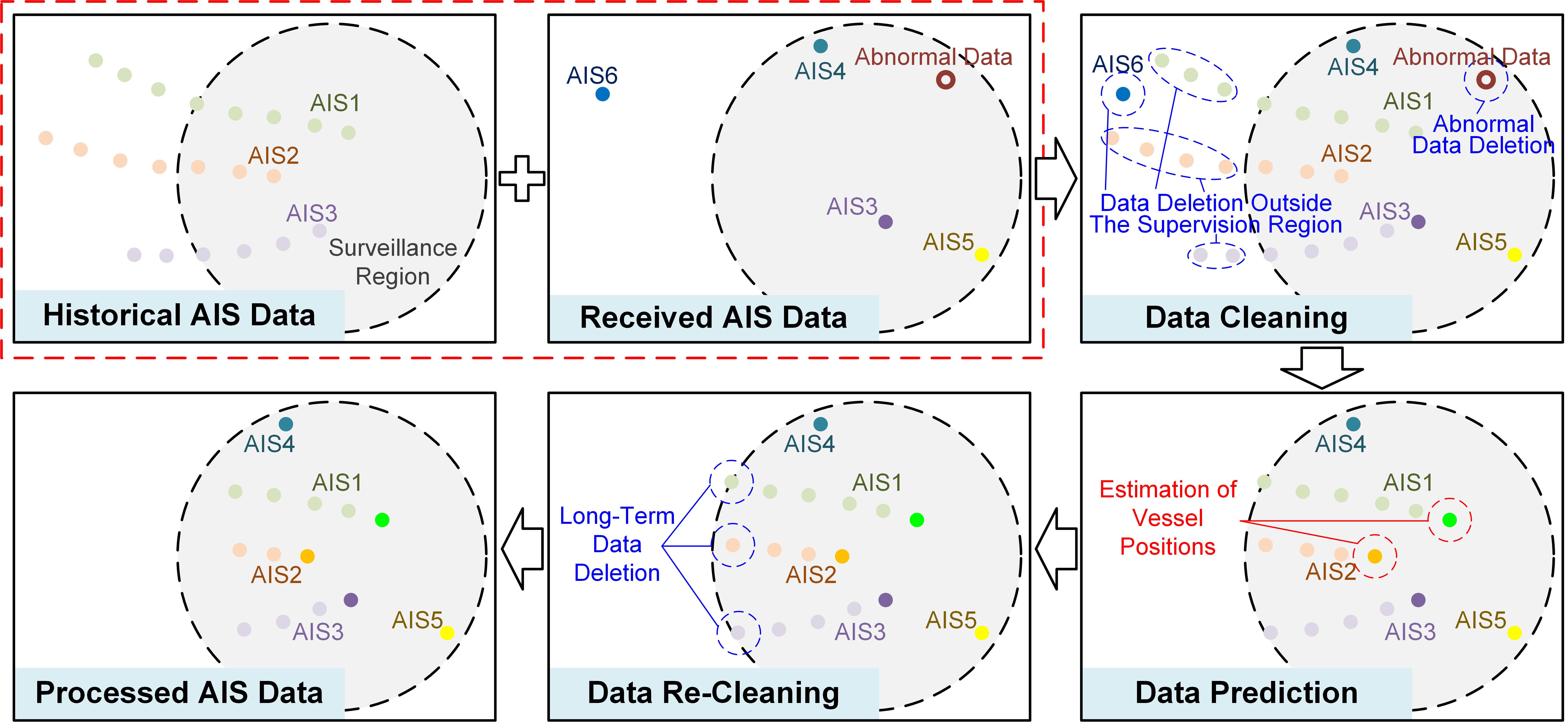
- 船舶の動的情報を(例:MMSI、速度、コース)および空間的・時間的位置情報を用いて、AISベースの軌跡を抽出する。
- 物体検出およびトラッキングモデルを用いて、ビデオベースの軌跡を抽出し、視覚的船舶ターゲットを特定・追跡する。
- 時間的ずれがある状況下でもAISと視覚的軌跡を一致させることを可能にする、深層学習を活用した非同期的軌跡マッチング機構(DeepSORVF)を実装する。
- 船舶航行行動に関する事前知識を運動モデルに統合することで、遮断時における追跡の耐性を向上させる。
- 両モダリティからの動き特徴を統合するハイブリッド統合戦略を用い、遮断中の船舶位置を予測・補正する。
- 時間経過に伴い一致したAISターゲットと視覚的ターゲット間の距離を最小化する軌跡マッチング損失関数を適用する。
実験結果
リサーチクエスチョン
- RQ1内河川における非同期的AISおよびビデオデータを効果的にマッチングさせ、船舶の識別および運動追跡を信頼性高く実現する方法は何か?
- RQ2船舶航行行動に関する事前知識を組み込むことで、遮断状況下での追跡性能はどの程度向上するか?
- RQ3時間遅延や欠損データに対処する際、軌跡マッチングの影響はデータ統合精度にどのように現れるか?
- RQ4本手法は、現実的で複雑な状況下でのベースライン統合および追跡手法と比較して、どのように優れているか?
主な発見
- 提案手法であるDeepSORVFは、FVesselデータセットにおいて平均97.02%のMultiple Object Fusion Accuracy(MOFA)および0.196のMultiple Object Fusion Precision(MOFP)を達成し、高い統合精度を示した。
- 遮断耐性トラッキング戦略の導入により、MOFAが最大11.7ポイント向上(例:clip-02では87.77%から99.47%に)し、遮断に対する強い耐性を示した。
- clip-02におけるMOFPはわずかに上昇(0.110から0.140に)したが、遮断中の船舶を正しく一致させたことで、全体の統合信頼性が向上した。
- 1秒分のデータ処理に平均0.2562秒(範囲:0.175–0.500秒)を要し、実用的導入に向けたリアルタイム性が確認された。
- 図9の可視化比較では、DeepSORVFが遮断中の船舶を効果的に予測・一致させているが、複雑な遮断状況ではわずかなバウンディングボックスのバイアスが残存する場合がある。
この論文を読む
Nubintのビューアで原文を開き、読みながら気になる箇所をすぐに質問できます。
Nubintでこの論文を読むこのレビューはAIが論文の原文をもとに作成しました。引用する前に原文をご確認ください。