
[論文レビュー] Atacama Large Aperture Submillimeter Telescope (AtLAST) science: Gas and dust in nearby galaxies
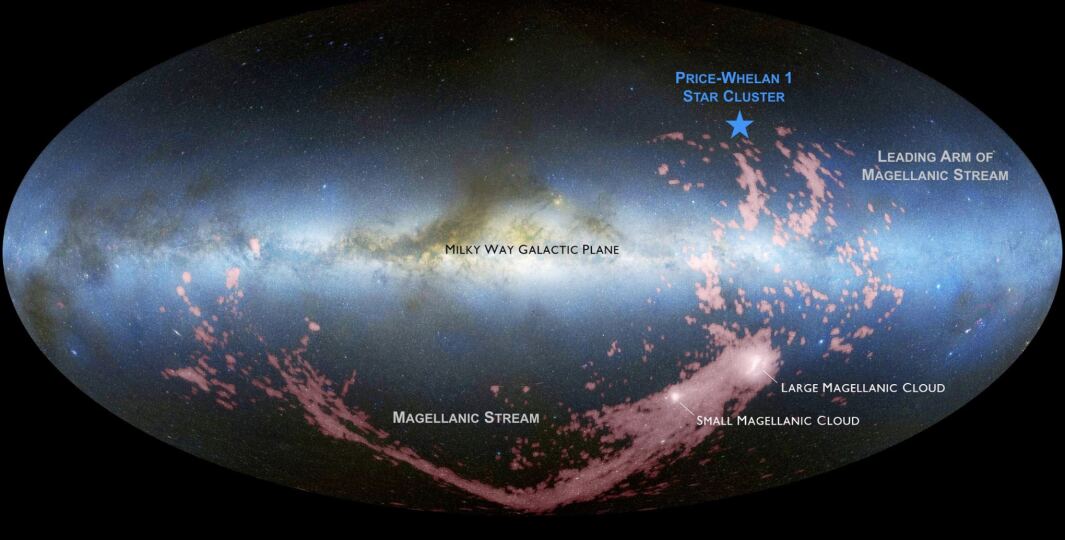
提案された50 m サブミリ波望遠鏡AtLASTが、広い空域と複数のトレーサを用いた深部の塵・ガスマッピングを通じて、近傍銀河、特にLMC/SMCにおけるISMと星形成研究をどのように変革するかを示すケーススタディ。
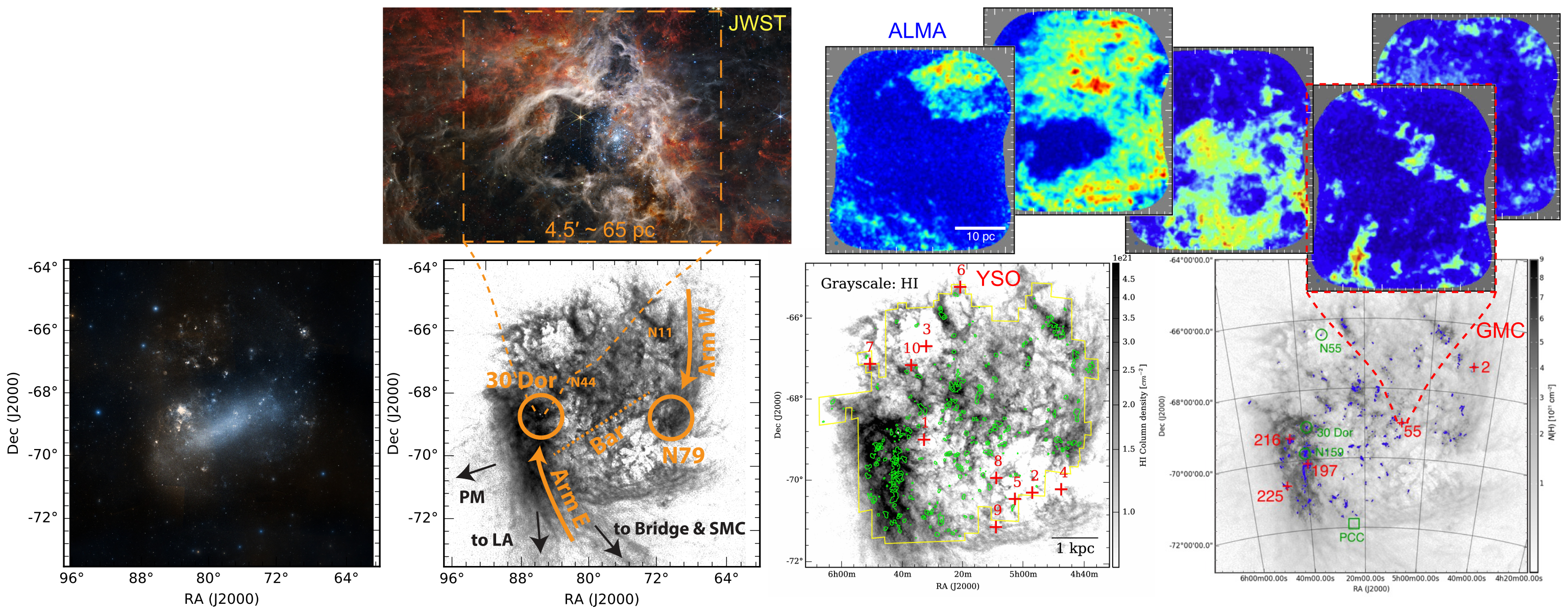
Understanding the physical processes that regulate star formation and galaxy evolution are major areas of activity in modern astrophysics. Nearby galaxies offer unique opportunities to inspect interstellar medium (ISM), star formation (SF), radiative, dynamic and magnetic physics in great detail from sub-galactic (kpc) scales to sub-cloud (sub-pc) scales, from quiescent galaxies to starbursts, and from field galaxies to overdensities. In this case study, we discuss the major breakthroughs in this area of research that will be enabled by the Atacama Large Aperture Submillimeter Telescope (AtLAST), a proposed 50-m single-dish submillimeter telescope. The new discovery space of AtLAST comes from its exceptional sensitivity, in particular to extended low surface brightness emission, a very large 2 degree field of view, and correspondingly high mapping efficiency. This paper focuses on four themes which will particularly benefit from AtLAST: 1) the LMC and SMC, 2) extragalactic magnetic fields, 3) the physics and chemistry of the interstellar medium, and 4) star formation and galaxy evolution. With ~1000-2000h surveys each, AtLAST could deliver deep dust continuum maps of the entire LMC and SMC fields at parsec-scale resolution, high-resolution maps of the magnetic field structure, gas density, temperature and composition of the dense and diffuse ISM in ~100 nearby galaxies, as well as the first large-scale blind CO survey in the nearby Universe, delivering molecular gas masses for up to 10^6 galaxies (3 orders of magnitude more than current samples). Through such observing campaigns, AtLAST will have a profound impact on our understanding of the baryon cycle and star formation across a wide range of environments.
研究の動機と目的
- 近傍銀河のガスと塵に焦点を当てたAtLASTの科学ケースを動機づけ、定義する。
- 多様な環境でISMの物理・化学・磁場・星形成をAtLASTがどのように探るかを示す。
- LMC/SMCを主要な研究室として強調し、これらの目標を達成するための観測要件を定量化する。
- 潜在的な観測計画手法を示し、銀河のバリオン循環の理解への影響を示す。
提案手法
- 50 m口径の単一ディッシュで、広範囲の発展放射に対する優れた感度、2°の視野、そして高いマッピング効率。
- ダストとガスのトレーサーを写すため、Band 3 から Band 10 までのマルチバンド連続波とスペクトル線の調査を提案する。
- LMC/SMC向けの具体的な調査計画を概略し、オンソース時間推定は約2900時間(総計)で、分解像度はBand 10で約1.5–2″程度。
- AtLASTの能力を既存施設(ALMA、APEX、Herschel)と比較し、AtLASTがCOダークガスや拡散IS Mに対して独自にどのように対処するかを論じる。
- CO、[CI]、[CII]、塵の発光など、ガス相と塵の性質を特徴づける標的トレーサを論じる。
- AtLASTデータを、ガス質量、塵質量、金属量効果、星形成過程の制約へ翻訳する枠組みを提示する。
実験結果
リサーチクエスチョン
- RQ1LMC/SMCの拡散・高密度IS Mは天の川環境とどのように異なり、それが星形成に与える影響は何か。
- RQ2低金属量環境におけるCOダーク分子ガスの程度と性質はどのようで、[CI]などの線でどのように痕跡を追跡できるか。
- RQ3塵の性質(温度、放射効率、質量)はLMC/SMCの金属量と環境に応じてどのように変化するか。
- RQ4近傍銀河における磁場がガスの流れと星形成を形作る役割は何か。
- RQ5包括的に調査した場合、局所銀河集団全体で塵と分子ガスの分布像はどうなるか。
主な発見
- 低金属量環境ではCOダークガスが著しく、[CII]観測はLMCでCOで追跡されない冷ガスの大きな割合を示唆する。
- AtLASTは複数バンドの連続波でLMC/SMCを連続マッピングでき、拡散放射に対する前例のない感度とHerschelより10〜15倍高い空間分解能を持ち、約100 deg²の領域でサブパーセクスケール研究を可能にする。
- AtLASTによる大規模COと[CI]調査は、既存のCO調査と同等かそれ以上の深さと解像度の連続で高感度 coverageを提供する。
- マルチバンド連続データは、塵とfree-free放射やCMB/前景混同行を分離するのに役立ち、環境を跨いだ塵質量・温度推定を改善する。
- 高周波数での線計測(例: CO、[CI])を大面積で実施可能となり、雲スケールから銀河スケールまでの励起とガス状態の詳細研究を可能にする。
- 調査戦略は、LMC/SMCの連続マッピングで約2900時間程度の観測時間を長年にわたって割り当て、総合的な多バンドカバレッジを可能にすることを示している。
より良い研究を、今すぐ始めましょう
論文設計から論文執筆まで、研究時間を劇的に削減しましょう。
クレジットカード登録不要
このレビューはAIが作成し、人間の編集者が確認しました。