
[論文レビュー] Automatic Pulmonary Lobe Segmentation Using Deep Learning
本論文は、クラスの不均衡と分類が難しいボクセルに対処するため、Dice損失とフォーカル損失を組み合わせたハイブリッド損失関数を用いた、深層学習フレームワークを提示する。凸包クロッピングによる事前処理と、LUNA16スキャン50例の手動アノテーションを用いた学習により、LUNA16で91.48%の平均Dice係数、独立したTianchiデータセットで94.17%を達成し、データセット間で強力な汎化性能を示した。
Pulmonary lobe segmentation is an important task for pulmonary disease related Computer Aided Diagnosis systems (CADs). Classical methods for lobe segmentation rely on successful detection of fissures and other anatomical information such as the location of blood vessels and airways. With the success of deep learning in recent years, Deep Convolutional Neural Network (DCNN) has been widely applied to analyze medical images like Computed Tomography (CT) and Magnetic Resonance Imaging (MRI), which, however, requires a large number of ground truth annotations. In this work, we release our manually labeled 50 CT scans which are randomly chosen from the LUNA16 dataset and explore the use of deep learning on this task. We propose pre-processing CT image by cropping region that is covered by the convex hull of the lungs in order to mitigate the influence of noise from outside the lungs. Moreover, we design a hybrid loss function with dice loss to tackle extreme class imbalance issue and focal loss to force model to focus on voxels that are hard to be discriminated. To validate the robustness and performance of our proposed framework trained with a small number of training examples, we further tested our model on CT scans from an independent dataset. Experimental results show the robustness of the proposed approach, which consistently improves performance across different datasets by a maximum of $5.87\%$ as compared to a baseline model.
研究の動機と目的
- 限られたアノテーションデータを用いたCTスキャンにおける肺葉セグメンテーションのための堅牢な深層学習フレームワークの開発。
- 肺葉セグメンテーションにおける極端なクラス不均衡に対処するため、Dice損失とフォーカル損失を組み合わせること。
- 凸包クロッピングによる事前処理を通じて、多様なCTデータセット間でのモデルの汎化性能を向上させること。
- 監視付き肺葉セグメンテーション研究のため、LUNA16のCTスキャン50例を手動でアノテートした公開可能なデータセットを提供すること。
提案手法
- 肺の凸包内に限定してスキャンをクロッピングすることで、胸部外のノイズを低減する。
- クラス不均衡の処理に適したDice損失と、分類が難しいボクセルに注目するフォーカル損失を組み合わせたハイブリッド損失関数を用いる。
- ランダムシフト、z軸反転、XY平面回転によるデータ拡張を実施し、汎化性能を向上させる。
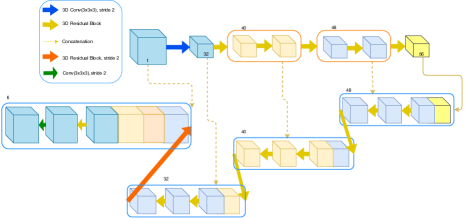
- バッチサイズ1で300エポックにわたり、Adam最適化アルゴリズムを用いて3D U-Netベースの深層畳み込みニューラルネットワークを学習する。
- Dice係数を用いて性能を評価し、各肺葉ごとのスコアと全肺葉の平均スコアを計算する。
- Tianchiデータセットの独立したホールドアウトセット10例を用いて、モデルの頑健性を検証する。
実験結果
リサーチクエスチョン
- RQ150例の手動アノテーション付きCTスキャンのみを用いて、深層学習モデルが高精度な肺葉セグメンテーションを達成できるか?
- RQ2Dice損失とフォーカル損失を組み合わせたハイブリッド損失関数は、極端なクラス不均衡の下で、セグメンテーション精度をどのように向上させるか?
- RQ3凸包クロッピングによる事前処理は、分布外のCTスキャンにおいて、モデルの頑健性と性能をどの程度向上させるか?
- RQ4Tianchiデータセットのように、学習時に使用されていない独立したデータセットに対し、モデルの汎化性能はどの程度高いか?
- RQ5提案フレームワークは、既存の最先端手法を上回る性能を示すか?
主な発見
- 提案フレームワークは、LUNA16テストセットで91.48%のSOTA平均Dice係数、Tianchiテストセットで94.17%を達成した。
- Dice損失にフォーカル損失を追加することで、ベースラインモデル(Dice損失のみ)と比較し、LUNA16で平均Dice係数が3.87%向上、Tianchiで3.95%向上した。
- 凸包クロッピングによる事前処理を追加することで、ハイブリッド損失のみのモデルと比較し、LUNA16で平均Dice係数が0.54%向上、Tianchiで1.92%向上した。
- 両データセットにおいて、前回のSOTA手法[7]と比較し、平均Dice係数で最大2.39%の向上を達成した。
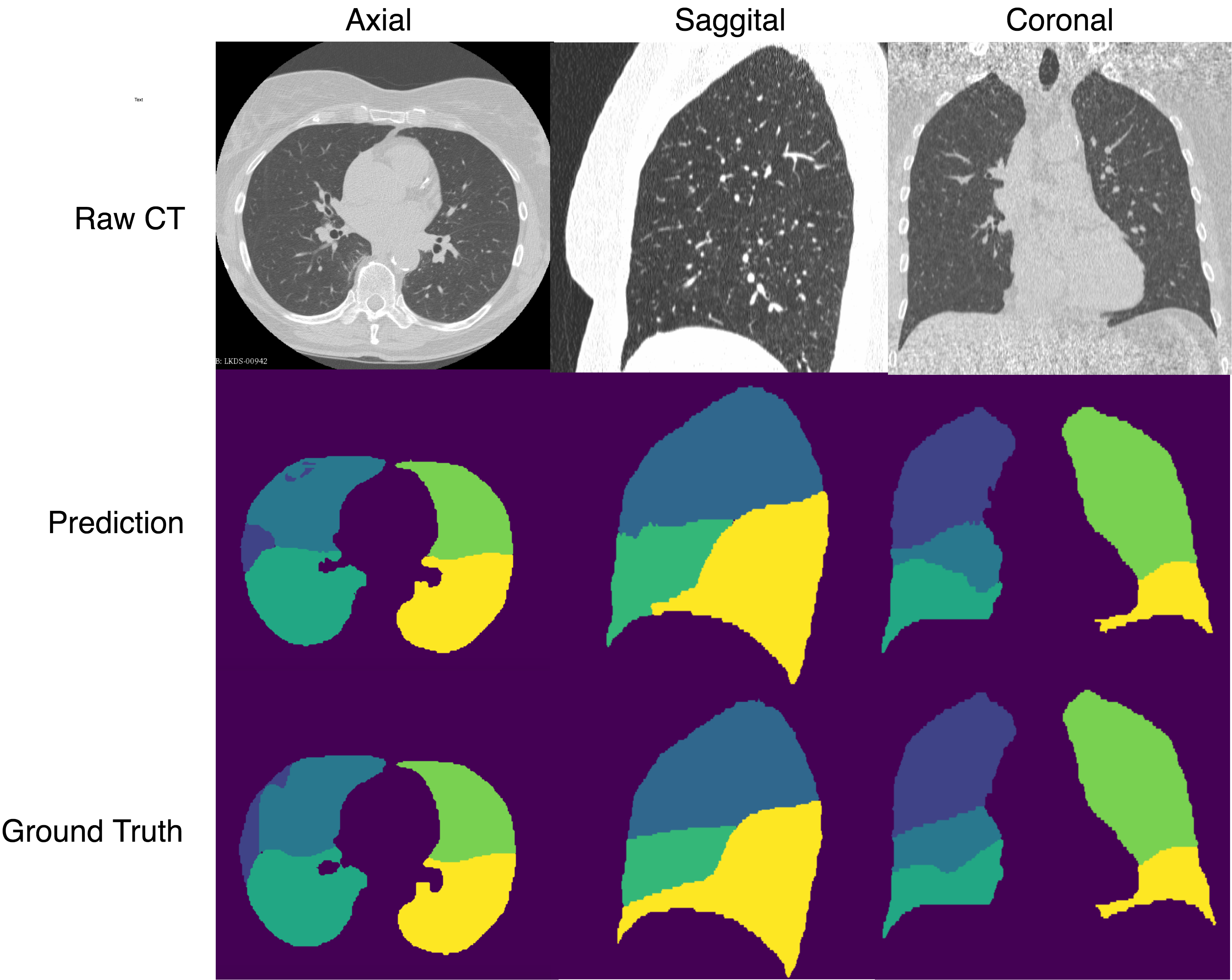
- 可視化による定性的な評価から、モデルが肺葉境界を効果的に捉えており、特に裂け目の周辺で誤検出(フォールスポジティブ)が顕著に低減されていることが確認された。
- LUNA16のCTスキャン50例を手動でアノテートしたデータセットを公開したことで、今後の監視付き肺葉セグメンテーション研究のための貴重なベンチマークが提供された。
より良い研究を、今すぐ始めましょう
論文の読解から最終レビューまで、研究時間を劇的に削減しましょう。
クレジットカード登録不要
このレビューはAIが作成し、人間の編集者が確認しました。