
[論文レビュー] BraTS-PEDs: Results of the Multi-Consortium International Pediatric Brain Tumor Segmentation Challenge 2023
この論文は BraTS-PEDs 2023 を提示し、初の小児 fokす BraTS チャレンジとしてデータセット、評価プロトコル、参加手法、そして小児の高グレード膠腫に対するセグメンテーション性能をベンチマークしている。
Pediatric central nervous system tumors are the leading cause of cancer-related deaths in children. The five-year survival rate for high-grade glioma in children is less than 20%. The development of new treatments is dependent upon multi-institutional collaborative clinical trials requiring reproducible and accurate centralized response assessment. We present the results of the BraTS-PEDs 2023 challenge, the first Brain Tumor Segmentation (BraTS) challenge focused on pediatric brain tumors. This challenge utilized data acquired from multiple international consortia dedicated to pediatric neuro-oncology and clinical trials. BraTS-PEDs 2023 aimed to evaluate volumetric segmentation algorithms for pediatric brain gliomas from magnetic resonance imaging using standardized quantitative performance evaluation metrics employed across the BraTS 2023 challenges. The top-performing AI approaches for pediatric tumor analysis included ensembles of nnU-Net and Swin UNETR, Auto3DSeg, or nnU-Net with a self-supervised framework. The BraTSPEDs 2023 challenge fostered collaboration between clinicians (neuro-oncologists, neuroradiologists) and AI/imaging scientists, promoting faster data sharing and the development of automated volumetric analysis techniques. These advancements could significantly benefit clinical trials and improve the care of children with brain tumors.
研究の動機と目的
- 多機関mpMRIデータからの小児脳腫瘍の自動体積分割をベンチマークし標準化する。
- 小児腫瘍サブ領域のグラウンドトゥルース注釈と公正な多施設評価フレームワークを提供する。
- BraTS-PEDsデータで WT, TC, ET のセグメンテーションに対する多様なAIアプローチ(主にU-Netベース)の比較。
提案手法
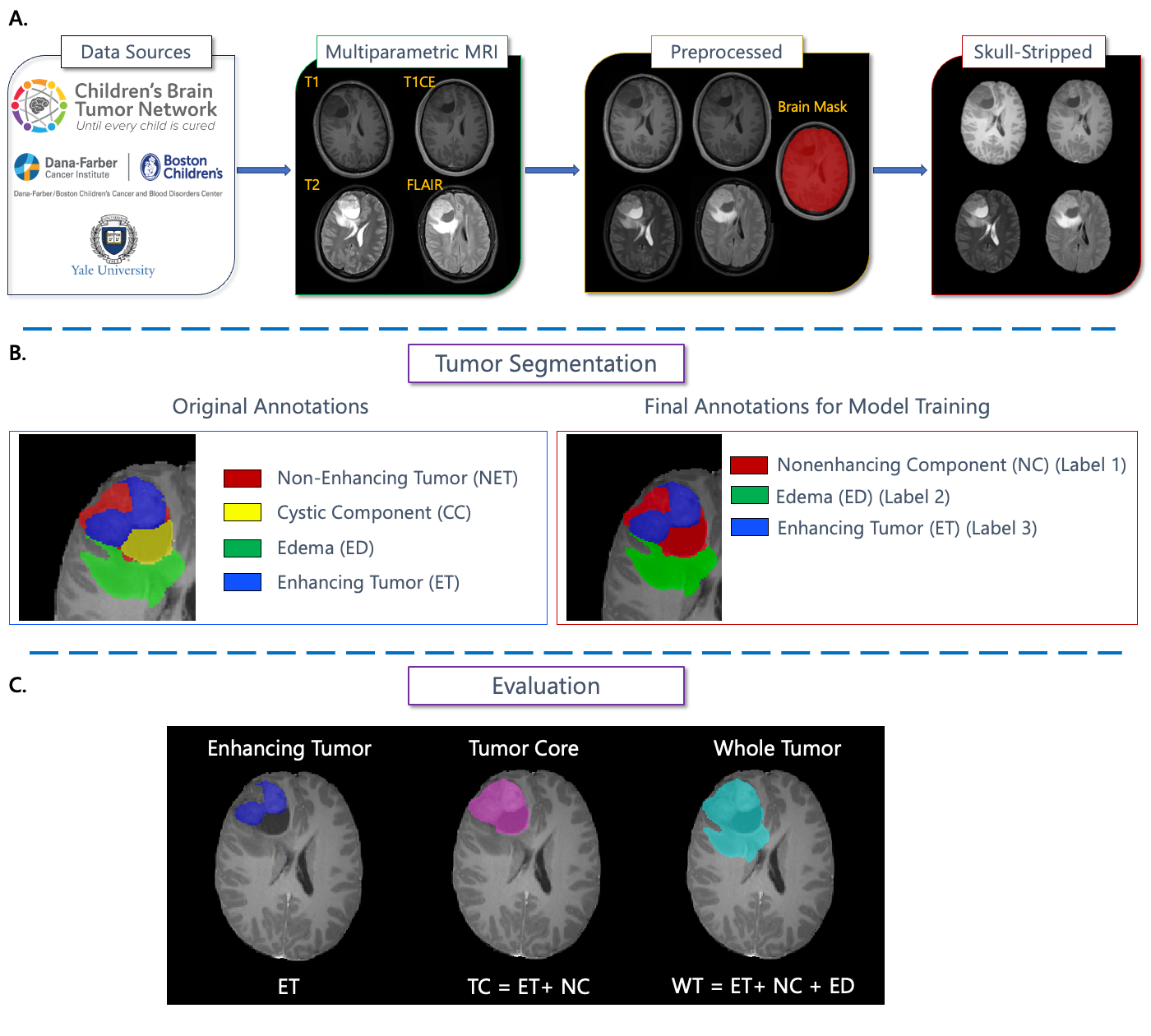
- 4つのシーケンス(T1、T1CE、T2、FLAIR)を含む多機関の小児MRIデータセットを厳選し、ET、NC、CC、EDのグラウンドトゥルースラベルを提供(チャレンジ用に3つのラベルへマッピング)。
- 解像度を1 mm3に前処理し、テンプレートへ共登録、そして小児頭蓋骨除去による識別化を実施。
- 参加者は提供データで訓練し、評価はET、TC、WTごとに病変ごとのDiceとHD95を用い、24名のテスト対象で実施。
- 標準化された注釈ガイドラインに従い、神経放射線科医とASNRの審査員がグラウンドトゥルーションを精練。
実験結果
リサーチクエスチョン
- RQ1AIセグメンテーション手法は、多機関mpMRIデータ上で小児脳腫瘍のサブ領域(ET、NC/TC、WT)をどれだけ正確に再現できるか?
- RQ2最先端アーキテクチャのアンサンブル(例:nnU-Net、Swin UNETR)は、小児腫瘍のセグメンテーションで単一モデルより優れているか?
- RQ3小児用のグラウンドトゥルース注釈と前処理が、施設間のセグメンテーション性能に与える影響は?
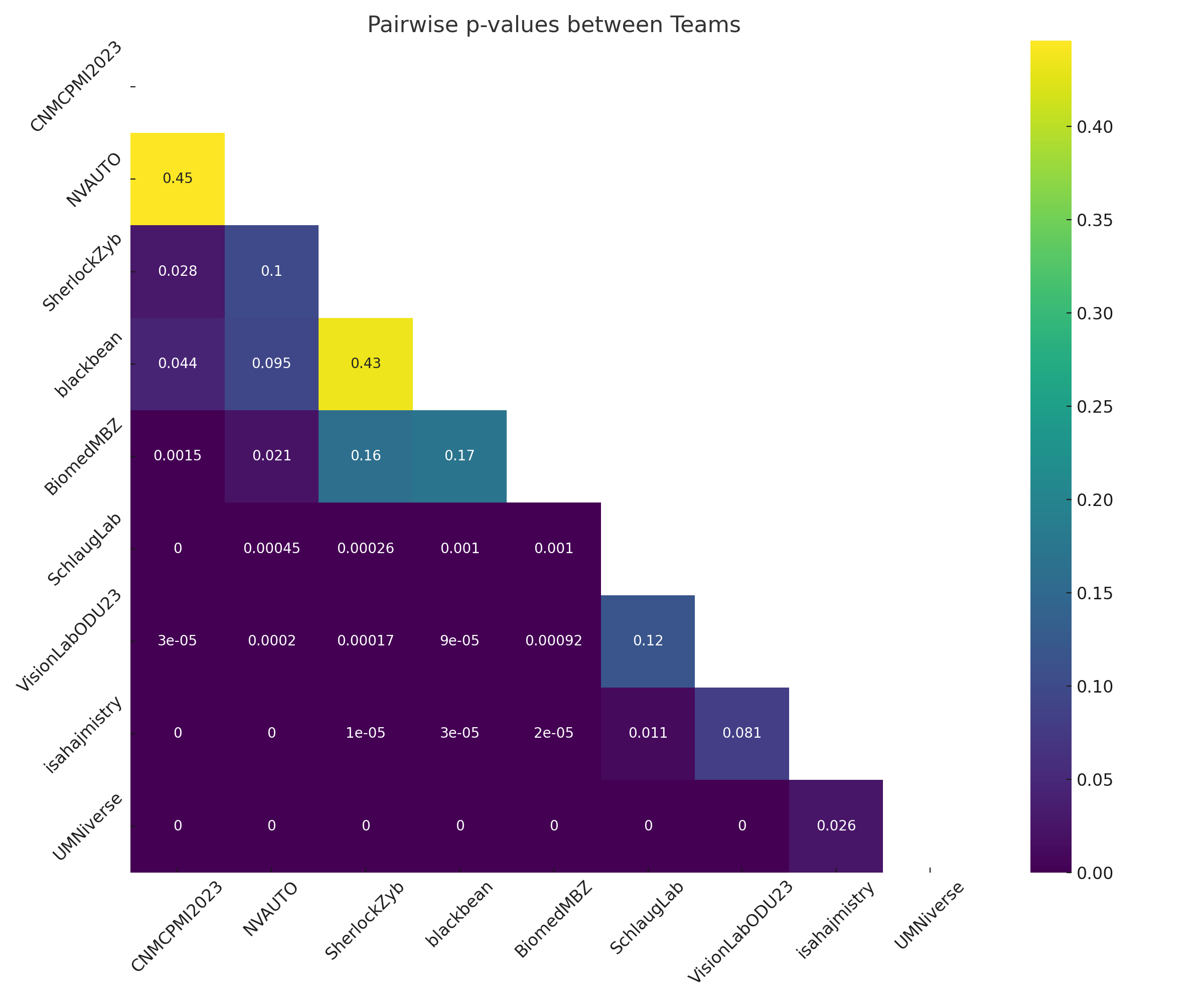
- RQ4BraTS-PEDs 2023テストセットでトップチーム間に統計的に有意な性能差があるか?
- RQ5アンサンブルと自己教師あり事前学習により、異種の小児MRIデータに対するロバスト性を向上できるか?
主な発見
| Teams | Method | Cumulative Ranks Across Subjects | FRS | Rank in the Challenge |
|---|---|---|---|---|
| CNMCPMI2023 | Ensemble of nnU-Net and Swin UNETR | 241.5 | 10.06 | 1 |
| NVAUTO | Auto3DSeg | 246 | 10.25 | 1 |
| SherlockZyb | nnU-Net (self-supervised) | 286.5 | 11.93 | 2 |
| Blackbean | Scalable and Transferable U-Net (STU-Net) | 290.5 | 12.1 | 3 |
- 上位手法はnnU-NetとSwin UNETRのアンサンブル、Auto3DSeg、または自己教師あり事前学習を伴うnnU-Netであった。
- WTの平均Diceは約0.83–0.84、TCは約0.77–0.81で、上位チーム間での範囲。
- ETセグメンテーションは Dice ~0.55–0.65 でよりばらつきが大きく、DMG/DIPGにおける小さなET領域や欠如の課題を反映している。
- アンサンブルは長所を結合し弱点を軽減することで全体の性能を向上させうる。
- トップチーム間の有意差は、テストコホートが小さい(n=24)ため統計的有意性が限定的だった。
- WTセグメンテーションはチーム全体で最も信頼性が高かった;ETは依然として最も難しいサブ領域だった。
より良い研究を、今すぐ始めましょう
論文設計から論文執筆まで、研究時間を劇的に削減しましょう。
クレジットカード登録不要
このレビューはAIが作成し、人間の編集者が確認しました。