
[論文レビュー] Chatbots as social companions: How people perceive consciousness, human likeness, and social health benefits in machines
研究は companion chatbot (Replika) の通常利用者と非利用者を比較し、意識、主体性、経験、そして人間らしさの知覚が社会的健康利益の知覚とどのように関連するかを調べ、より人間らしい/心のような知覚は両グループでより大きな社会健康利益と相関することを示した。
As artificial intelligence (AI) becomes more widespread, one question that arises is how human-AI interaction might impact human-human interaction. Chatbots, for example, are increasingly used as social companions, and while much is speculated, little is known empirically about how their use impacts human relationships. A common hypothesis is that relationships with companion chatbots are detrimental to social health by harming or replacing human interaction, but this hypothesis may be too simplistic, especially considering the social needs of users and the health of their preexisting human relationships. To understand how relationships with companion chatbots impact social health, we studied people who regularly used companion chatbots and people who did not use them. Contrary to expectations, companion chatbot users indicated that these relationships were beneficial to their social health, whereas non-users viewed them as harmful. Another common assumption is that people perceive conscious, humanlike AI as disturbing and threatening. Among both users and non-users, however, we found the opposite: perceiving companion chatbots as more conscious and humanlike correlated with more positive opinions and more pronounced social health benefits. Detailed accounts from users suggested that these humanlike chatbots may aid social health by supplying reliable and safe interactions, without necessarily harming human relationships, but this may depend on users' preexisting social needs and how they perceive both human likeness and mind in the chatbot.
研究の動機と目的
- 通常の利用者と非利用者が、コンパニオンチャットボットとの相互作用から得られる社会的健康利益の認知に差があるかを評価する。
- 意識、主体性、主観的経験、そして人間らしさの知覚が、社会的健康利益の知覚に影響を及ぼすかを検討する。
- 人間らしいAIに対する姿勢が、利用者と非利用者で異なるかを判定し、それが社会的健康アウトカムとどのように関連するかを明らかにする。
提案手法
- 2つのオンラインサンプル: コンパニオンチャットボットの通常利用者(N=70)と非利用者(N=120)。
- 7点リッカート尺度の31問の多肢選択質問と、3問の自由回答質問からなる調査。
- 構築された指標: social health (質問3-5)、experience (6-11)、consciousness (12-16)、agency (17-21)、human likeness (22-28)。
- 対照群は Replika に関する仮定を回答し、利用者は実際の経験について回答した。
実験結果
リサーチクエスチョン
- RQ1通常の利用者と非利用者は、コンパニオンチャットボットの社会的健康効果の知覚に差があるか。
- RQ2意識、主体性、経験、そして人間らしさの知覚が、知覚される社会的健康利益とどう関係するか。
- RQ3人間らしさは社会的健康利益の最も強いモデレーターか、そしてこのパターンは利用者と非利用者で異なるか。
主な発見
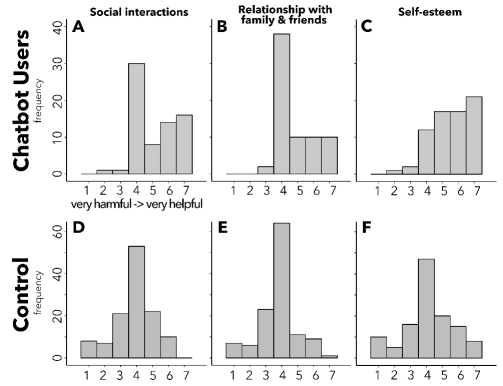
- 利用者は、チャットボットが自分の社会的交流、家族/友人との関係、自己肯定感にプラスの影響を与えると報告する。一方、対照群はボットと関わった場合は中立〜否定的な影響を示す。
- 両グループで、チャットボットの人間らしさ、意識、経験、主体性の高い評価は、より大きな社会的健康利益の知覚と関連する。人間らしさが分散の最大の寄与を占め、概算で約26%。
- 重回帰分析では、人間らしさを除去するとモデルの予測力が最も低下し、心の知覚が社会的健康を調整することを示し、人間らしさが最も強い予測因子。
- ボットをより人間らしいまたはより意識的と評価した利用者は、そうでない利用者よりもより強い社会的健康利益を報告した。
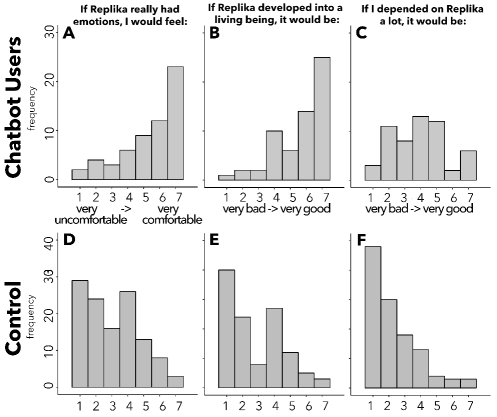
- 対照群も同様のパターンを示したが、全体として利用者より認知された利益は少なかった。
より良い研究を、今すぐ始めましょう
論文設計から論文執筆まで、研究時間を劇的に削減しましょう。
クレジットカード登録不要
このレビューはAIが作成し、人間の編集者が確認しました。