
[論文レビュー] Collectively-modified inter-molecular electron correlations: The connection of polaritonic chemistry and spin glass physics
このフォーカスレビューは、集団振動強結合の下での dressed electronic-structure problem を Sherrington-Kirkpatrick spin-glass model にマッピングし、 polarization glass とポラリトニック化学を spin-glass 物理と結びつける可能性のある phase-transition-like behavior を明らかにします。
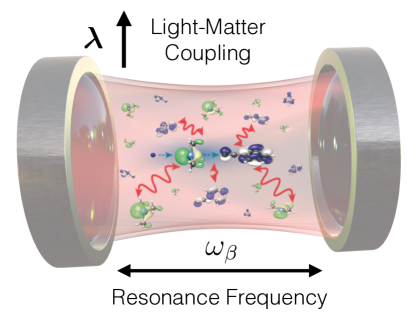
Polaritonic chemistry has garnered increasing attention in recent years due to pioneering experimental results, which show that site- and bond-selective chemistry at room temperature is achievable through strong collective coupling to field fluctuations in optical cavities. Despite these notable experimental strides, the underlying theoretical mechanisms remain unclear. In this focus review, we highlight a fundamental theoretical link between the seemingly unrelated fields of polaritonic chemistry and spin glasses, exploring its profound implications for the theoretical framework of polaritonic chemistry. Specifically, we present a mapping of the dressed many-molecules electronic-structure problem under collective vibrational strong coupling to the spherical Sherrington-Kirkpatrick (SSK) model of a spin glass. This mapping uncovers a collectively induced instability of the intermolecular electron correlations, which could provide the long sought-after seed for significant local chemical modifications in polaritonic chemistry. Overall, the qualitative predictions made from the SSK model (e.g., dispersion effects, phase transitions, differently modified bulk and rare event properties, heating,...) agree well with available experimental observations. Our connection paves the way to incorporate, adjust and probe numerous spin glass concepts in polaritonic chemistry, such as modified fluctuation-dissipation relations, (non-equilibrium) aging dynamics, time-reversal symmetry breaking or stochastic resonances. Ultimately, the connection also offers fresh insights into the applicability of spin glass theory beyond condensed matter systems suggesting novel theoretical directions such as spin glasses with explicitly time-dependent (random) interactions.
研究の動機と目的
- 光と物質の結合が光学共振器内で分子電子構造に集団的、非局所的影響を誘導できるという動機付け。
- Sherrington-Kirkpatrickモデルへのマッピングを介して波動結合化学とスピン・グラス物理との理論的関係を提案。
- 集団結合下でのフラストレーション、偏極パターン、および潜在的な相転移の出現を特定。
- フラストレーション、エージングダイナミクス、確率的共振といったスピン・グラスの概念がポラトニック化学のメカニズムを照らす可能性を論じる。
提案手法
- ロングウェavelength、少モード近似の Pauli-Fierz アブイニシオ理論を用いて集合-キャビティ結合を記述する。
- キャビティ結合下でキャビティ・ボンヌ-オペンハイマー近似と変位場を用いて dressed 電子問題を定式化。
- X および x 双極子結合からの全体対相互作用項を含む電子部分の N 者結合キャビティ Hartree 方程式 (cH) を導出。
- Shin-Metiu 一次元モデルで集団強結合と自己無矛盾偏極パターンを示す。
- cH 方程式を Sherrington-Kirkpatrick スピン・グラス模型へ写像し、偏極-グラスの不安定性を明らかにし、その含意を論じる。
実験結果
リサーチクエスチョン
- RQ1光学 Cavities 内の集団振動強結合は、個々の分子へフィードバックする集団電子効果を駆動できるか?
- RQ2VSC の下で dressed electronic-structure 問題をスピン・グラス物理と関連づける方法は、偏極秩序とフラストレーションにどんな含意をもたらすか?
- RQ3VSC 下の偏極パターンは replica symmetry breaking, aging, stochastic resonances などのスピン・グラス現象に似ているか?
- RQ4実験的署名(例: NMR 観察) は polarization-glass の図と可能なキャビティ誘起相転移を支持するか?
- RQ5スピン・グラス概念を通じてポラトニック化学を解釈することでどんな理論的方向性が生まれるか?
主な発見
- 集団 VSC の下で分子偏Polarizations は二次形式の全方位相互作用を介して結合し、個々の分子への非局所的フィードバックを生む。
- 熱力学極限で局所的分子偏極は生存するがマクロな偏 polarization は消失し、偏極-グラス秩序を示す。
- Shin-Metiu モデルの数値シミュレーションは有限の局所偏極パターンと、フラストレーションと一致する不連続に近い偏極分布を示す。
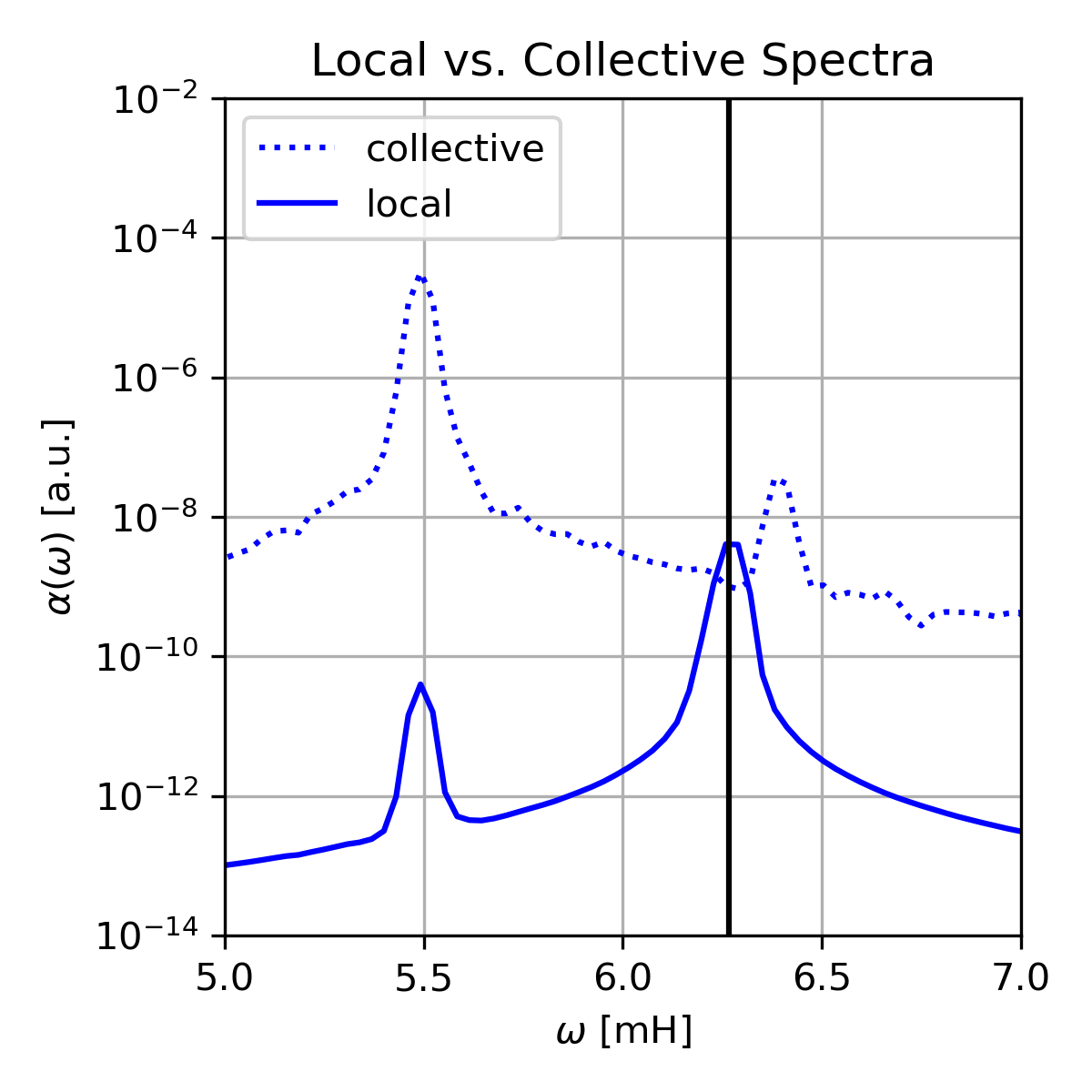
- 自己一貫キャビティ-Hartree 解が高い集団結合で収束しなくなる相転移様の不安定性の証拠がある。
- VSC 下の NMR 実験は平均化学シフトの欠如を示す一方でブロード化の変化と共鳴依存の構造平衡の変化を示し、polarization-glass 図に一致する。
- SKスピン・グラス模型への明示的マッピングは、スピン・グラス概念(フラストレーション、エージング、確率的共鳴)をポラトニック化学へ適用する枠組みを提供する。
- この研究は偏Polarization glasses の時変秩序パラメータやスピン・グラス理論の凝縮系以外への適用範囲拡大など、新しい理論方向を示唆する。
より良い研究を、今すぐ始めましょう
論文設計から論文執筆まで、研究時間を劇的に削減しましょう。
クレジットカード登録不要
このレビューはAIが作成し、人間の編集者が確認しました。