
[論文レビュー] Data-Centric Digital Agriculture: A Perspective
本論文は、モデル最適化からデータ品質、データの整備、データ利用の向上へ焦点を移す、データ中心のデジタル農業のアプローチを提唱している。多様なデータソース(実験的および非実験的)に加え、高度なセンシング技術と機械学習を活用することで、収量予測や病害虫検出といった作物管理タスクにおける、より正確で一般化可能で持続可能なソリューションの実現が可能になる。
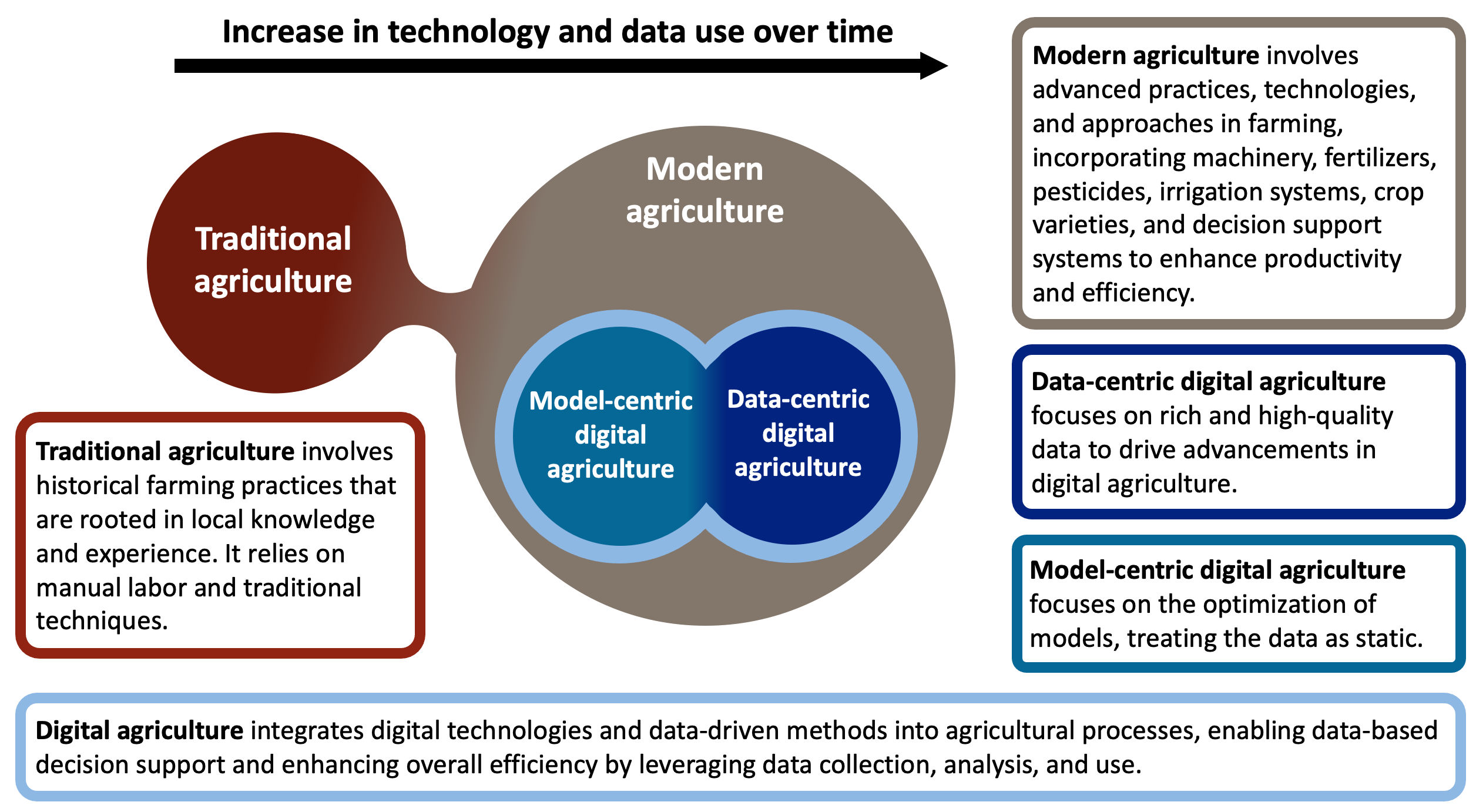
In response to the increasing global demand for food, feed, fiber, and fuel, digital agriculture is rapidly evolving to meet these demands while reducing environmental impact. This evolution involves incorporating data science, machine learning, sensor technologies, robotics, and new management strategies to establish a more sustainable agricultural framework. So far, machine learning research in digital agriculture has predominantly focused on model-centric approaches, focusing on model design and evaluation. These efforts aim to optimize model accuracy and efficiency, often treating data as a static benchmark. Despite the availability of agricultural data and methodological advancements, a saturation point has been reached, with many established machine learning methods achieving comparable levels of accuracy and facing similar limitations. To fully realize the potential of digital agriculture, it is crucial to have a comprehensive understanding of the role of data in the field and to adopt data-centric machine learning. This involves developing strategies to acquire and curate valuable data and implementing effective learning and evaluation strategies that utilize the intrinsic value of data. This approach has the potential to create accurate, generalizable, and adaptable machine learning methods that effectively and sustainably address agricultural tasks such as yield prediction, weed detection, and early disease identification
研究の動機と目的
- モデル中心の機械学習がデジタル農業において抱える限界を是正し、データ品質とデータ整備への焦点を再設定すること。
- 実験的および非実験的農業データの潜在的価値が、現在あまり活用されていないことの強調。特に、頑健で一般化可能なモデルを訓練する上で重要である。
- モデル性能の飽和状態を克服し、持続可能性を向上させるために、データ中心のデジタル農業へのパラダイムシフトを提唱すること。
- データサイエンス、リモートセンシング、ロボット工学、センサーテクノロジーを統合し、適応的でスケーラブルかつ実行可能な農業ソリューションを構築すること。
- 制御された実験的データと現実世界の観察データのギャップを埋め、モデルの一般化能力と実用的適用性を向上させること。
提案手法
- 実験的データ(制御された、仮説に基づく)と非実験的データ(現実世界の観察的)を区別し、モデル学習におけるそれぞれの異なる役割を強調すること。
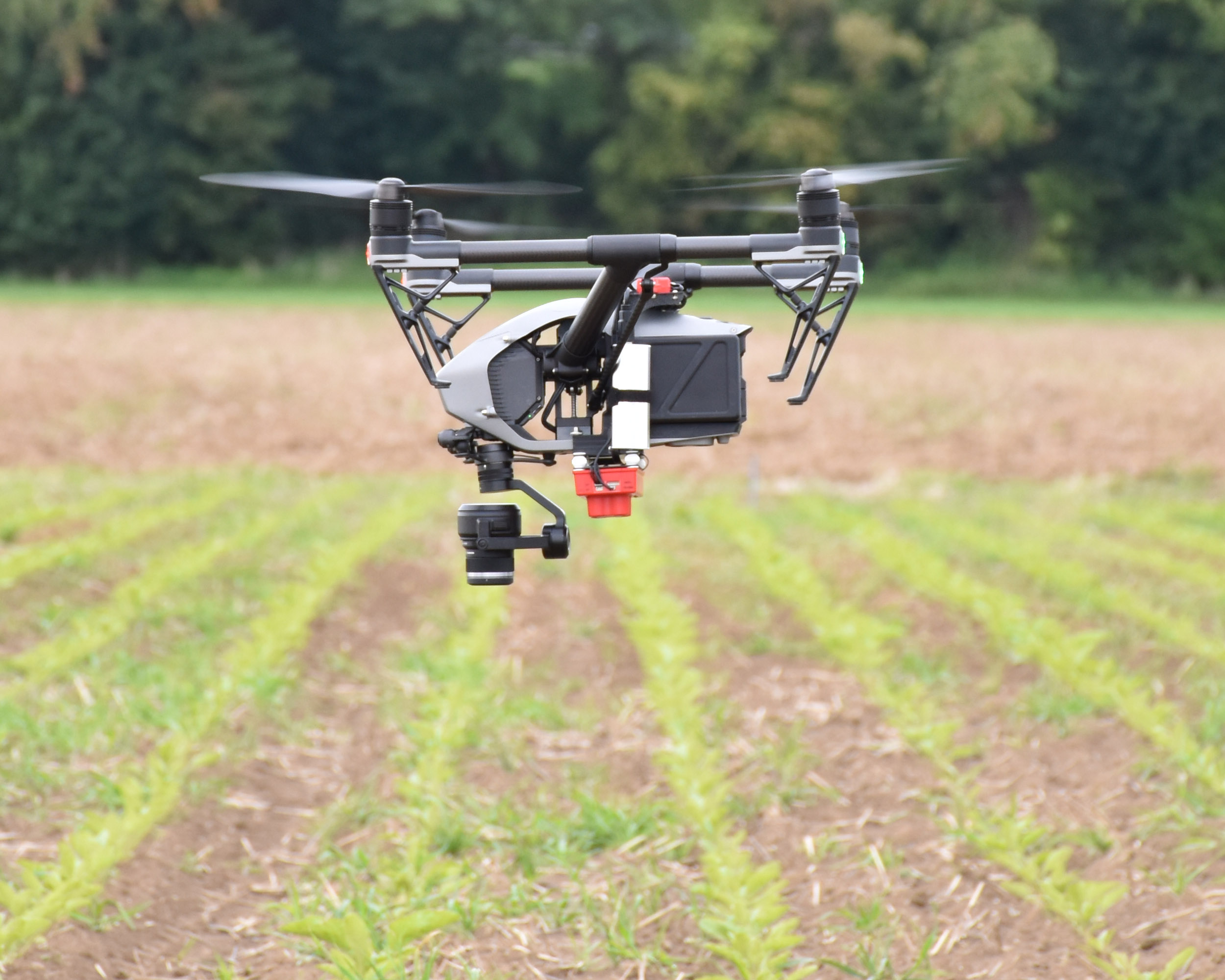
- 衛星画像(Landsat、Planet)、無人航空機(UAV)ベースのリモートセンシング(ミリメートル級解像度)、地上ロボット技術を活用して、高解像度でサイト特化型のデータ収集を実現すること。
- 非実験的データからのパターン抽出に、データドリブンな機械学習手法を適用し、複雑な農業システムにおける相関関係やトレンドの特定を図ること。
- データ品質、一貫性、代表性の向上を目的としたデータ整備戦略を実装し、モデル性能と一般化能力の向上を図ること。
- 農場管理情報システムと可変率アプリケーション(VRA)技術を統合し、データ解像度を運用スケール(例:トラクター走行レーン、フィールドゾーン)に一致させること。
- 実験的データでキャリブレーションされた機械的モデルと、非実験的データで学習されたデータドリブンモデルを統合し、ハイブリッドで頑健な意思決定支援を実現すること。
実験結果
リサーチクエスチョン
- RQ1モデル中心の機械学習がデジタル農業において観察される性能の飽和状態を、どのようにデータ中心のアプローチが克服できるか。
- RQ2一般化可能な機械学習モデルを農業タスクの訓練に用いる際、実験的データと非実験的データの相対的価値は何か。
- RQ3データ品質、データ整備、データ利用を体系的にどのように改善すれば、作物生産におけるモデルの正確性と持続可能性を向上させられるか。
- RQ4新興のセンシング技術(例:UAV、高解像度衛星)は、どのようにデータ中心のデジタル農業を可能にするか。
- RQ5データ中心のフレームワークは、多様なデータソースをどのように統合し、リアルタイムでサイト特化型の農業意思決定を支援するか。
主な発見
- デジタル農業におけるモデル中心のアプローチは、性能の飽和状態に達しており、一般的に使用されている機械学習手法は類似した精度に達し、同様の制限要因に直面している。
- 非実験的データ(例:収量マップ、UAV や衛星からの地理空間データ)は、頑健で一般化可能なモデルを訓練する上で、現実世界の多様性を提供する上で不可欠な要素である。
- 反復的・ランダム化された制御された試験から得られる実験的データは、因果関係の検証や機械的モデルのキャリブレーションに不可欠である。
- 第二世代の衛星(例:Planet、SkySat)およびUAV(センチメートル未満の解像度)からの高解像度データ統合により、トラクター走行レーンや小規模フィールド単位での正確なサイト特化型管理が可能になる。
- データ中心のデジタル農業は、早期の病害虫検出、雑草同定、収量予測といった重要なタスクに対して、より正確で適応可能なソリューションを可能にする。
- 実験的および非実験的データの包括的統合に加え、高度なセンシング技術とデータ整備手法を組み合わせることで、実世界の農業応用におけるモデルの信頼性と持続可能性が顕著に向上する。
より良い研究を、今すぐ始めましょう
論文の読解から最終レビューまで、研究時間を劇的に削減しましょう。
クレジットカード登録不要
このレビューはAIが作成し、人間の編集者が確認しました。