
[論文レビュー] Data Release 3: the Solar System survey
Gaia Data Release 3 は、小惑星や自然衛星を含む15万件を超える太陽系小天体における大規模なアストロメトリとフォトメトリの調査を初めて実施し、ミリアーセコンド未塔のアストロメトリック残差を達成し、形状や衛星の影響によるミリアーセコンドスケールのフォトセンターワンブルの検出を可能にした。このリリースは、軌道決定における前例のない高精度を示し、レーダー測距なしでヤルコフスキー効果の漂移や二重小惑星系の検出がアストロメトリーによって可能になる新たな能力を明らかにした。
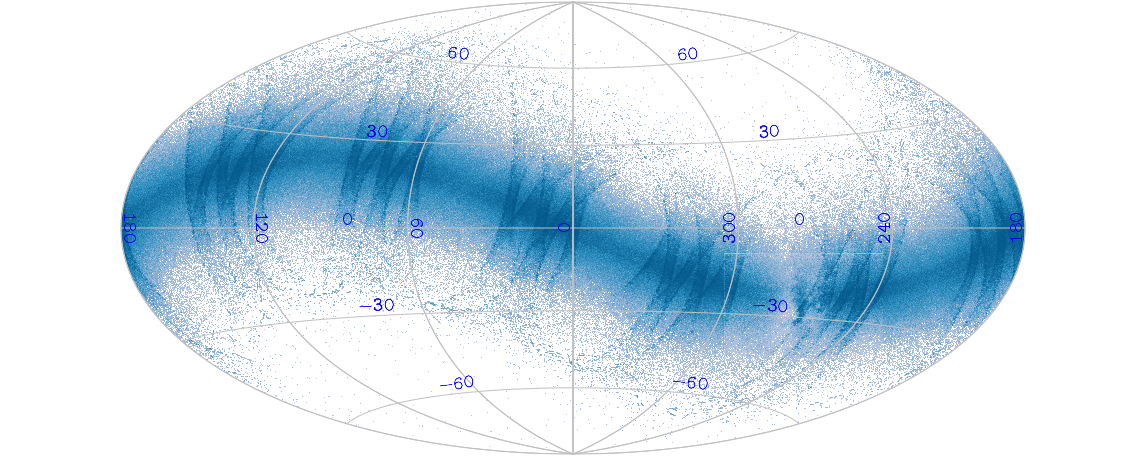
The third data release by the Gaia mission of the European Space (DR3) is the first release to provide the community with a large sample of observations for more than 150 thousand Solar System objects, including asteroids and natural planetary satellites. The release contains astrometry (over 23 million epochs) and photometry, along with average reflectance spectra of 60518 asteroids and osculating elements. We present an overview of the procedures that have been implemented over several years of development and tests to process Solar System data at the level of accuracy that Gaia can reach. We illustrate the data properties and potential with some practical examples. In order to allow the users of DR3 to best exploit the data, we explain the assumptions and approaches followed in the implementation of the data processing pipeline for Solar System processing, and their effects in terms of data filtering, optimisation, and performances. We then test the data quality by analysing post-fit residuals to adjusted orbits, the capacity of detecting subtle dynamical effects (wobbling due to satellites or shape and Yarkovsky acceleration), and to reproduce known properties of asteroid photometry (phase curves and rotational light curves). The DR3 astrometric accuracy is a clear improvement over the data published in DR2, which concerned a very limited sample of asteroids. The performance of the data reduction is met, and is illustrated by the capacity of detecting milliarcsecond-level wobbling of the asteroid photocentre that is due to satellite or shape effects and contributes to Yarkovsky effect measurements. The third data release can in terms of data completeness and accuracy be considered the first full-scale realisation of the Solar System survey by Gaia.
研究の動機と目的
- Gaia DR3における太陽系小天体の高精度データ処理パイプラインの開発と検証。
- 小惑星の形状や衛星運動に起因するフォトセンターワンブルのような微細な力学的効果の検出を可能にする。
- 特に既知の物理モデルとの比較において、Gaiaのフォトメトリーおよびアストロメトリーの信頼性と限界を評価する。
- レーダー測距データなしで二重小惑星系の発見およびヤルコフスキー加速度の測定がGaia DR3によって可能であることを示す。
提案手法
- 小惑星のアストロメトリーは、正確な軌道積分と反復的精錬を伴う、全天をカバーする複数エポックのトラッキング手法を用いて処理された。
- フォトメトリックデータは低分解能の反射スペクトルとGバンドマグニチュードを用いてキャリブレーションされ、位相曲線および回転光曲線モデリングが適用された。
- 軌道フィッティングには準運動要素とフィット後残差解析が用いられ、ミリアーセコンドスケールでのアストロメトリック精度の妥当性が検証された。
- ロゼッタミッションのデータから得られた形状および散乱モデルが用いられ、予想されるフォトメトリをシミュレートし、外れ値の検出と品質評価が可能になった。
- 大きな残差を示す観測、特に(2867) Šteinsのような対象ではモデリング仮定が乖離要因となっている可能性があるため、外れ値の除外処理が実施された。
- アストロメトリック残差、フォトメトリック整合性、形状モデリングの統合的手法が用いられ、データ品質の評価および微細な力学的効果の検出が行われた。
実験結果
リサーチクエスチョン
- RQ1Gaia DR3 は、形状に起因するフォトセンターワンブルを検出するために必要な、大規模な小惑星サンプルに対してミリアーセコンド未塔のアストロメトリック精度を達成できるか?
- RQ2レーダー測距データが事前にない状況で、Gaia DR3 は近地小惑星におけるヤルコフスキー効果をどの程度検出できるか?
- RQ3Gaia DR3 のGバンドフォトメトリック測定は小惑星に対してどの程度信頼性が高く、モデリングの限界により残存する外れ値の割合はどの程度か?
- RQ4Gaia DR3 のアストロメトリック手法は、衛星に起因するワブリングを介して二重小惑星系を効果的に検出できるか?
- RQ5高精度な形状モデルからのシミュレートフォトメトリは観測されたGaiaフォトメトリをどの程度正確に再現できるか、残存する不確実性は何か?
主な発見
- G < 18 の小惑星におけるアストロメトリック残差はミリアーセコンド未塔のレベルにあり、Gaia DR2 より顕著な改善が確認された。
- (21) Lutetia のフォトセンターワンブルがミリアーセコンドスケールで検出され、この効果が小型小惑星の軌道解法に対しても影響を及ぼすことが示された。
- Gaia DR3 は衛星に起因するワブリングを成功裏に検出でき、アストロメトリのみを用いた二重小惑星系の検出という新たな手法を開発した。
- 一部の近地小惑星においてヤルコフスキー漂移が測定可能であり、地上追跡データと組み合わせることで、レーダー測距なしでもこの効果を検出可能なGaiaの潜在能力が示された。
- (2867) Šteins ではGバンドマグニチュードが16.3~18.4マグで、観測誤差は0.0028~0.014マグであり、モデリングの限界にもかかわらず高いフォトメトリック精度が示された。
- 高い精度にもかかわらず、形状モデルや散乱特性の仮定に起因する非無視可能な外れ値の割合がフォトメトリックサンプルに残存している可能性がある。

より良い研究を、今すぐ始めましょう
論文の読解から最終レビューまで、研究時間を劇的に削減しましょう。
クレジットカード登録不要
このレビューはAIが作成し、人間の編集者が確認しました。