
[論文レビュー] Decentralized Zero-Trust Framework for Digital Twin-based 6G
この論文は、ブロックチェーン、AI、分散学習を統合して、デジタルツイン対応の6Gネットワークの物理デバイスとデジタルツインの両方を保護する分散型ゼロトラストセキュリティフレームワークを提案します。
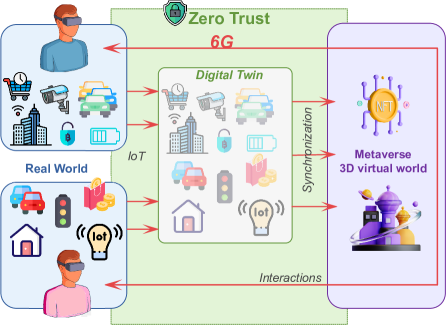
The Sixth Generation (6G) network is a platform for the fusion of the physical and virtual worlds. It will integrate processing, communication, intelligence, sensing, and storage of things. All devices and their virtual counterparts will become part of the service-provisioning process. In essence, 6G is a purposefully cooperative network that heavily depends on the capabilities of edge and end-devices. Digital Twin (DT) will become an essential part of 6G, not only in terms of providing a virtual representation of the physical elements and their dynamics and functionalities but rather DT will become a catalyst in the realization of the cooperative 6G environment. DT will play a main role in realizing the full potential of the 6G network by utilizing the collected data at the cyber twin and then implementing using the physical twin to ensure optimal levels of accuracy and efficiency. With that said, such a cooperative non-conventional network infrastructure cannot rely on conventional centralized intrusion detection and prevention systems. Zero-trust is a new security framework that aims at protecting distributed data, devices, components and users. This article presents a new framework that integrates the zero-trust architecture in DT-enabled 6G networks. Unlike conventional zero-trust solutions, the proposed framework adapts a decentralized mechanism to ensure the security, privacy and authenticity of both the physical devices and their DT counterparts. Blockchain plays an integral part in the authentication of DTs and the communicated data. Artificial Intelligence (AI) is integrated into all cooperating nodes using meta, generalized and federated learning solutions. The article also discusses current solutions and future outlooks, with challenges and some technology enablers.
研究の動機と目的
- 6Gの安全でスケーラブルな採用を促進するため、分散・信頼レス環境で物理デバイスとそのDTを保護する。
- 従来のIDS/IPSを超えた分散型ゼロトラストアーキテクチャを提案し、DTの相互作用とメタバース通信を保護する。
- 脅威情報、分散認証、ブロックチェーン対応の信頼機構を中核とする。
- DT対応の6Gにおける分散型ゼロトラストの実現に向けた課題・促進要因・今後の方向性を特定する。
提案手法
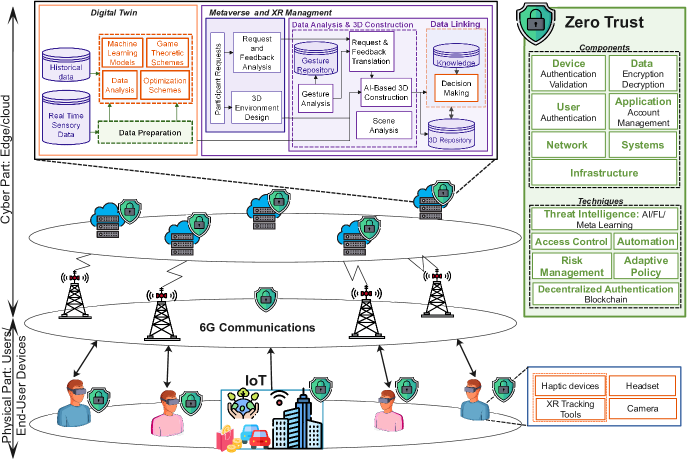
- デバイス、DT、データの相互作用を物理層と仮想層で保護するため、ゼロトラスト概念とデジタルツイン対応6Gを統合する。
- アイデンティティとアクセスをスケーラブルに管理するため、ブロックチェーンを活用した分散認証を提案する。
- 分散ノード間で継続的な信頼評価機構として脅威情報を取り入れる。
- エッジとエンドデバイス間で分散的、プライバシー保護されたセキュリティを実現するため、メタラーニングや連合学習などのAIベースの解決策を組み込む。
- 中央集権的ボトルネックを避けてスケーラブルなセキュリティを支える階層化・分散型学習アプローチ(例:FL、メタラーニング、PnP-AI)を議論する。
実験結果
リサーチクエスチョン
- RQ1DT対応の6Gネットワークのデバイス、DT、データ相互作用層を保護するために、ゼロトラスト原理をどのように効果的に分散化できるか。
- RQ2分散認証と信頼管理におけるブロックチェーンと脅威情報は、6G DTエコシステムでどのような役割を果たすか。
- RQ3分散AI(例:メタラーニング、連合学習)は、中央機関なしでDT対応の6Gに対してスケーラブルでプライバシー保護されたセキュリティを提供できるか。
主な発見
- 本フレームワークは、DT対応の6Gにおける分散型ゼロトラストの中核促進要因として脅威情報と分散認証の必要性を強調する。
- ブロックチェーンは、DT間およびネットワーク層を跨ぐ分散認証と安全なデータ交換の重要な構成要素として位置づけられる。
- 分散学習パラダイム(メタラーニング、連合学習)は、エッジおよびエンドデバイス間で適応的でプライバシー保護されたセキュリティを可能にするメカニズムとして議論される。
- 論文は、知的ブロックチェーンとハイブリッド学習を分散型ゼロトラストアーキテクチャに統合するための将来の方向性を示す現在の動向と潜在的な解決策を概説する。
- 実証的な結果や定量評価は本文には提示されておらず、貢献は概念的なフレームワークと展望である。
より良い研究を、今すぐ始めましょう
論文設計から論文執筆まで、研究時間を劇的に削減しましょう。
クレジットカード登録不要
このレビューはAIが作成し、人間の編集者が確認しました。