
[論文レビュー] Deep Learning in Breast Cancer Imaging: A Decade of Progress and Future Directions
この論文は、過去10年間の乳がん画像診断におけるディープラーニングの進展をレビューし、マンモグラフィ、超音波、MRI、デジタル病理学をカバーしている。スクリーニング、診断、治療反応予測、予後予測における進歩を統合し、臨床応用に向けた主な課題と今後の研究方向性を特定している。
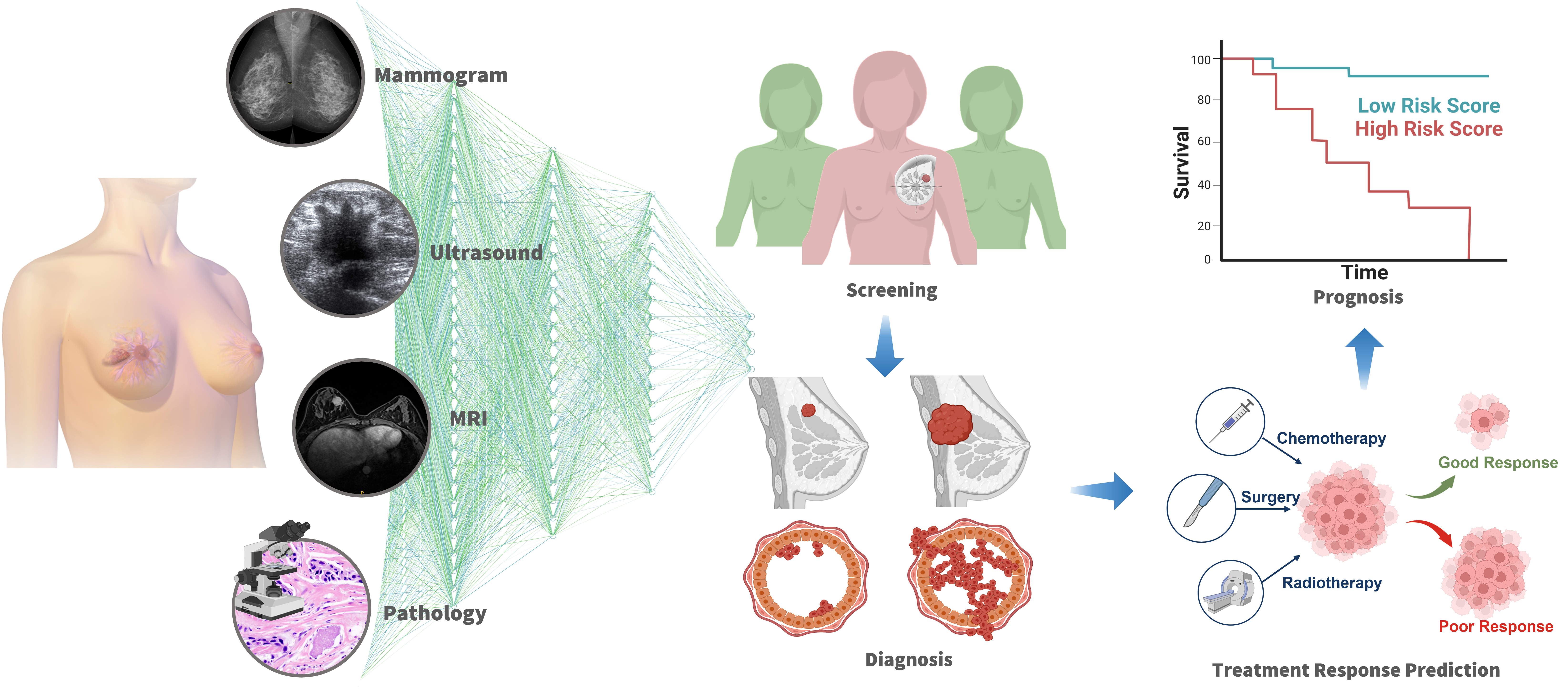
Breast cancer has reached the highest incidence rate worldwide among all malignancies since 2020. Breast imaging plays a significant role in early diagnosis and intervention to improve the outcome of breast cancer patients. In the past decade, deep learning has shown remarkable progress in breast cancer imaging analysis, holding great promise in interpreting the rich information and complex context of breast imaging modalities. Considering the rapid improvement in deep learning technology and the increasing severity of breast cancer, it is critical to summarize past progress and identify future challenges to be addressed. This paper provides an extensive review of deep learning-based breast cancer imaging research, covering studies on mammogram, ultrasound, magnetic resonance imaging, and digital pathology images over the past decade. The major deep learning methods and applications on imaging-based screening, diagnosis, treatment response prediction, and prognosis are elaborated and discussed. Drawn from the findings of this survey, we present a comprehensive discussion of the challenges and potential avenues for future research in deep learning-based breast cancer imaging.
研究の動機と目的
- 過去10年間における乳がん画像診断におけるディープラーニングの進化と影響を体系的にレビューすること。
- マンモグラフィ、超音波、MRI、ヒストパスロジーを含む複数の画像モodalitiyにおけるディープラーニングの応用を分析すること。
- 臨床的展開における主要な課題、例えばデータ不足、解釈可能性、一般化性能を特定すること。
- 乳がんケアにおけるディープラーニングモデルの正確性、信頼性、臨床統合性を向上させるための今後の研究方向性を提示すること。
提案手法
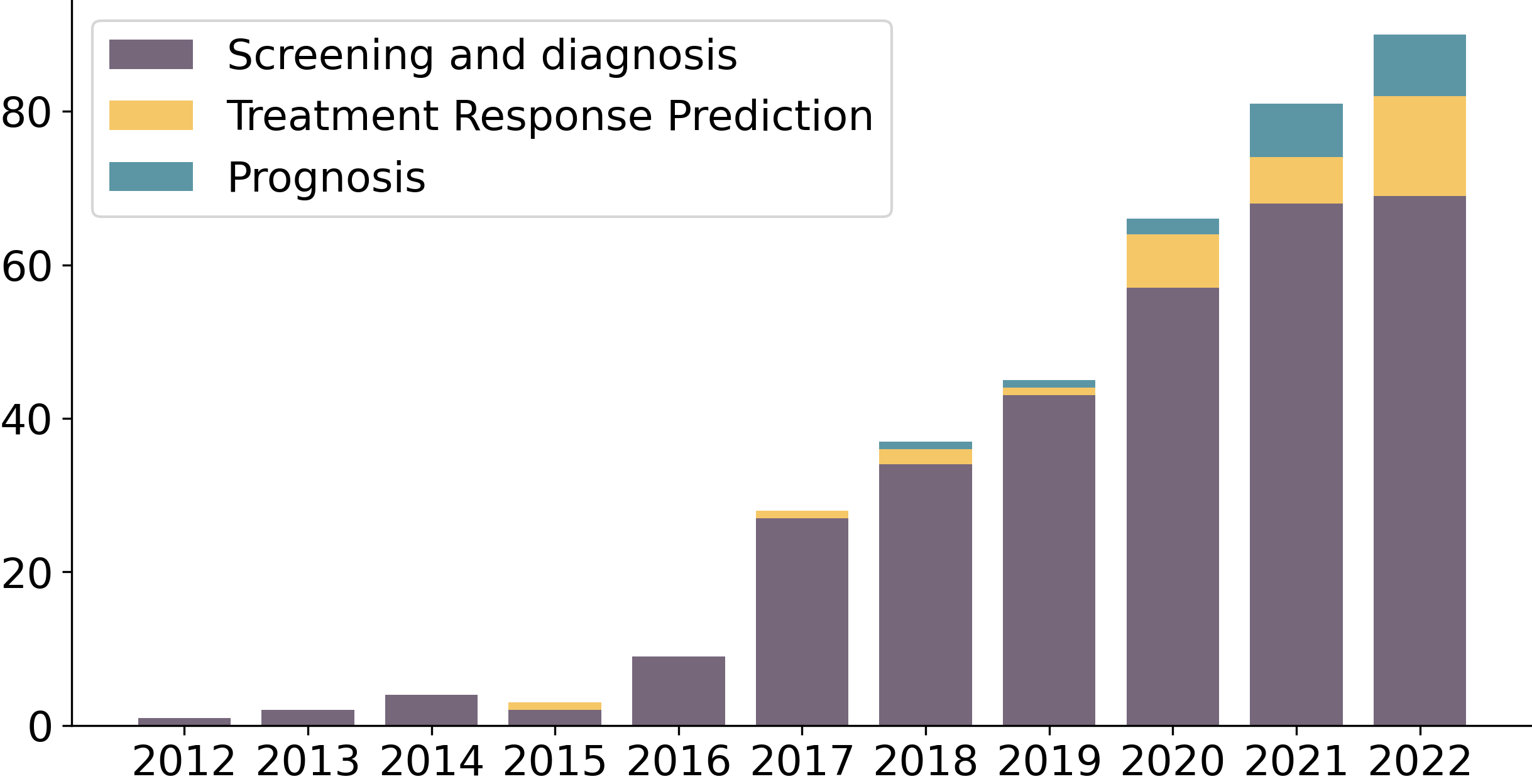
- 2013年から2023年までの、乳がん画像診断におけるディープラーニングに関する査読付き論文を網羅的に調査した。
- 画像モダリティ(マンモグラム、超音波、MRI、H&E病理)、タスク(スクリーニング、診断、治療反応、予後)、モデルアーキテクチャごとに研究を分類した。
- 特徴抽出および分類に用いられるディープラーニング技術、例えばCNN、U-Net、ResNet、トランスフォーマー、シアンプスネットワーク、グラフニューラルネットワークを評価した。
- マルチモーダル学習フレームワーク(例:マルチモーダルコン pact bilinear pooling、アンサンブルモデル)を用いて、臨床的データと画像データを統合した。
- AUC、正確性、感度、特異度、生存予測および再発予測のためのC-indexといった標準化された指標を用いてモデル性能を分析した。
- 実世界での展開に向けた解釈可能性技術と臨床的妥当性要件について議論した。
実験結果
リサーチクエスチョン
- RQ1過去10年間にわたり、異なる乳がん画像診断モダリティにおけるディープラーニングモデルの性能とアーキテクチャはどのように進化したか?
- RQ2ニューアドジュバント化学療法後の病理的完全寛解(pCR)を予測するための最も効果的なディープラーニング手法は何か?
- RQ3画像データと臨床データを統合するマルチモーダル統合戦略は、乳がんの予後予測をどのように改善するか?
- RQ4実世界での乳がん画像診断におけるディープラーニングの採用を制限する主な技術的・臨床的障壁は何か?
- RQ5乳がんケアにおけるディープラーニングモデルの臨床的有用性と解釈可能性を向上させるために、今後最も重要となる研究方向性は何か?
主な発見
- いくつかの研究で、ニューアドジュバント化学療法前の後での超音波およびMRI画像を用いたpCR予測において、AUCが0.90を超える高い性能を達成した。
- トランスフォーマーとデュアルブランチCNNは、治療反応予測のための連続的超音波画像の時系列モデリングにおいて、性能が向上した。
- スライド全体画像、臨床データ、ゲノム特徴を統合したマルチモーダル統合により、複数の研究で5年生存予測のAUCが0.85以上に向上した。
- グラフニューラルネットワークは、腫瘍浸潤リンパ球と腫瘍領域間の空間的相互作用を解釈可能な形でモデリングでき、再発予測の精度向上に寄与した。
- 事前学習モデル(例:ResNet18、ViTベースアーキテクチャ)は、特にデータが少ない状況下でも病理画像分析の特徴抽出を顕著に改善した。
- 研究環境では優れた性能を示したものの、多様な集団や画像プロトコルにわたる一般化性能は依然として大きな課題であり、外部妥当性評価で顕著な性能低下が見られた。
より良い研究を、今すぐ始めましょう
論文の読解から最終レビューまで、研究時間を劇的に削減しましょう。
クレジットカード登録不要
このレビューはAIが作成し、人間の編集者が確認しました。