
[論文レビュー] Differential voltage analysis for battery manufacturing process control
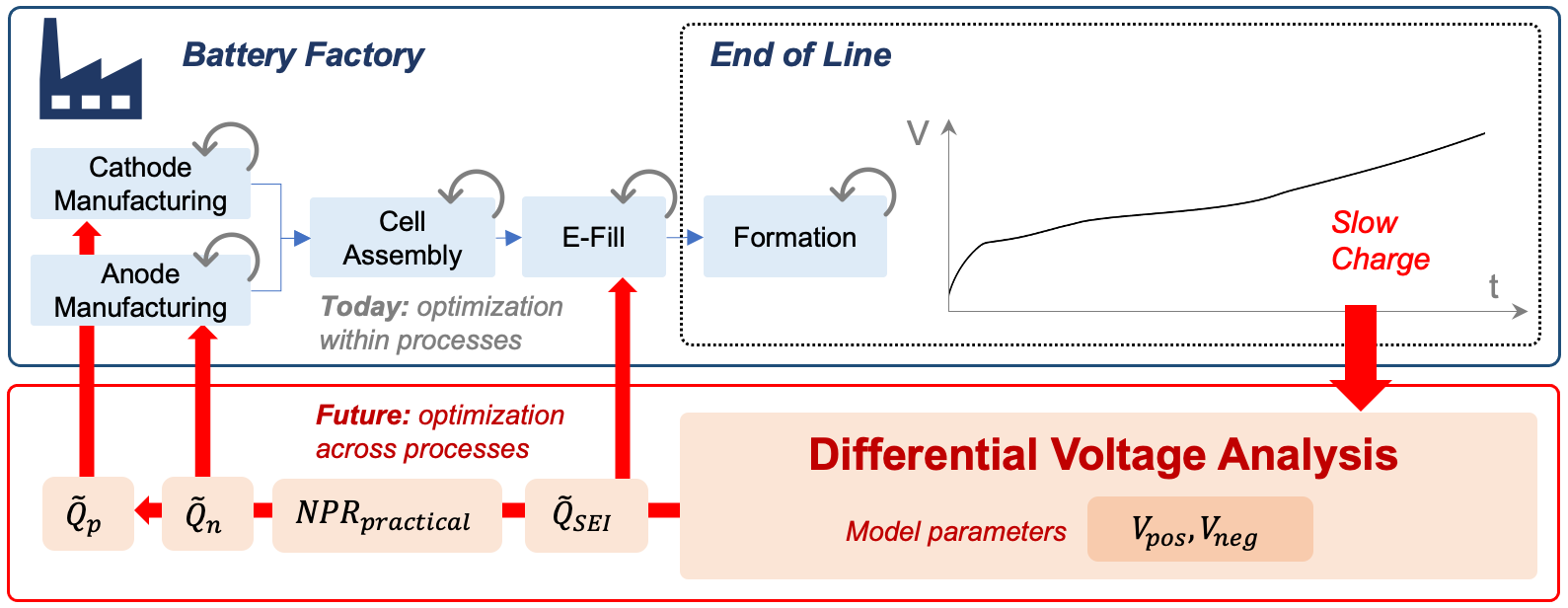
本稿では、全セル電圧曲線を用いてリチウムイオン消費量や実効的負極対正極比といった電気化学的に解釈可能な指標を抽出することで、最終工程におけるバッテリ製造プロセス制御のための自動的かつ再現可能な微分電圧分析(DVA)フレームワークを提示する。従来のDVAに比べ、『アクセス不能リチウム問題』に起因するモデル不確実性を形式化し、破壊的でないスケーラブルな診断を可能にすることで、製造ばらつきと長期的セル性能の関連を明確にする。
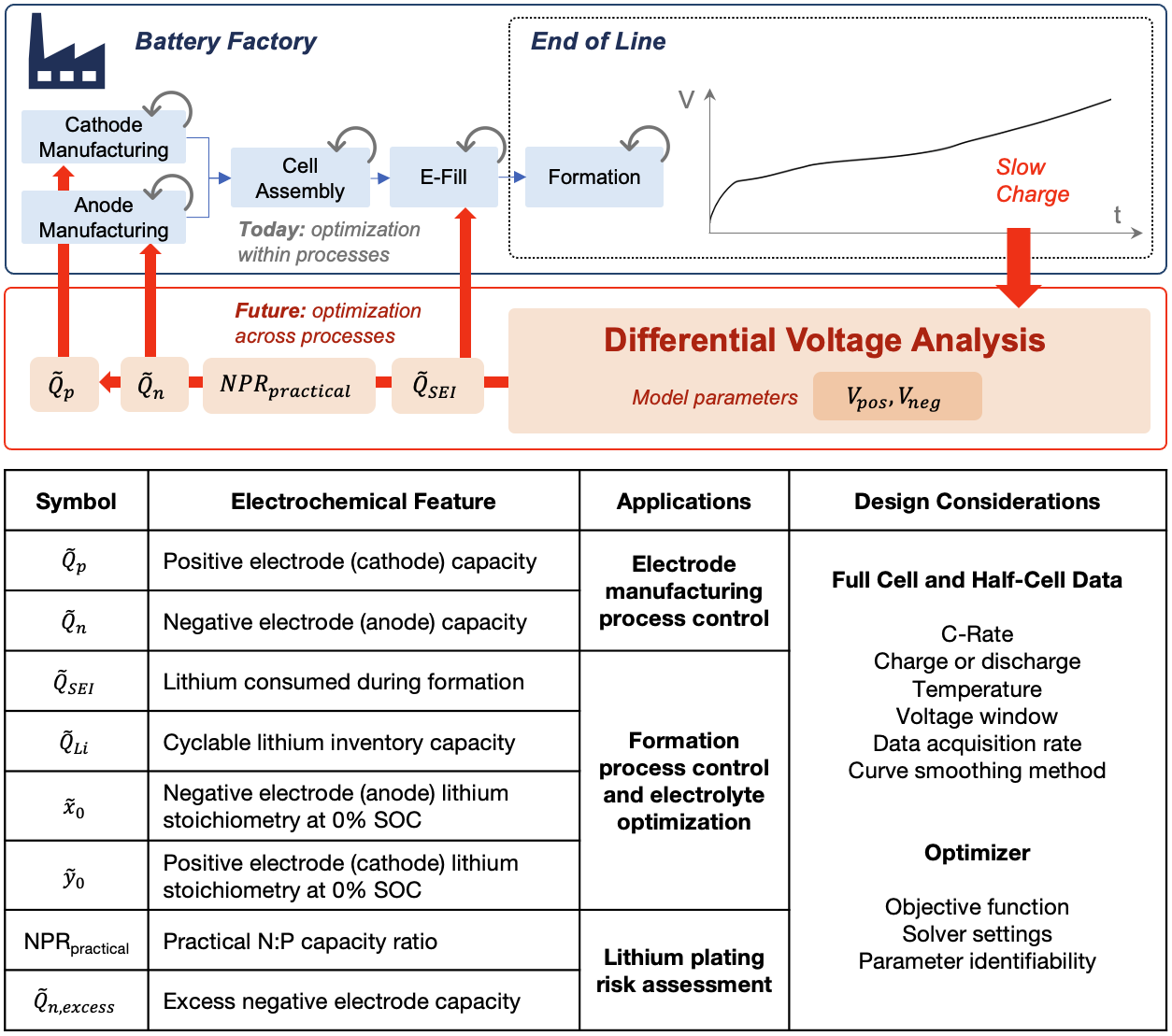
Voltage-based battery metrics are ubiquitous and essential in battery manufacturing diagnostics. They enable electrochemical "fingerprinting" of batteries at the end of the manufacturing line and are naturally scalable, since voltage data is already collected as part of the formation process which is the last step in battery manufacturing. Yet, despite their prevalence, interpretations of voltage-based metrics are often ambiguous and require expert judgment. In this work, we present a method for collecting and analyzing full cell near-equilibrium voltage curves for end-of-line manufacturing process control. The method builds on existing literature on differential voltage analysis (DVA or dV/dQ) by expanding the method formalism through the lens of reproducibility, interpretability, and automation. Our model revisions introduce several new derived metrics relevant to manufacturing process control, including lithium consumed during formation and the practical negative-to-positive ratio, which complement standard metrics such as positive and negative electrode capacities. To facilitate method reproducibility, we reformulate the model to account for the "inaccessible lithium problem" which quantifies the numerical differences between modeled versus true values for electrode capacities and stoichiometries. We finally outline key data collection considerations, including C-rate and charging direction for both full cell and half cell datasets, which may impact method reproducibility. This work highlights the opportunities for leveraging voltage-based electrochemical metrics for online battery manufacturing process control.
研究の動機と目的
- バッテリ製造における電圧ベースの指標の解釈に伴う曖昧さと専門家依存性を解消すること。
- モデル不確実性を形式化することで、最終工程テストにおける微分電圧分析(DVA)の再現性と解釈可能性を向上させること。
- 形成中におけるリチウム消費量や実効的負極対正極比といった、直接的なプロセス制御に使用可能な新しい電気化学的特徴量を開発すること。
- 既存の形成データを活用して、DVAの自動化を実現し、スケーラブルかつリアルタイムの製造プロセス監視を可能にすること。
- モデル出力の再現性を保証するための明確なデータ収集ガイドライン(Cレート、電流方向、スムージング)を提供すること。
提案手法
- 『アクセス不能リチウム問題』を考慮した物理ベースの電気化学モデルを用いてDVAを再定式化し、モデル化された電極容量およびストイキオメトリと真の値との乖離を是正する。
- 全セル電圧曲線のフィッティングと、正極/負極電極容量、初期ストイキオメトリ、SEI形成によるリチウム損失量などの主要パラメータの推定を目的とした非線形最小二乗最適化フレームワークを導入する。
- モデル出力から得られる新しい導出指標として、使用可能なリチウムインVENTORY、実効的負極対正極比(NP比)、および余剰負極電極容量を定義する。
- 全セルおよび半セル電圧データを併用することで、パラメータの同定可能性を向上させ、モデル予測の不確実性を低減する。
- ノイズに起因するDVA特徴量のばらつきを最小限に抑えるために、データスムージングと慎重なCレート選択を実施する。
- MATLABおよびPythonを用いたエンドツーエンド分析の実装を実施し、オープンソースのコードと公開データセットを提供する。
実験結果
リサーチクエスチョン
- RQ1微分電圧分析(DVA)をどのように形式化すれば、バッテリ製造における再現性を向上させ、専門家依存性を低減できるか?
- RQ2DVAから得られる新しい電気化学的特徴量として、プロセス制御および長期的性能に直接関連するものは何か?
- RQ3データ収集プロトコルのばらつき(Cレート、電流方向、スムージング)が、DVAから得られる指標の再現性にどのように影響するか?
- RQ4『アクセス不能リチウム問題』は、DVAに基づくパrameter推定にどの程度バイアスをもたらし、それをどのように是正できるか?
- RQ5破壊的試験なしで、SEI形成や電極負荷の差異といった有意義な製造ばらつきをDVAが検出可能か?
主な発見
- 再定式化されたDVAモデルは、アクセス不能リチウム問題を適切に扱い、推定された電極容量およびストイキオメトリの系統的誤差を低減した。
- 本手法は、2つのセルバッチ間でSEI形成中に消費されたリチウム量に3倍の差が生じていることを検出し、破壊的分析なしで顕著なプロセスばらつきを明らかにした。
- 1つのバッチにおける全セル容量のばらつきは、正極負荷のばらつきに起因していることが特定され、本手法が性能差の根本原因を同定できる能力を有することを示した。
- 実効的負極対正極比と使用可能なリチウムインVENTORYは、成功裏に推定され、製造偏差に対して感受性が高いことが確認された。
- Cレートや電流方向といったデータ収集パラメータは、モデル出力の再現性に顕著な影響を及ぼし、遅いCレートと一貫した充電方向が安定性を向上させた。
- オープンソース実装と公開データセットのおかげで、再現性の確保と産業用プロセス制御パイプラインへの統合が可能になった。
より良い研究を、今すぐ始めましょう
論文の読解から最終レビューまで、研究時間を劇的に削減しましょう。
クレジットカード登録不要
このレビューはAIが作成し、人間の編集者が確認しました。