
[論文レビュー] Dust modeling of the combined ALMA and SPHERE datasets of HD163296. Is HD163296 really a Meeus group II disk?
本研究では、ALMA(ミリメートル波長の連続スペクトル)とSPHERE(偏光散乱光)のデータを統合して、HD 163296のダスト分布をモデル化し、外側の円盤に表面に小さなダスト粒子が存在しないことが判明した。これは、中間的なSEDを説明する要因である。100 AUを超える領域で散乱光が検出されない理由として、ダストの沈降が強化されたり、小さな粒子が枯渇したりする2つのメカニズムが関与しており、HD 163296は従来のグループII源として分類されるよりも、グループIの原始惑星系円盤に近い性質を示していることが示唆される。
Context. Multi-wavelength observations are indispensable in studying disk geometry and dust evolution processes in protoplanetary disks. Aims. We aimed to construct a 3-dimensional model of HD 163296 capable of reproducing simultaneously new observations of the disk surface in scattered light with the SPHERE instrument and thermal emission continuum observations of the disk midplane with ALMA. We want to determine why the SED of HD 163296 is intermediary between the otherwise well-separated group I and group II Herbig stars. Methods. The disk was modelled using the Monte Carlo radiative transfer code MCMax3D. The radial dust surface density profile was modelled after the ALMA observations, while the polarized scattered light observations were used to constrain the inclination of the inner disk component and turbulence and grain growth in the outer disk. Results. While three rings are observed in the disk midplane in millimeter thermal emission at $\sim$80, 124 and 200 AU, only the innermost of these is observed in polarized scattered light, indicating a lack of small dust grains on the surface of the outer disk. We provide two models capable of explaining this difference. The first model uses increased settling in the outer disk as a mechanism to bring the small dust grains on the surface of the disk closer to the midplane, and into the shadow cast by the first ring. The second model uses depletion of the smallest dust grains in the outer disk as a mechanism for decreasing the optical depth at optical and NIR wavelengths. In the region outside the fragmentation-dominated regime, such depletion is expected from state-of-the-art dust evolution models. We studied the effect of creating an artificial inner cavity in our models, and conclude that HD 163296 might be a precursor to typical group I sources.
研究の動機と目的
- HD 163296のSpectral Energy Distribution(SED)が中間的であるのにもかかわらず、MeeusグループII源として分類されているという矛盾を解明すること。
- ALMAとSPHEREの多波長観測データを用いて、HD 163296の3次元ダスト分布をモデル化すること。
- 100 AUを超える領域で散乱光が検出されない理由が、ダストの沈降か粒子の枯渇のどちらに起因するかを特定すること。
- HD 163296が典型的なグループIのHerbig Ae/Be星への前身段階にあるかどうかを評価すること。
- 円盤の幾何学的形状、乱流、粒子成長のプロセスが、観測されたSEDおよび形状に与える影響を評価すること。
提案手法
- 3次元ダスト分布と放射移動を模擬するために、モンテカルロ放射移動コードMCMax3Dを用いた。
- ALMA 1.3 mm連続スペクトルデータに合わせて、径方向のダスト表面密度プロファイルをフィットし、約80、124、200 AUに位置する3つのリングを特定した。
- SPHERE IRDISの偏光散乱光を用いて、内側円盤の傾きと乱流を制約した。
- ダスト進化の2つのメカニズムを検討した:外側円盤におけるダスト沈降の強化(α ~ 1×10⁻⁵)と、3 µm未満の粒子の枯渇。
- 仮想的な内側空洞を導入して、遷移的円盤の挙動をテストした。
- 内側と外側円盤成分のわずかなずれ(約1.3°–3°)を組み合わせたモデルが、観測された明るさの非対称性をよく再現したため、モデルの妥当性を検証した。
実験結果
リサーチクエスチョン
- RQ1HD 163296のSEDがグループIとグループIIのHerbig Ae/Be星の中間的であるにもかかわらず、MeeusグループII源として分類されているのはなぜか?
- RQ2ALMAデータではダストリングが観測される一方で、SPHEREの画像では100 AUを超える領域で散乱光が検出されないのは、何が原因か?
- RQ3外側領域の円盤表面に小さな粒子が存在しないのは、ダストの沈降や小さな粒子の枯渇によって説明できるか?
- RQ4HD 163296は、グループIの源に進化する遷移的対象であり得るか?その観測的特徴は何か?
- RQ5円盤の幾何学的形状とダスト進化プロセスが、HD 163296の多波長での外観にどのように寄与しているか?
主な発見
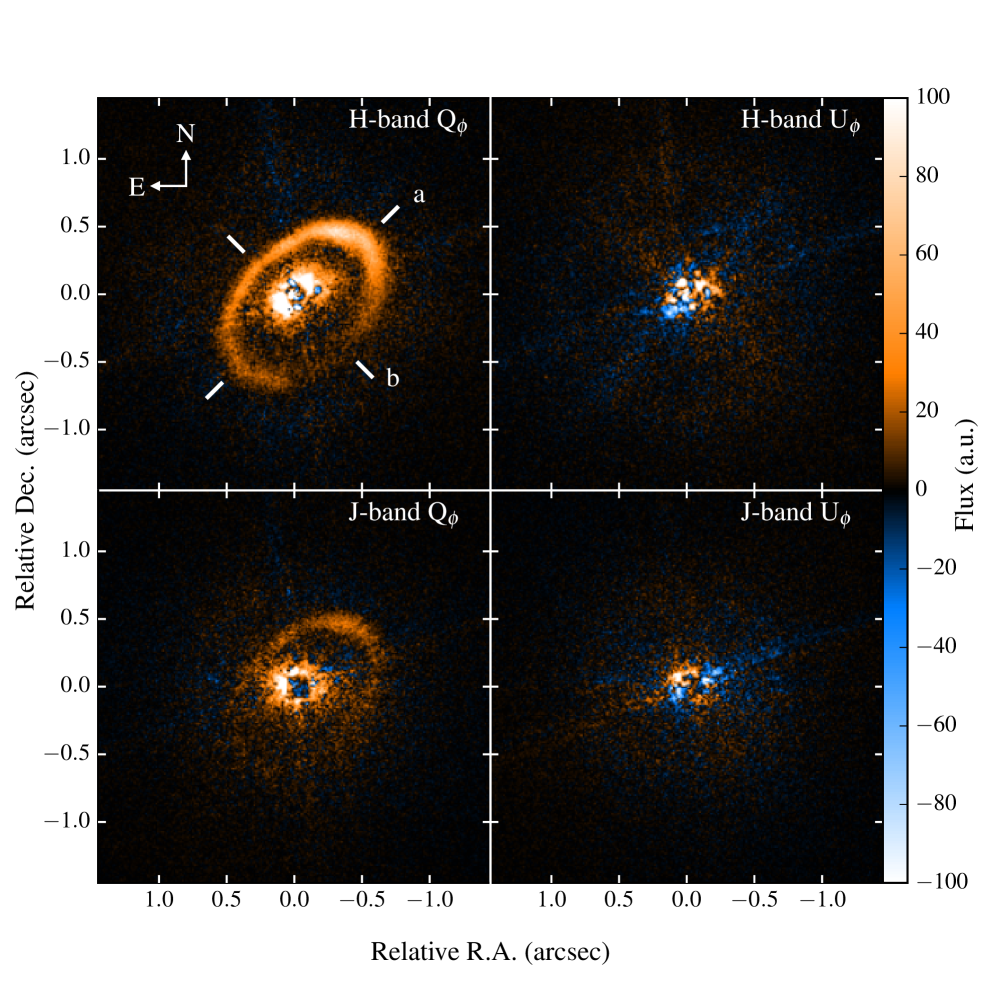
- 100 AUを超える領域で散乱光が検出されないことは、外側円盤の表面に小さなダスト粒子が存在しないことを示しており、これはミリ波長で明るいリングが存在するにもかかわらずである。
- 外側円盤でα ~ 1×10⁻⁵のダスト沈降が強化されているモデルでは、最初のリングが小さな粒子を影にすることで、その散乱寄与が減少し、観測結果を説明できる。
- 外側円盤で3 µm未満の粒子が完全に枯渇しているモデルも同様の観測的効果を生み出し、最新のダスト進化モデルと整合的である。
- HD 163296のFIR過剰は、外側円盤が大きく傾斜しているのではなく、解像された内側円盤と最初のダストリングからの寄与がほぼ等しく、それによって生じている。
- 強く照明された内側壁が存在せず、内側円盤と最初のリングの間にギャップが存在するという事実は、HD 163296がグループI源への前身段階にあると考える根拠である。
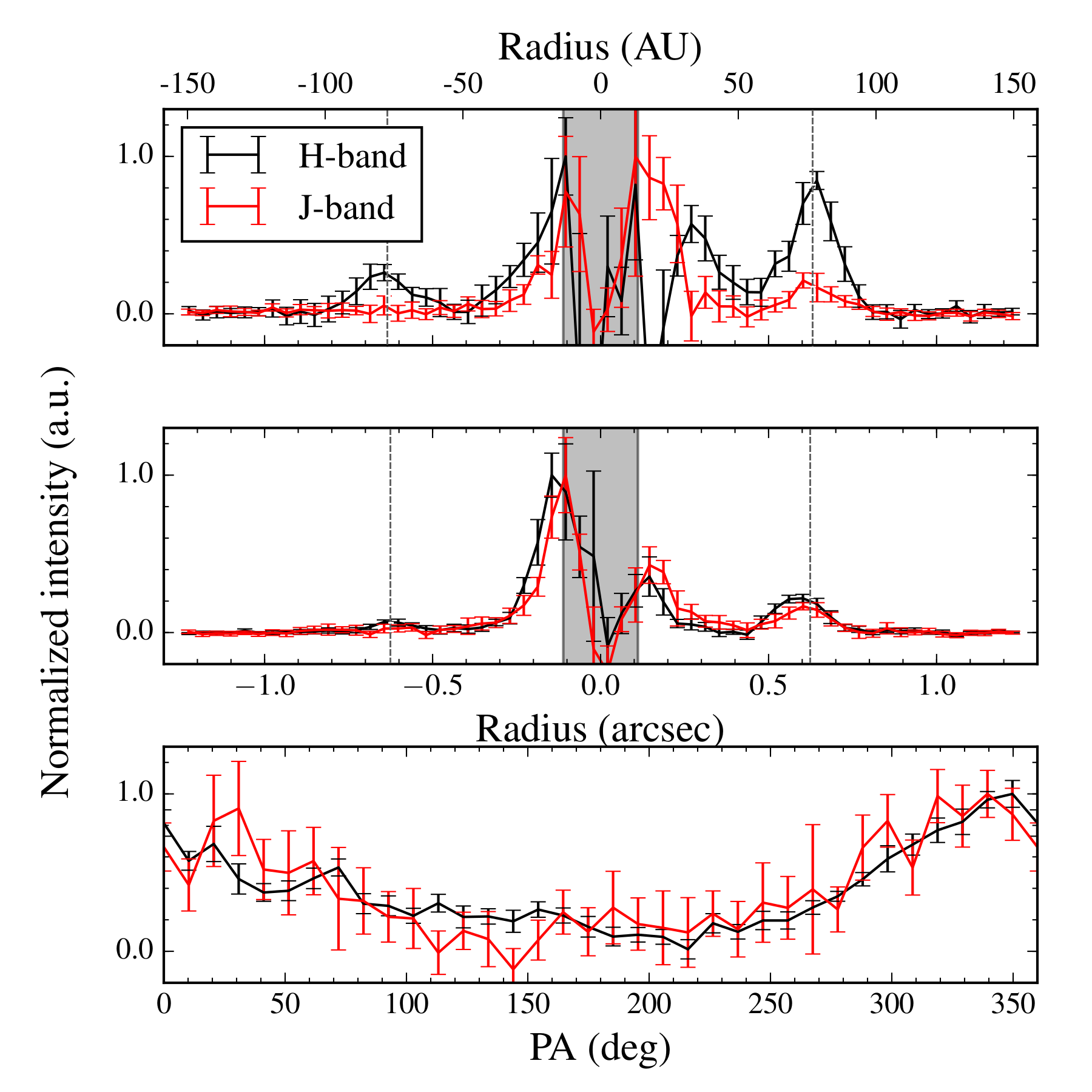
- SPHERE画像における明るさの非対称性は、内側と外側円盤成分のわずかなずれ(約1.3°–3°)に加え、偏光および位相関数の効果を組み合わせることで、良好に再現された。
より良い研究を、今すぐ始めましょう
論文の読解から最終レビューまで、研究時間を劇的に削減しましょう。
クレジットカード登録不要
このレビューはAIが作成し、人間の編集者が確認しました。