
QUICK REVIEW
[論文レビュー] Efficient phase-space generation for hadron collider event simulation
Enrico Bothmann, J. T. Childers|arXiv (Cornell University)|Feb 21, 2023
Particle physics theoretical and experimental studies参考文献 39被引用数 7
ひとこと要約
論文は、tチャネル生成とsチャネル崩壊を組み合わせ、sチャネルトポロジーの制限とMPI平行実装をオプションで提供する、SherpaとLHC様の状況でテスト済みのシンプルで効率的な多チャネル位相空間積分器Chiliを提示する。
ABSTRACT
We present a simple yet efficient algorithm for phase-space integration at hadron colliders. Individual mappings consist of a single t-channel combined with any number of s-channel decays, and are constructed using diagrammatic information. The factorial growth in the number of channels is tamed by providing an option to limit the number of s-channel topologies. We provide a publicly available, parallelized code in C++ and test its performance in typical LHC scenarios.
研究の動機と目的
- ハドロン衝突シミュレーションにおける高次元の位相空間積分の効率性の必要性を動機付け、解決する。
- 重要なマルチチャネル特性を保持しつつ組合せ的複雑さを制御する、単純なダイアグラム情報に基づく位相空間積分器を開発する。
- Vegasベースの積分とMPI並列化、さらにPythonバインディングと機械学習ベースのパイロット用TensorFlowインターフェースを備えた公開C++実装(Chili)を提供する。
- 典型的なLHC様プロセスにおけるChiliの性能を示し、NLO代数的法則(サブトラクション)との統合と正規化フロー型積分器との統合を議論する。
提案手法
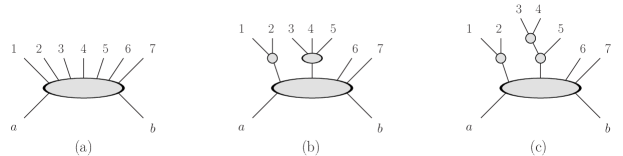
- ダイアグラムベースの因子化によってn粒子の位相空間を分解し、tチャネル生成とsチャネル崩壊へと反復適用して因子化式(式(2))を適用する。
- dΦn要素の明示的表現(式(5))と二体崩壊マッピング(式(7))を用いてt-およびs-チャネルビルディングブロックを構築する。
- sチャネルトポロジーの最大数を制限することで組合せ的成長を抑制する(ChiliとChili basicの比較)。
- 中間共鳴に対してBreit-Wigner分布またはds/sα分布を取り入れ、実験カットに合わせた柔軟なp⊥および速さ/角度マッピングを適用する。
- 多チャネルアルゴリズム(Kleiss-Pittau法)と統合し、NLOの実放出サブトラクションのためのCatani-Seymourディポールマッピング(FF, FI/IF, II配置)をサポートする。
- n-粒子位相空間を3n-4+2次元の単位ハイパーキューブに写すtチャネルコアマッピングを提供し、Python/TensorFlowインターフェースを提供して正規化フロー型積分器と互換性を持たせる。
実験結果
リサーチクエスチョン
- RQ1ハドロン衝突の位相空間積分を、ダイアグラム構造を活用してより単純にしつつ、効率性を保つにはどうすればよいか。
- RQ2sチャネルトポロジーの制限が、典型的なLHCプロセスにおける積分効率と精度に与える影響はどの程度か。
- RQ3スタンドアロンの位相空間積分器を既存のマトリックス要素生成器およびNLOサブトラクションスキームとどう統合するか。
- RQ4基本的なt-チャネルマッピングはMLベース(正規化フロー)積分フレームワークへの橋渡しとして有効か。
- RQ5ChiliをSherpaなどの既存フレームワークと比較した場合、多様性のある多重度数・ジェット数に対してどの程度の精度と速度の改善が得られるか。
主な発見
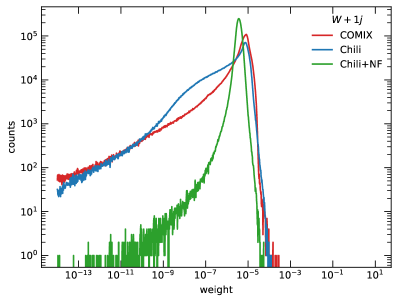
- Chiliは、いくつかのLOプロセスからマルチジェット最終状態まで、ベンチマーク表に示される通りSherpaと比較可能なモンテカルロ不確実性および未重み付け効率を達成する。
- 任意のsチャネルトポロジーの制限を含むマルチチャネルアプローチは、高多重度の最終状態に対して精度と計算コストの間で調整可能なバランスを提供する。
- 統合フレームワークはNLOディポールマッピングをサポートし、SherpaのComixおよびAmegicジェネレータとインターフェース可能で、Catani-Seymourサブトラクションによる実放出NLO補正を可能にする。
- Chiliはnanobind経由のPythonバインディングとTensorFlowインターフェースを提供し、正規化フロー型積分器(iFlow、MadNIS)との組み合わせを可能にする。
- パフォーマンスベンチマークでは、Chili(基本的なsチャネルトポロジー)を用いた場合でも、W, Z, h, t t̄, γ+jets, およびLO設定のQCDジェット生成においてSherpaと同等の効率を維持し、強化されたトポロジーへとスケールしてMC不確実性を制御可能である。
より良い研究を、今すぐ始めましょう
論文設計から論文執筆まで、研究時間を劇的に削減しましょう。
クレジットカード登録不要
このレビューはAIが作成し、人間の編集者が確認しました。