
[論文レビュー] Empowering Biomedical Discovery with AI Agents
本論文では、大規模言語モデル、機械学習ツール、実験プラットフォームを統合する協働的で懐疑的なシステムとしてのAIエージェントを提案する。継続的学習、仮説生成、自律的ワークフロー実行を可能にすることで、データの外挿を超えた新しい科学的知見を支援し、自律的バイオメディスン研究へと前進する。
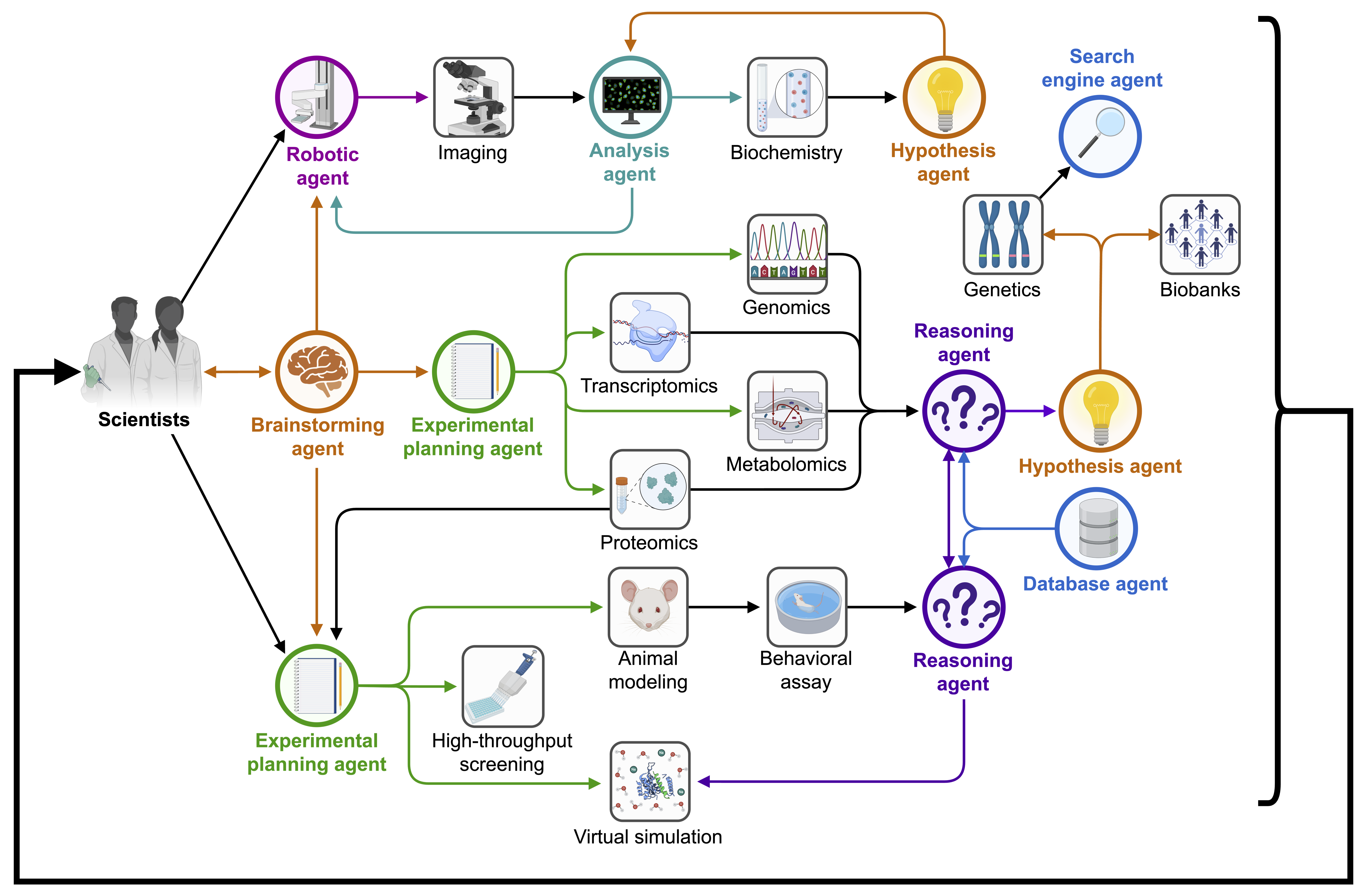
We envision "AI scientists" as systems capable of skeptical learning and reasoning that empower biomedical research through collaborative agents that integrate AI models and biomedical tools with experimental platforms. Rather than taking humans out of the discovery process, biomedical AI agents combine human creativity and expertise with AI's ability to analyze large datasets, navigate hypothesis spaces, and execute repetitive tasks. AI agents are poised to be proficient in various tasks, planning discovery workflows and performing self-assessment to identify and mitigate gaps in their knowledge. These agents use large language models and generative models to feature structured memory for continual learning and use machine learning tools to incorporate scientific knowledge, biological principles, and theories. AI agents can impact areas ranging from virtual cell simulation, programmable control of phenotypes, and the design of cellular circuits to developing new therapies.
研究の動機と目的
- 人間の専門知識とAIの能力を統合し、共同作業者として機能するAIエージェントの開発を目的とする。
- 単なるデータ外挿を超えて、科学的原則に基づいた非線形的で新規の仮説を生成できるAIエージェントの実現を目的とする。
- 継続的学習における深刻な忘却の問題に取り組みつつ、不確実性を考慮した推論によって信頼性を維持する。
- リアルタイムフィードバックを用いて、自律的でクローズドループの実験と仮説の精錬が可能なAIエージェントの設計を目的とする。
- 生物学的および実験的システムと相互作用するAIエージェントの安全で倫理的な展開を確立するためのプロトコルの策定を目的とする。
提案手法
- 継続的学習のための構造化されたメモリと推論を提供する大規模言語モデル(LLMs)および生成モデルの使用。
- テキスト、配列、画像、高次元のオミクスデータなど、多様なデータタイプを処理するためのマルチモーダル基盤モデルの統合。
- 知覚、相互作用、記憶、推論モジュールを備えたAIエージェントの設計により、自律的問題解決者としての機能を実現。
- 人間からのフィードバックを用いた強化学習(RLHF)および指示微調整を実装し、エージェント行動を科学的推論と人間の好みに一致させる。
- 文脈内学習および少数ショットプロンプティングを用いて、新しい生物学的タスクへのゼロショットまたは少数ショット適応を可能にする。
- テキスト、分子構造、実験的読み出し結果の間で表現を統一するためのクロスモーダルアライメント技術の適用。
実験結果
リサーチクエスチョン
- RQ1AIエージェントは、既存の文献の線形的外挿を超えた、生物学的に新規な仮説をどのように生成できるか?
- RQ2AIエージェントが科学的発見における懐疑的推論と不確実性の管理を実現するためのアーキテクチャ的およびトレーニング的要因は何か?
- RQ3AIエージェントは、新しい生物学的データや実験的結果から継続的に学習しながら、深刻な忘却を回避できるか?
- RQ4AIエージェントは、人間や他のエージェントとどのように協働し、複雑なバイオメディスンワークフローを加速できるか?
- RQ5実験的およびin-vitro環境でのAIエージェントの安全で倫理的な展開を確保するための必要な保護策は何か?
主な発見
- AIエージェントは、複雑なバイオメディスン的問題を管理可能なサブタスクに自動的に分解し、特定の解決策を求める専用ツールを調整できる。
- LLMと機械学習モデル、実験プラットフォームを統合することで、シミュレーテッドおよび実世界の両環境で閉ループ学習と仮説の精錬を達成する。
- 構造化されたメモリと継続的学習の統合により、深刻な忘却を回避しながら科学的知識を保持・更新できる。
- AIエージェントは、既存の文献を超えた仮説を生成する能力を示しており、画期的な発見の可能性を示唆している。
- 人間を含むフィードバックとRLHFを通じて、エージェントは科学的推論との整合性を高め、共同研究における信頼性を向上させる。
- このフレームワークは、in-silicoモデリング、表現型制御、細胞回路設計など多様な応用をサポートし、広範なバイオメディスン的関連性を示している。
より良い研究を、今すぐ始めましょう
論文の読解から最終レビューまで、研究時間を劇的に削減しましょう。
クレジットカード登録不要
このレビューはAIが作成し、人間の編集者が確認しました。