
[論文レビュー] Gaia Data Release 1: Astrometry - one billion positions, two million proper motions and parallaxes
Gaia DR1 は 10億を超える星の天体測定結果を提示し、主要な200万星のサブセットが Hipparcos 型の精度を提供する。TGAS と補助データを使用し、二次データセットには epoch J2015.0 の位置が 11.4億を超えるソースに対して含まれている。
Gaia Data Release 1 (Gaia DR1) contains astrometric results for more than 1 billion stars brighter than magnitude 20.7 based on observations collected by the Gaia satellite during the first 14 months of its operational phase. We give a brief overview of the astrometric content of the data release and of the model assumptions, data processing, and validation of the results. For stars in common with the Hipparcos and Tycho-2 catalogues, complete astrometric single-star solutions are obtained by incorporating positional information from the earlier catalogues. For other stars only their positions are obtained by neglecting their proper motions and parallaxes. The results are validated by an analysis of the residuals, through special validation runs, and by comparison with external data. Results. For about two million of the brighter stars (down to magnitude ~11.5) we obtain positions, parallaxes, and proper motions to Hipparcos-type precision or better. For these stars, systematic errors depending e.g. on position and colour are at a level of 0.3 milliarcsecond (mas). For the remaining stars we obtain positions at epoch J2015.0 accurate to ~10 mas. Positions and proper motions are given in a reference frame that is aligned with the International Celestial Reference Frame (ICRF) to better than 0.1 mas at epoch J2015.0, and non-rotating with respect to ICRF to within 0.03 mas/yr. The Hipparcos reference frame is found to rotate with respect to the Gaia DR1 frame at a rate of 0.24 mas/yr. Based on less than a quarter of the nominal mission length and on very provisional and incomplete calibrations, the quality and completeness of the astrometric data in Gaia DR1 are far from what is expected for the final mission products. The results nevertheless represent a huge improvement in the available fundamental stellar data and practical definition of the optical reference frame.
研究の動機と目的
- Gaia DR1 の天体測定内容の概要とそのモデル仮定・データ処理・検証について概観する。
- 主要データセット(一次 TGAS と二次)とそれらの精度・参照系・制限について説明する。
- Gaia DR1 で用いられた入力データ・参照系・相対論的モデリングを説明する。
- 姿勢と機器の較正方法と、それらが天体測定解にどのように取り込まれるかを要約する。
提案手法
- Gaia の観測を Hipparcos および Tycho-2 の事前位置と組み合わせて一次解を得る(TGAS)。
- 六パラメータの天体測定モデル(α, δ, π, μ_α*, μ_δ, v_r)を適用し、Gaia DR1 では v_r をゼロに設定する。
- 相対論的 Gaia モデル(GREM)を用いて BCRS 方向を CoMRS/SRS で Gaia 観測方向へ変換する。
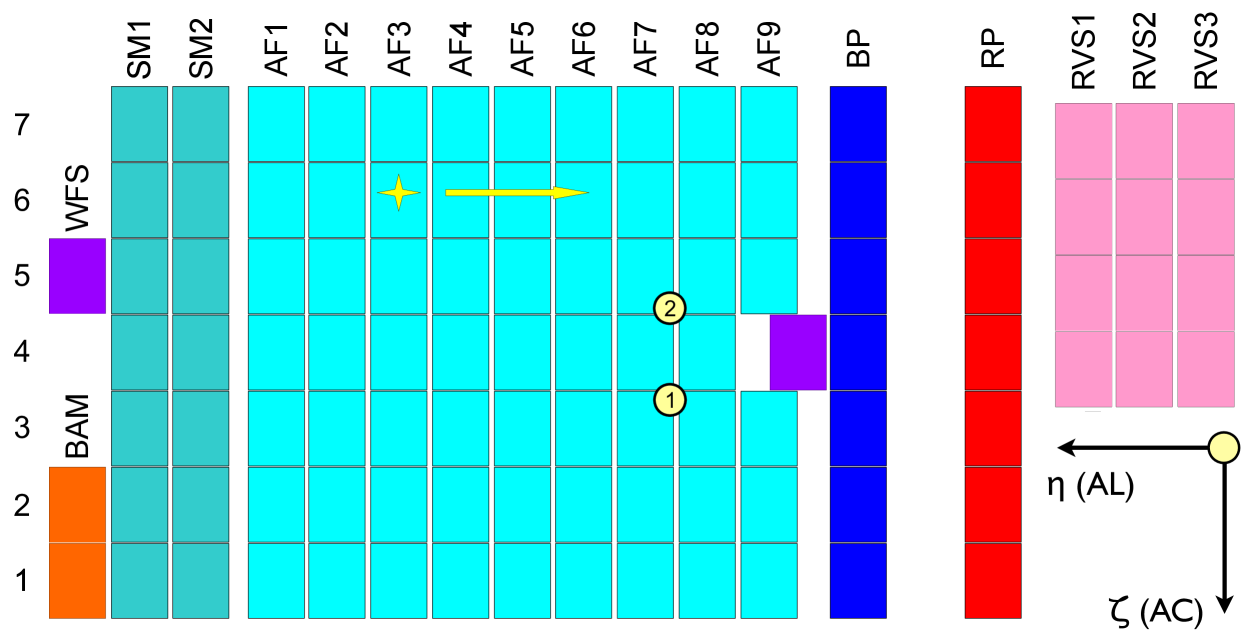
- 幾何学的較正と姿勢スプライン表現で機器幾何学をモデル化する。
- 搭載型計測(BAM)データと太陽系小天体暦を較正に組み込む。
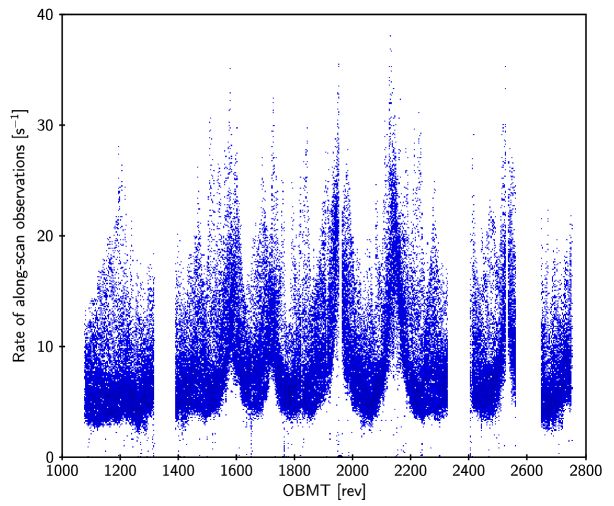
- 一次解で約3500万の基本レコードを処理し、二次解で1.7×10^10レコードを処理する。
実験結果
リサーチクエスチョン
- RQ1Gaia DR1 の天体測定内容は何か、主要データと二次データセットはどのように組織されているのか。
- RQ2明るい恒星と暗い源について、Gaia DR1 の精度と参照系の整合性はどの程度達成されているのか。
- RQ3天体測定解はどのように構築され(TGAS と二次)、どんな事前情報が用いられているのか。
- RQ4相対論的効果と機器較正はどのようにモデリングされ、Gaia DR1 の処理に組み込まれているのか。
- RQ5Gaia DR1 の結果の制限と暫定性は何か、将来のリリースでどのように改善されるのか。
主な発見
- 一次データセットには約2.06百万星の位置・視差・平均固有運動が含まれ、位置/視差の典型的不確かさは約0.3 mas、固有運動は約1 mas/yr。
- 約93,635星は Hipparcos に基づく固有運動で約0.06 mas/yr の精度に達する。
- 暗い源は epoch J2015.0 で約10 mas の精度の位置を得られ、参照系は J2015.0 で 0.1 mas 未満の精度で IC RF に合わせられている。
- 全体として Gaia DR1 は暫定的な天体測定解を提供するが、短い時間範囲と継続的な較正の中で、基礎的な星データと光学参照系に対する従来データより大きな改善を示している。
- Hipparcos の参照系は Gaia DR1 のフレームに対して約0.24 mas/yr の回転で Gaia DR1 のフレームに対して回転していることが分かっている。
より良い研究を、今すぐ始めましょう
論文設計から論文執筆まで、研究時間を劇的に削減しましょう。
クレジットカード登録不要
このレビューはAIが作成し、人間の編集者が確認しました。