
[論文レビュー] Galaxy archaeology for wet mergers: Globular cluster age distributions in the Milky Way and nearby galaxies
本稿では、銀河内の過去の湿った合体(wet mergers)を tracer する手段として、マルチモーダルな球状銀河団(GC)年齢分布の有用性を提案している。ミルキーウェイおよび近傍銀河(M31、NGC 1407、NGC 3115)を実験的・観測的ラボとして用い、観測された GC 年齢分布とシミュレーションによる合体歴の比較を通じて、特にガスを豊富に含む合体時に形成された若い GC 群が、明確な年齢ピークを示し、湿った合体イベントと相関することを示した。これにより、通常は追跡困難な合体歴の推定が可能となる。
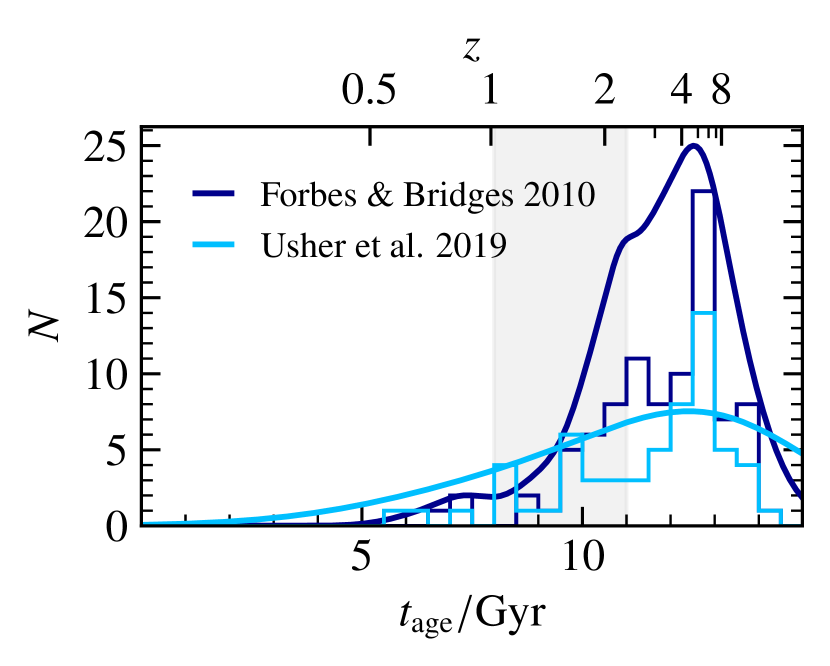
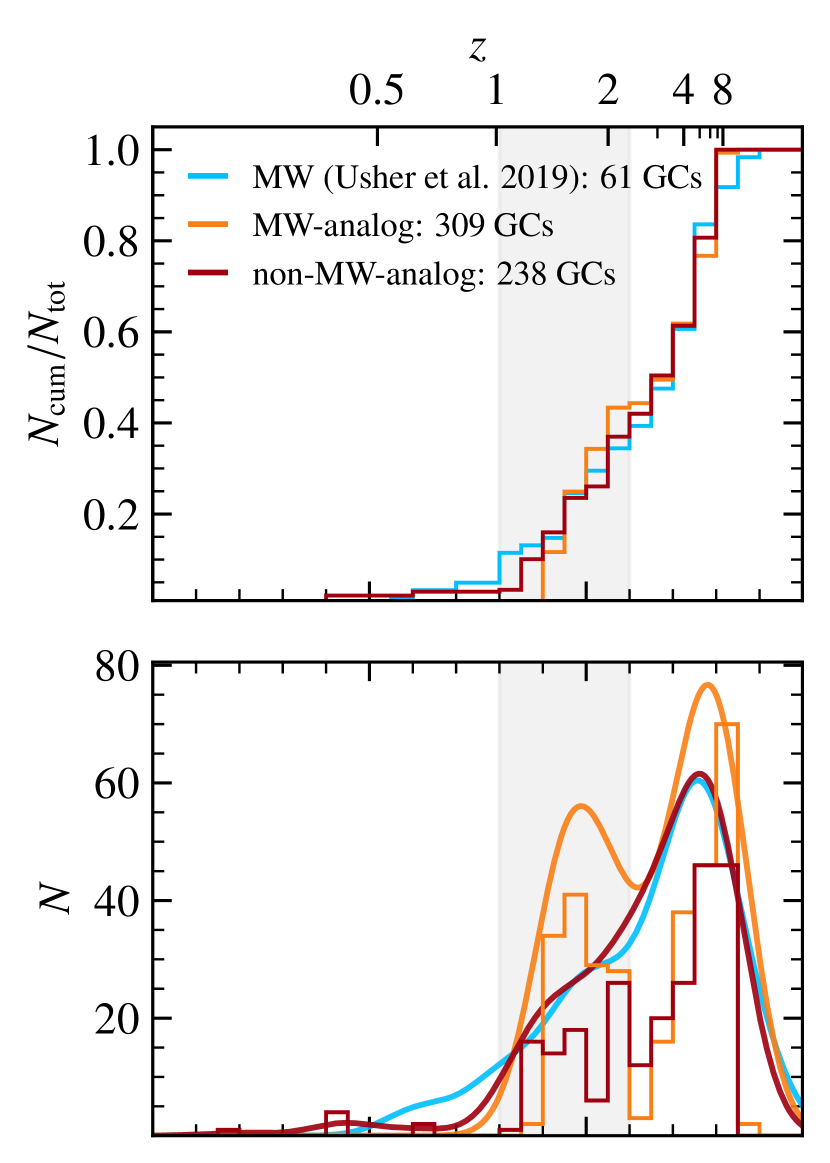
Identifying past wet merger activity in galaxies has been a longstanding issue in extragalactic formation history studies. Gaia's 6D kinematic measurements in our Milky Way (MW) have vastly extended the possibilities for Galactic archaeology, leading to the discovery of early mergers in the MW's past. As recent work has established a link between young globular clusters (GCs) and wet galaxy merger events, the MW provides an ideal laboratory for testing how GCs can be used to trace galaxy formation histories. To test the hypothesis that GCs trace wet mergers, we relate the measured GC age distributions of the MW and three nearby galaxies to their merger histories and interpret the connection with wet mergers through an empirical model for GC formation. For the MW, we cross-match the GCs with their associated progenitor host galaxies to disentangle the connection to the GC age distribution. We find that the MW GC age distribution is bimodal, mainly caused by younger GCs associated with Gaia-Sausage/Enceladus (GSE) and in part by unassociated high-energy GCs. The GSE GC age distribution also appears to be bimodal. We propose that the older GSE GCs were accreted together with GSE, while the younger ones formed through the merger. For the nearby galaxies, we find that peaks in the GC age distributions coincide with early gas-rich mergers. Even small signatures in the GC age distributions agree well with the formation histories of the galaxies inferred through other observed tracers. From the models, we predict that the involved cold gas mass can be estimated from the number of GCs found in the formation burst. Multimodal GC age distributions can trace massive wet mergers as a result of GCs being formed through them. From the laboratory of our own MW and nearby galaxies we conclude that the ages of younger GC populations of galaxies can be used to infer the wet merger history of a galaxy.
研究の動機と目的
- 球状銀河団(GC)の年齢分布が、銀河形成における湿った合体イベントを実証的 tracer として機能するかどうかを検証すること。
- ミルキーウェイおよび近傍銀河における観測された GC 年齢分布とそれらの推定された合体歴との関連を調査すること。
- 若い GC 群の存在が、観測可能でない場合が多い、過去の湿った(ガス豊富な)合体と相関するかどうかを特定すること、特に観測可能な合体痕跡が限られる銀河において。
- 湿った合体中に GC 発生バーストが生じるのをモデル化し、銀河における観測可能な年齢分布の特徴と結びつけるモデルの構築と検証を行うこと。
- 外部銀河系における湿った合体のタイミングと性質を制約するための診断ツールとして、GC 年齢分布の実用性を評価すること。
提案手法
- ミルキーウェイ、M31、NGC 1407、NGC 3115 の GC 年齢分布を、複数の研究から収集し、比較分析に用いた。
- ミルキーウェイの GC を、その起源天体(例:Gaia-Sausage/Enceladus)と照合することで、付加されたシステムに起因する年齢分布寄与を分離した。
- GC 発生の経験的モデルを用いて、観測された GC 年齢分布を再現する銀河合体歴をシミュレーションした。
- 観測された分布と一致するシミュレートされた銀河を選別し、その付加歴を観測的 tracer と比較した。
- シミュレーションで若い GC の形成を追跡し、特に低温ガス分率の高い合体に起因するものと結びつけた。
- 特に低質量比の合体系において、年齢ピークの顕著さを評価することで、湿った合体の痕跡の検出可能性を評価した。
実験結果
リサーチクエスチョン
- RQ1マルチモーダルな球状銀河団年齢分布は、銀河内の過去の湿った合体イベントを特定するのに用いられるか?
- RQ2ミルキーウェイおよび近傍銀河の球状銀河団年齢分布は、湿った合体のタイミングと性質をどの程度反映しているか?
- RQ3付加されたシステム(例:Gaia-Sausage/Enceladus)に由来する GC 年齢分布は、イン・サイトのクラスターと比べてどのように異なるか?
- RQ4小さな、またはマイナーな湿った合体イベントは、球状銀河団年齢分布に観測可能な痕跡を残すか?
- RQ5合体バースト中に形成された GC の数と、湿った合体に関与した冷たいガス質量の間にはどのような関係があるか?
主な発見
- ミルキーウェイの球状銀河団年齢分布は二峰性を示し、主に Gaia-Sausage/Enceladus(GSE)合体に起因する若いクラスターと、関連しない高エネルギー GC 群によるものである。
- GSE の GC 年齢分布も二峰性を示し、システムと共に付加された古いクラスターと、合体中に形成された若いクラスターが存在する。これは、湿った合体の力学的環境によって引き起こされたイン・サイト形成を示唆している。
- NGC 3115、M31、NGC 1407 の GC 年齢分布に明確なピークが観測され、ガス豊富な合体活動の初期段階と一致しており、GC 発生バーストと湿った合体の間の関連を支持する。
- 小さな低質量の湿った合体イベントですら、GC 年齢分布に検出可能な、やや目立たないピークとしての痕跡を残しており、特に NGC 3115 や NGC 1407 のような系では顕著である。
- シミュレーションにより、ミルキーウェイおよび NGC 3115 の GC 年齢分布と一致する銀河は、約 8–10 Gyr 前に主要な湿った合体を経験しており、観測された合体歴と整合的である。
- モデルは、バースト中に形成された GC の数を用いて、湿った合体に関与した冷たいガス質量を推定可能であると予測しており、GC 発生と合体特性との間の定量的関係を提供する。
より良い研究を、今すぐ始めましょう
論文の読解から最終レビューまで、研究時間を劇的に削減しましょう。
クレジットカード登録不要
このレビューはAIが作成し、人間の編集者が確認しました。