
[論文レビュー] Generative AI in Agriculture: Creating Image Datasets Using DALL.E's Advanced Large Language Model Capabilities
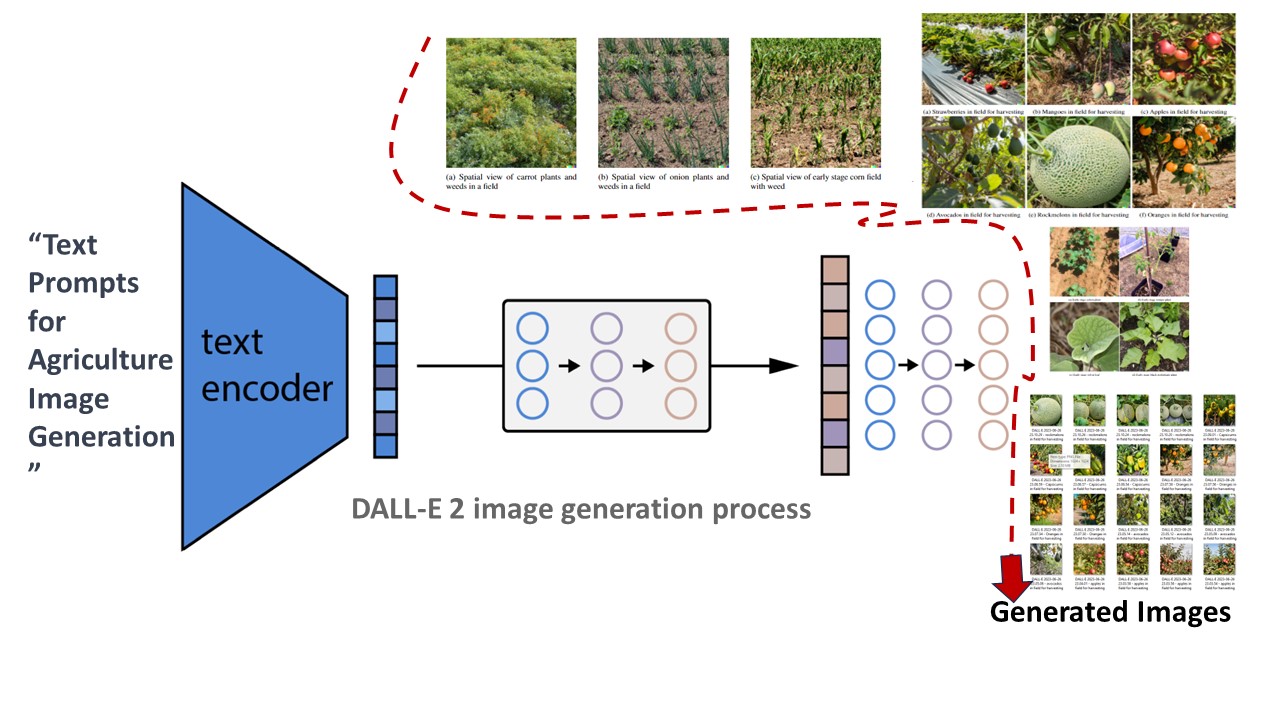
本研究では、GANと大規模言語モデルに基づく生成的AIモデルDALL·E 2が、テキストプロンプトからの高精細な合成農業画像を生成できることを示している。これにより、高価で時間がかかる現実世界のデータ収集の必要性が顕著に低減される。生成された画像は、MSE、PSNR、FSIMといった標準指標で優れた性能を示し、現実のフィールドイメージングに依存せずに、作物・雑草の区別や病気の検出、精密農業への応用が可能になる。
The field of agricultural communication is evolving rapidly with the advent of generative artificial intelligence (AI), particularly image generation technologies. As these tools begin to influence how agricultural data is visualized and disseminated, the sector's diversity spanning both technical and non-technical researchers, demands a rigorous foundational study to demystify the image generation process. This research investigated the role of artificial intelligence (AI), specifically the DALL.E model by OpenAI, in advancing data generation and visualization techniques in agriculture. DALL.E, an advanced AI image generator, works alongside ChatGPT's language processing to transform text descriptions and image clues into realistic visual representations of the content. The study used both approaches of image generation: text-to-image and image-to-image (variation). Six types of datasets depicting fruit crop environment were generated. These AI-generated images were then compared against ground truth images captured by sensors in real agricultural fields. The comparison was based on Peak Signal-to-Noise Ratio (PSNR) and Feature Similarity Index (FSIM) metrics. The image-to-image generation exhibited a 5.78% increase in average PSNR over text-to-image methods, signifying superior image clarity and quality. However, this method also resulted in a 10.23% decrease in average FSIM, indicating a diminished structural and textural similarity to the original images. Similar to these measures, human evaluation also showed that images generated using image-to-image-based method were more realistic compared to those generated with text-to-image approach. The results highlighted DALL.E's potential in generating realistic agricultural image datasets and thus accelerating the development and adoption of imaging-based precision agricultural solutions.
研究の動機と目的
- 実世界の画像収集に依存することを減らすために、DALL·E 2を用いた合成農業画像の生成可能性を検討すること。
- 標準的な画像品質指標を用いて、AIが生成した農業画像の視覚的忠実度と正確性を、実画像と比較して評価すること。
- 作物・雑草の区別や病気の同定といった、主な農業応用分野におけるAI生成画像の潜在的有用性を示すこと。
- テキストから画像を生成する技術を活用し、従来のデータ収集手法に代わるスケーラブルで低コストな代替手段を提案すること。
- データセット拡張、フィードバックループ、高度な評価手法を活用して、将来の生成的AIの精密農業システムへの統合を支援する道筋を示すこと。
提案手法
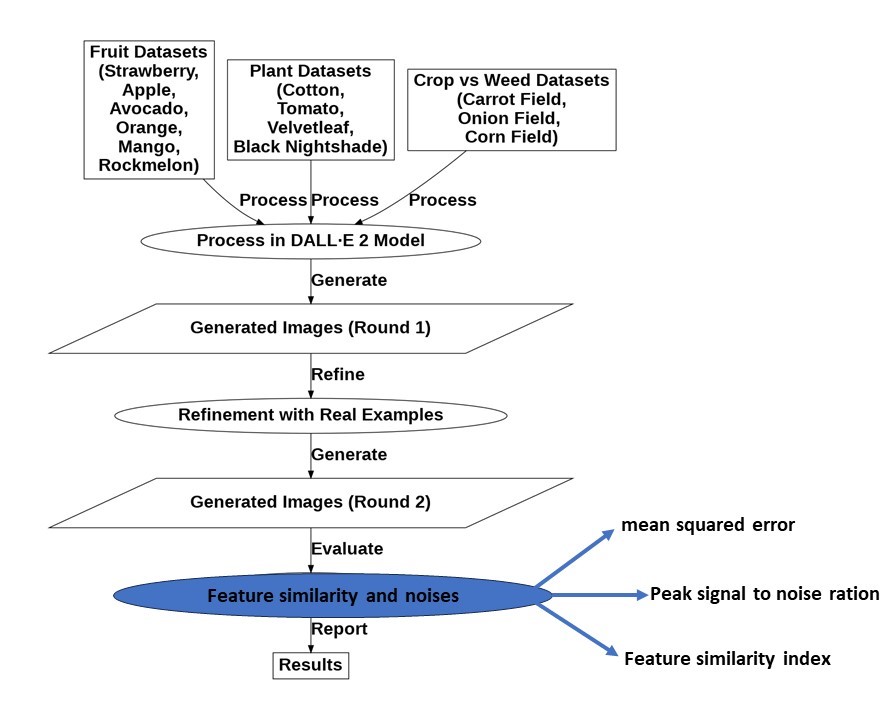
- GANフレームワークにTransformerベースのテキストエンコーダーを組み合わせたテキストから画像を生成するモデルDALL·E 2を用い、自然言語プロンプトから合成農業画像を生成した。
- 多様な農業状況(果物、植物、雑草・作物の区別など)をカバーするため、GPT-4とchatGPTを統合し、正確なテキスト記述を精緻化・生成した。
- 健全な植物と病巣のある植物、さまざまな作物、フィールド状態を含む、複数の農業カテゴリーにわたるAI生成画像のキュレート済みデータセットを構築した。
- 標準指標を用いて画像品質を評価した:平均二乗誤差(MSE)、ピーク信号対ノイズ比(PSNR)、特徴類似度指数(FSIM)。
- AI生成画像と実画像を比較し、リアルさと構造的一致性を評価した。視覚的忠実度と意味的正確性に注目した。
- 将来の導入のための5段階のロードマップを提案した:データセット拡張、高度なトレーニング、専門家フィードバック統合、多様な評価指標(例:Inception Score)の活用、システム統合。
実験結果
リサーチクエスチョン
- RQ1DALL·E 2は、自然言語記述のみで高品質でリアルな農業画像を生成できるか?
- RQ2AI生成農業画像の視覚的特徴は、現実世界の画像と比較して、構造的および知覚的類似性の観点でどの程度類似しているか?
- RQ3AI生成画像は、作物・雑草の区別や病気の検出といった、主な農業タスクをどの程度支援できるか?
- RQ4現在の合成画像生成技術には、複雑な農業状況を再現するにあたり、どのような限界があり、それらはどのように克服できるか?
- RQ5DALL·E 2のような生成的AIモデルは、どのようにして既存の農業研究および精密農業ワークフローに体系的に統合できるか?
主な発見
- DALL·E 2は、入力記述と出力画像の視覚的整合性が強く保たれた、写真に似た農業画像を効果的に生成した。
- AI生成画像は、報告されたMSE、PSNR、FSIMの数値により、標準的な画像品質指標で競争力のある性能を示し、高い視覚的忠実度を達成した。
- 合成画像は、作物・雑草の区別や植物の健康状態といった、複雑な農業状況を効果的に捉えており、AIトレーニングや意思決定支援への応用可能性を示唆した。
- AI生成画像の活用により、実世界の画像収集にかかる時間、人的労力、コストが顕著に削減され、AIアプリケーションにデータが求められる分野におけるスケーラブルな代替手段を提供した。
- MSE、PSNR、FSIMといった複数の指標を用いた評価により、生成画像が実画像と構造的および知覚的に類似していることが確認され、AIモデルのトレーニングおよびテストにおける利用が妥当であることが裏付けられた。
- 本研究では、データセット拡張、専門家フィードバック統合、高度な評価技術(例:多様性評価に向けたInception Scoreの可能性)を含む、将来の導入の明確な道筋を同定した。
より良い研究を、今すぐ始めましょう
論文の読解から最終レビューまで、研究時間を劇的に削減しましょう。
クレジットカード登録不要
このレビューはAIが作成し、人間の編集者が確認しました。