
[論文レビュー] How to Understand Limitations of Generative Networks
論文は粒子物理学における生成ネットワークを評価する際にNeyman-Pearson分類器の重みを用いることを提案し、ジャets、カロリメータ・ショー(カロリメータ・ショー)、イベント全体にわたる重み分布が失敗を示す様子を明らかにし、解釈性と不確実性の重視を強調する。
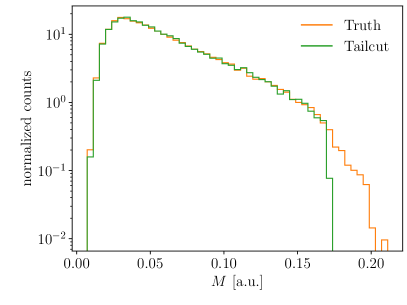
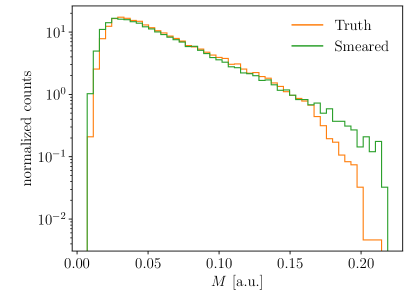
These are the datasets used in "How to Understand Limitations of Generative Networks". The preprint is available on arXiv at: https://arxiv.org/abs/2305.16774 Four files are used in Sec.5 "Event generation": ev_truth.h5 is the true reconstruction-level sample used during training; ev_masspeak.h5 is the sample generated from the neural network of Sec. 5.1; ev_inn.h5 is the state-of-the-art sample used in Sec. 5.2; ev_binn.h5 collects the Bayesian samples of Sec. 5.3; The remaining three files are used for the "Calorimeter simulation" section.These are named according to the particle originating the shower: "calo_eplus.hdf5" for positrons, "calo_gamma.hdf5" for photons, and "calo_piplus.hdf5" for pions. Each sample contains 100k showers.
研究の動機と目的
- 粒子物理学における生成ネットワークを評価するための分類器ベースの枠組みを定義する。
- 分類器出力を用いて密度推定の欠陥を診断する重み分布を導出する。
- 分布シフトを伴うジェット、カロリメータシミュレーション、再構成レベルのイベント生成に手法を適用する。
- 重みパターンが基礎となる物理とつながり、説明可能なAI診断を可能にすることを示す。
提案手法
- 最適なNП分類器からの重み w(x) = p_data(x)/p_model(x) を定義する。
- 重み分布とテールを分析して過剰生成領域と過少生成領域を特定する。
- ROC/AUC の概念を用いるが単一の数値よりも重み分布の形状を重視する。
- ジェット、カロリメータショー、および Z+ジェットイベントに対してアンサンブル分類器を適用する。
- 校正、プル、ベイズ回帰の関連性を探り不確実性を評価する。
- 重みに裏づけされた相空間クラスタリングが特定の失敗モードを示すことを実演する。
実験結果
リサーチクエスチョン
- RQ1Neyman-Pearson分類器は高エネルギー物理学の生成タスクにおいてデータとモデルの尤度比を正確に学習できるか。
- RQ2分類器の重みの尾部とクラスタがジェット、カロリメータ、イベントの生成欠陥について何を明らかにするか。
- RQ3重み分布は生成ネットワークの改善と不確実性評価をどのように導くか。
- RQ4重みベースの解析は相空間境界とHL-LHCシミュレーションの物理的特徴とどう関係するか。
主な発見
- 重み分布は通常 w=1 の近くでピークを持ち、尾部は過剰生成または過少生成の領域を示す。
- 尾部とクラスタのパターンは欠落した特徴、相空間の境界、汚染や平滑化された分布を特定する。
- カロリメータ・ショーは非対称な重み尾部と層ごとのエネルギー蓄積とノイズに関連する特有の失敗モードを示す。
- イベント生成の重みは質量ピークのぼかしとジェット相関を特定可能な問題として明らかにする。
- アンサンブルと校正は分類器が密度比を学ぶのを支援し、xAI風の診断を可能にする。
- 重みは生成器バージョン間の進捗を定量化し、ターゲットを絞った改善を導く。
より良い研究を、今すぐ始めましょう
論文設計から論文執筆まで、研究時間を劇的に削減しましょう。
クレジットカード登録不要
このレビューはAIが作成し、人間の編集者が確認しました。