
[論文レビュー] HuntGPT: Integrating Machine Learning-Based Anomaly Detection and Explainable AI with Large Language Models (LLMs)
HuntGPT は KDD99 で訓練された Random Forest-based network anomaly detector trained on KDD99 と XAI (SHAP/LIME) および OpenAI GPT-3.5 Turbo チャットボットを組み合わせ、Gradio ダッシュボードを介して説明可能で実用的な侵入検知の洞察を提供します。本研究は AI 支援システムの技術的正確さと回答の読みやすさを評価します。
Machine learning (ML) is crucial in network anomaly detection for proactive threat hunting, reducing detection and response times significantly. However, challenges in model training, maintenance, and frequent false positives impact its acceptance and reliability. Explainable AI (XAI) attempts to mitigate these issues, allowing cybersecurity teams to assess AI-generated alerts with confidence, but has seen limited acceptance from incident responders. Large Language Models (LLMs) present a solution through discerning patterns in extensive information and adapting to different functional requirements. We present HuntGPT, a specialized intrusion detection dashboard applying a Random Forest classifier using the KDD99 dataset, integrating XAI frameworks like SHAP and Lime for user-friendly and intuitive model interaction, and combined with a GPT-3.5 Turbo, it delivers threats in an understandable format. The paper delves into the system's architecture, components, and technical accuracy, assessed through Certified Information Security Manager (CISM) Practice Exams, evaluating response quality across six metrics. The results demonstrate that conversational agents, supported by LLM and integrated with XAI, provide robust, explainable, and actionable AI solutions in intrusion detection, enhancing user understanding and interactive experience.
研究の動機と目的
- Threat hunting における ML-based anomaly detection の利用を動機づけて検出時間を短縮し、対応品質を向上させる。
- Dashboard (HuntGPT) を提案し、Random Forest detector と SHAP および LIME の説明、および GPT-based conversational agent を統合する。
- Explainability と対話的な AI-assist で分析者の信頼と使いやすさを向上させる。
- Prototype の技術的正確さと AI-generated explanations や responses の読みやすさを評価する。
提案手法
- KDD99 intrusion detection dataset を用いて anomaly detection のための Random Forest classifier を訓練・展開する。
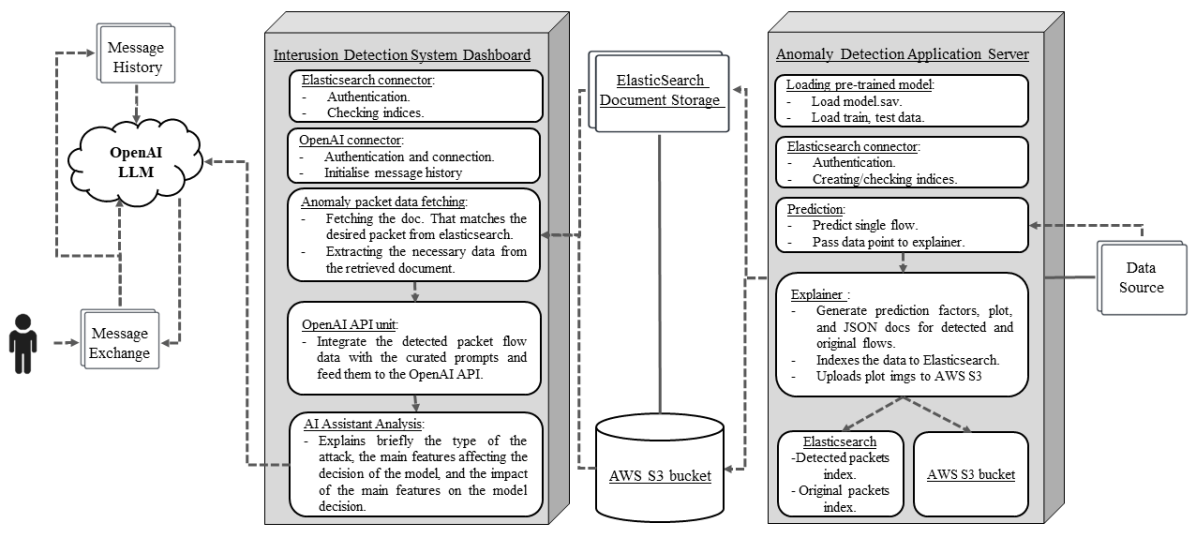
- SHAP と LIME の explainability frameworks を統合し、feature-level explanations と visual plots を Elasticsearch および AWS S3 に保存する。
- OpenAI API を介して GPT-3.5 Turbo conversational agent を接続し、IDS ダッシュボード経由で explainable threat analyses を提供する。
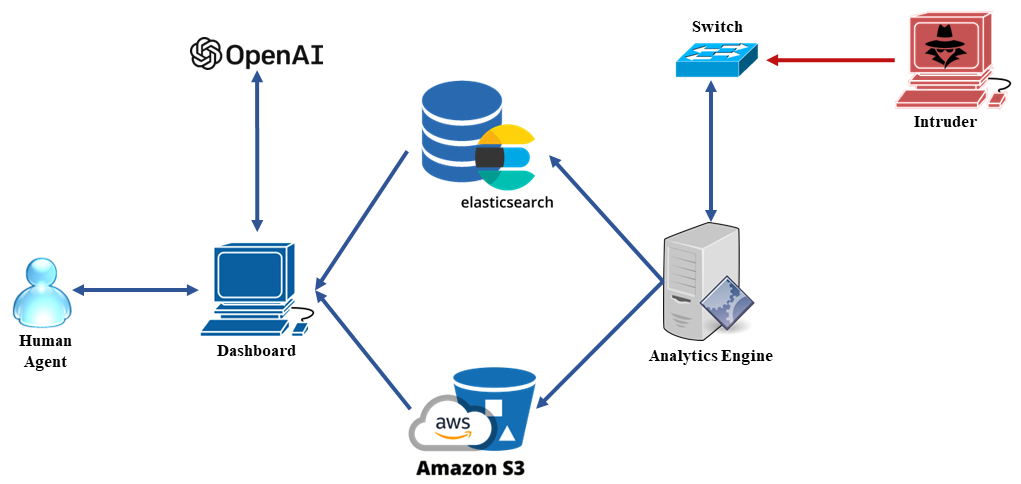
- Analytics engine、Elasticsearch を用いた Data Storage、Gradio を用いた UI の三層アーキテクチャを採用し、関心事を分離してモジュール開発を可能にする。
- CISM などのサイバーセキュリティ認証準備資料と照合して technical accuracy を評価し、AI explanations の readability を六つの readability metrics で評価する。
実験結果
リサーチクエスチョン
- RQ1検出されたネットワーク異常に対して、LLM-powered chatbot と XAI explanations は正確で実践的な洞察を提供できるか。
- RQ2SHAP および LIME の explanations を統合することで、分析者の ML-based anomaly detections への信頼と理解は向上するか。
- RQ3サイバーセキュリティ文脈における AI-generated anomaly explanations および chatbot responses の認知的読みやすさはどの程度か。
- RQ4標準的な認証と比較して、実務的なサイバーセキュリティ知識の観点で system のパフォーマンスはどの程度か。
主な発見
| Exam | No. of Questions | GPT-3.5 turbo Success Rate |
|---|---|---|
| CISM Certified Information Security Manager Practice Exams [14] | 40 | 82.5% |
| ISACA official CISM practice Quiz [43] | 10 | 80% |
| ISACA official cybersecurity fundamentals practice quiz [43] | 25 | 72% |
- GPT-3.5 Turbo は標準化された試験での成功率が 72% から 82.5% の範囲で示すように、サイバーセキュリティ知識を substantial に示した。
- 読みやすさの分析は、生成された explanations および chatbot responses が概ね大学院または同等レベルである一方、基本的な大学教育を受けたユーザーにも理解可能であることを示している。
- HuntGPT プロトタイプは、AI-generated explanations、インタラクティブなディスカッション、およびダウンロード可能な incident report を介して explainable な異常検知を提供する。
- アーキテクチャは Elasticsearch storage、AWS S3 plots、Gradio UI を統合し、OpenAI の API を用いた Analyst とのシームレスな対話を可能にするモジュール型開発をサポートする。
- Conversational agent–driven explanations は、侵入検知の文脈で実践的な AI-supported responses の生成を支援できる。
より良い研究を、今すぐ始めましょう
論文設計から論文執筆まで、研究時間を劇的に削減しましょう。
クレジットカード登録不要
このレビューはAIが作成し、人間の編集者が確認しました。