
[論文レビュー] Identification of cardiovascular diseases through ECG classification using wavelet transformation
この論文は連続ウェーブレット変換と離散ウェーブレット変換を用いてECG信号から特徴を抽出し、MIT-BIH由来データに対してさまざまな分類器を適用して、最大で96%のテスト精度を達成している。
Cardiovascular diseases are the leading cause of mortality globally, necessitating advancements in diagnostic techniques. This study explores the application of wavelet transformation for classifying electrocardiogram (ECG) signals to identify various cardiovascular conditions. Utilizing the MIT-BIH Arrhythmia Database, we employed both continuous and discrete wavelet transforms to decompose ECG signals into frequency sub-bands, from which we extracted eight statistical features per band. These features were then used to train and test various classifiers, including K-Nearest Neighbors and Support Vector Machines, among others. The classifiers demonstrated high efficacy, with some achieving an accuracy of up to 96% on test data, suggesting that wavelet-based feature extraction significantly enhances the prediction of cardiovascular abnormalities in ECG data. The findings advocate for further exploration of wavelet transforms in medical diagnostics to improve automation and accuracy in disease detection. Future work will focus on optimizing feature selection and classifier parameters to refine predictive performance further.
研究の動機と目的
- Automated ECG analysisを促進する理由がある(手動解釈は時間がかかる)
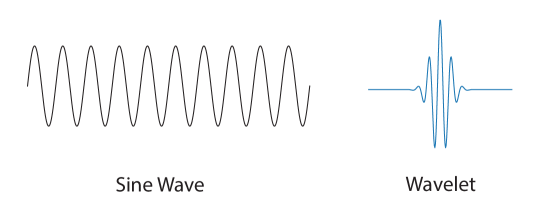
- ECG信号から特徴抽出のためにウェーブレット変換(CWTとDWT)を調査する
- ウェーブレット由来の特徴量に対して複数の機械学習分類器を評価する
- ウェーブレットの選択と深さが分類性能と一般化に与える影響を特定する
提案手法
- ECG信号をCWTとDWTの両方で分解して周波数サブバンドを取得する
- サブバンドごとに8つの統計特徴量を抽出する(mean, median, std, variance, RMS, zero-crossings, mean-crossings, entropy)
- サブバンド全体の特徴量を集約してサンプルごとの特徴ベクトルを構成する
- 複数の分類器を訓練および評価する(KNN, Linear SVC, RBF SVC, Decision Tree, Random Forest, MLP, AdaBoost, GaussianNB, Gradient Boosting)
- 再現性のある結果のためにJupyter環境でPythonとPyWaveletsおよびscikit-learnを使用する
実験結果
リサーチクエスチョン
- RQ1ウェーブレットベースの特徴量をECGから抽出して、正常状態と異常状態を区別できるか?
- RQ2最良の予測性能を得るウェーブレットタイプと分解深さは何か?
- RQ3MIT-BIH由来データのECG分類で、どの機械学習モデルがウェーブレット特徴を最も活用できるか?
- RQ4訓練とテストのパフォーマンスは過学習とモデルの一般化の可能性をどのように反映するか?
主な発見
| 分類器 | ハイパーパラメータ | トレーニング精度 | テスト精度 |
|---|---|---|---|
| K-Nearest Neighbors | K=5, p=1 | 0.91 | 0.88 |
| Linear SVC | N/A | 0.91 | 0.91 |
| RBF SVC | gamma=2, C=1 | 0.99 | 0.83 |
| Decision Tree | max_depth=20 | 0.99 | 0.93 |
| Random Forest | max_depth=20, max_features=5, n_estimates=10 | 0.99 | 0.96 |
| Multi-Layer Perceptron | hidden_layer_sizes=(50,100), alpha=0.01, max_iter=1000, activation='tanh', solver='adam' | 0.97 | 0.95 |
| AdaBoost | N/A | 0.83 | 0.82 |
| GaussianNB | N/A | 0.67 | 0.66 |
| Gradient Boost | N_estimators=10000 | 1.00 | 0.96 |
- Discrete wavelet decomposition to five levels produced 40 features per sample.
- Sym5 wavelet was chosen for decomposition due to its properties.
- Random Forest and Gradient Boosting achieved high testing accuracy (0.96 and 0.96 respectively) with high training accuracy, indicating strong performance but potential overfitting concerns.
- Certain models (GaussianNB, AdaBoost) underperformed relative to others in both training and testing.
- Some models showed very high training accuracy but variable testing accuracy, underscoring the need for regularization and hyperparameter tuning.
より良い研究を、今すぐ始めましょう
論文設計から論文執筆まで、研究時間を劇的に削減しましょう。
クレジットカード登録不要
このレビューはAIが作成し、人間の編集者が確認しました。